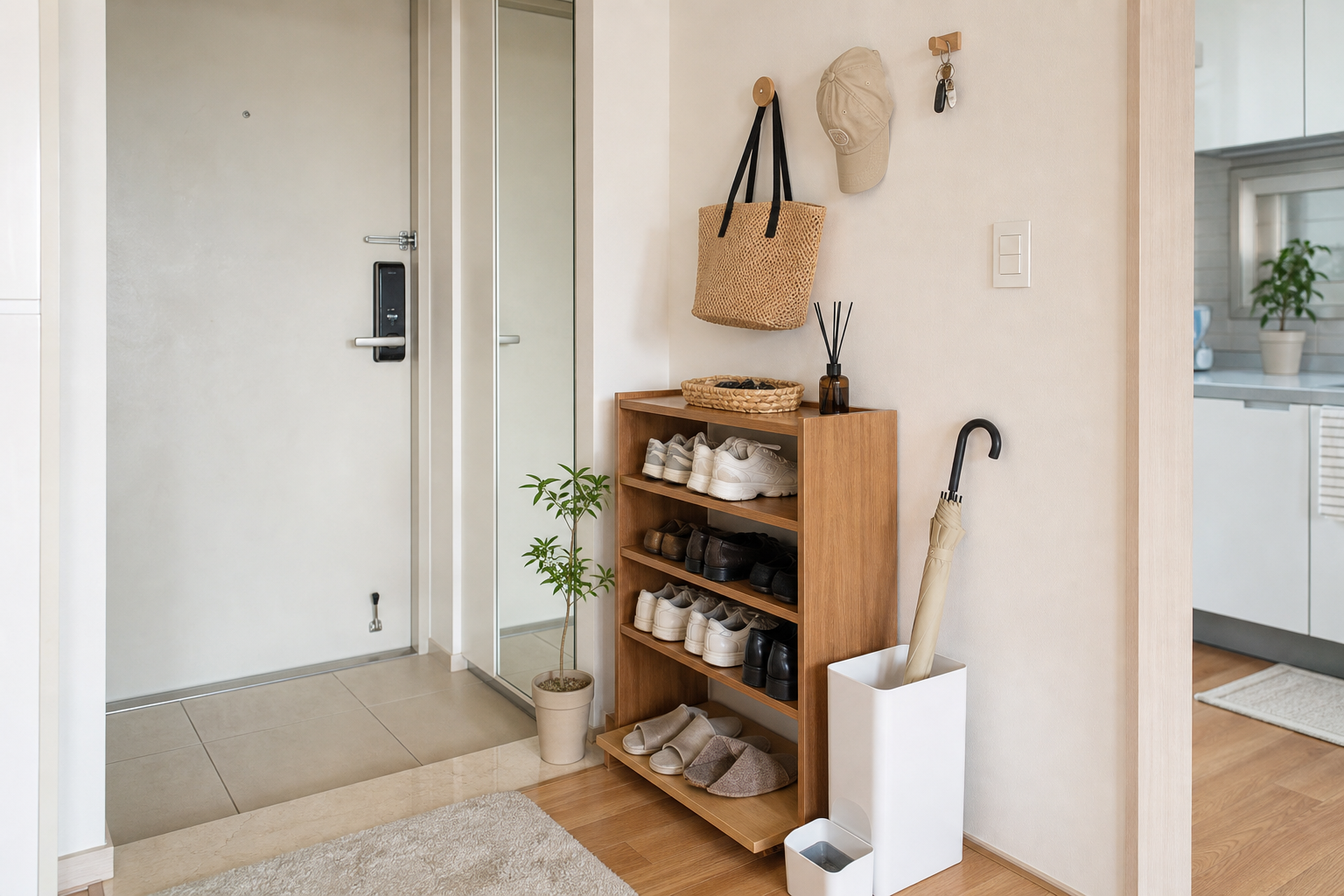
Korean Apartment Organization: Storage Solutions That Work

The average Korean apartment measures just 59–84 square meters, yet Korean households store an impressive amount of belongings by using vertical stacking, modular inserts, and zone-based organization systems that global decluttering trends are only now catching up to. Living in a compact Korean apartment forces creative thinking — and after years of refinement, Korean homeowners have developed storage strategies that are genuinely more space-efficient than anything you’ll find in a standard Western organizing guide.

Korean apartment organization and storage solutions aren’t just about buying cute bins. They’re rooted in a cultural expectation that every item has a designated place, shoes never touch living spaces, and seasonal rotation of belongings (called 계절 정리, gyejeol jeongni) happens like clockwork. This article breaks down the exact systems Korean households use, room by room.

Why Korean Apartment Organization Demands Different Solutions

blog content image 1

Korean apartments are built with a fundamentally different layout than Western homes, which means standard organization advice often fails. Most Korean units feature a dedicated entryway shoe cabinet (sinbal-jang), built-in veranda storage, and no basement or garage. Every centimeter of indoor space must work double duty.

The Structural Differences That Matter

Korean apartments almost always have ondol (underfloor heating), which means residents sit, eat, and sleep closer to the floor. This single fact changes storage philosophy entirely — low-profile furniture with hidden compartments is standard, not a trend.

Here are the key structural features that shape Korean apartment organization:

  • No shoes indoors: A recessed entryway (hyeon-gwan) requires a dedicated shoe storage system, often holding 20–40 pairs per household
  • Built-in veranda: Most apartments have an enclosed veranda (1.5–3 square meters) used as a laundry and storage zone
  • No closet culture: Many older Korean apartments have zero built-in closets — freestanding wardrobes and storage furniture are essential
  • Kimchi refrigerator space: A second refrigerator specifically for fermented foods is common, requiring dedicated kitchen floor space
  • Multipurpose rooms: A living room may also serve as a bedroom, study, and dining area depending on the time of day

Understanding these constraints explains why Korean storage solutions prioritize modularity and vertical expansion over the Western habit of spreading belongings across multiple large rooms.

Room-by-Room Korean Apartment Storage Solutions

blog content image 2

Korean households organize storage into five distinct zones: entryway, kitchen, bathroom, veranda, and multipurpose living space — each with specific product categories and techniques that differ from global norms.

Entryway (Hyeon-gwan) Storage

The entryway is the first and most critical organization zone. In Korea, a disorganized entryway signals a disorganized home. Most Korean families use a tall, narrow shoe cabinet (sinbal-jang) that holds shoes at an angle to save depth — typically only 28–32 cm deep but 180 cm tall.

Key entryway storage techniques:

  1. Stack shoes using adjustable double-layer shoe racks (each slot holds 2 pairs instead of 1)
  2. Mount a magnetic strip or slim shelf for keys, masks, and hand sanitizer
  3. Place a slim umbrella holder inside the cabinet door rather than on the floor
  4. Use seasonal rotation — store off-season shoes in vacuum bags on the veranda

Kitchen Storage

Korean kitchens are compact but must accommodate a wide range of cookware, side-dish containers (banchan-tong), and fermentation supplies. The average Korean kitchen has 30–40% less counter space than a comparable American kitchen, making vertical and inside-cabinet organization essential.

Korean-specific kitchen solutions include:

  • Stackable side-dish containers: Rectangular glass containers (not round) that tessellate perfectly in the refrigerator, saving up to 25% more fridge space
  • Under-sink sliding racks: Korean hardware stores sell pull-out wire racks sized specifically for Korean under-sink plumbing configurations
  • Over-range storage hoods: Many Korean range hoods include a built-in shelf or drying rack for small dishes
  • Door-mounted spice racks: Narrow racks that attach to cabinet door interiors, holding gochugaru, sesame oil, and other Korean cooking staples

Bathroom Storage

Korean bathrooms are almost universally “wet bathrooms” — the entire room is a shower zone with a floor drain. This means all storage must be wall-mounted or elevated. Suction-cup caddies and adhesive hooks rated for wet conditions are staples in every Korean bathroom.

Veranda Storage Zone

The enclosed veranda is Korea’s secret storage weapon. A well-organized Korean veranda functions as a laundry room, pantry overflow, and seasonal storage unit combined — often holding the equivalent of a small Western walk-in closet within 2–3 square meters.

  1. Ceiling-mounted retractable drying racks (standard in most Korean apartments)
  2. Slim metal shelving units (typically 30 cm deep × 180 cm tall) along one wall
  3. Clear labeled bins for seasonal clothing, holiday supplies, and bulk groceries
  4. A small cabinet for cleaning supplies, detergents, and recycling sorting

Living and Sleeping Spaces

Since many Korean families use the living room floor for sleeping (with yo mattresses stored during the day), furniture must create hidden storage. Lift-top tables, platform beds with drawers, and tall narrow bookshelves that double as room dividers are typical Korean solutions.

Best Korean Storage Products Compared

blog content image 3

Korean home stores like Daiso Korea, IKEA Korea, and local brands like Changsin Living and Lock&Lock offer storage products specifically designed for compact Korean apartment dimensions. The table below compares the most popular categories.

Feature Daiso Korea Modular Bins Lock&Lock Interlock Containers IKEA Korea SKÅDIS Pegboard Changsin Living Stackable Drawers
Price Range (per unit) ₩1,000–₩5,000 ($0.75–$3.75) ₩5,000–₩15,000 ($3.75–$11) ₩19,900–₩29,900 ($15–$22) ₩8,000–₩20,000 ($6–$15)
Best For Drawer dividers, small item sorting Kitchen, fridge, banchan storage Wall-mounted entryway/desk organization Closet and veranda vertical stacking
Material Polypropylene plastic BPA-free Tritan or tempered glass Fiberboard + plastic accessories Heavy-duty PP plastic
Modularity High — multiple sizes interlock Medium — lid-to-base stacking High — customizable with accessories High — stackable up to 5 units
Durability 1–2 years (lightweight) 5+ years (kitchen-grade) 5+ years (wall-mounted) 3–5 years (medium-duty)
Availability Outside Korea Limited (some on Coupang Global) Widely available globally Available at all IKEA stores Available via Gmarket Global

For global readers who can’t access Korean stores, Lock&Lock containers and IKEA SKÅDIS boards are the easiest Korean-popular products to buy internationally and replicate Korean organization methods at home.

Korean Seasonal Organization: The Gyejeol Jeongni System

Korean households perform a full seasonal organization reset 2–4 times per year, rotating clothing, bedding, kitchenware, and even cleaning supplies to match the current season. This practice, called gyejeol jeongni (계절 정리), is a core reason Korean apartments stay organized despite limited space.

The seasonal rotation follows Korea’s four distinct climate phases:

  1. Spring (March–May): Swap heavy winter bedding for lighter quilts; move winter coats to vacuum-sealed bags on the veranda; deep-clean ondol floor vents
  2. Summer (June–August): Rotate to moisture-absorbing storage inserts (Korea’s monsoon season causes mold); switch to bamboo mats and cooling pillows; store woolen items with mothballs
  3. Autumn (September–November): Prepare kimchi-making supplies (kimjang season); rotate back to medium-weight bedding; organize Chuseok holiday items
  4. Winter (December–February): Store summer clothing in overhead veranda shelves; bring out heated blankets and humidifiers; reorganize shoe cabinet for boots

This rotation system means only 50–60% of a Korean household’s belongings are actively accessible at any given time — the rest are stored in labeled bins on the veranda, in overhead cabinets, or in vacuum-sealed bags. This is the single biggest reason Korean apartments feel spacious despite their small footprint.

How to Start Seasonal Rotation If You’ve Never Done It

Begin with clothing and bedding only — these are the highest-volume items. Buy 3–4 large vacuum storage bags (available at any Korean Daiso for ₩3,000 each) and one set of stackable bins. Label everything by season. After one full year of clothing rotation, expand the system to kitchenware and cleaning supplies.

The most common mistake non-Korean households make is trying to keep everything accessible year-round. In a small apartment, that guarantees clutter. Accepting that some items belong in “deep storage” for 6–9 months of the year is the fundamental Korean apartment organization mindset shift.

Frequently Asked Questions

How do Koreans organize small apartments with no closets?

Koreans use freestanding wardrobe systems, vertical stackable drawers, and seasonal clothing rotation to compensate for the lack of built-in closets. Many households also install tension-rod clothing racks inside unused alcoves or behind curtains. The key difference from Western closet culture is that Koreans store off-season clothes elsewhere, keeping only current-season items in the main wardrobe.

What are the best Korean storage products available internationally?

Lock&Lock food containers, Changsin Living stackable drawers, and Daiso modular bins are the three most popular Korean storage brands, with Lock&Lock being the most widely available outside Korea. IKEA products are also commonly used in Korean apartments and are easy to source globally. For online shopping, Gmarket Global and Coupang Global ship select Korean home products internationally.

Why do Korean apartments look so clean and minimalist?

Korean apartments appear minimalist primarily because of aggressive seasonal rotation — only items for the current season are kept visible, while everything else goes into deep storage. Cultural factors also play a role: the Confucian-influenced emphasis on household order, the no-shoes-indoors policy that reduces dirt, and the social expectation that a home should be presentable for unexpected guests all reinforce clean-looking spaces.

How much does it cost to set up Korean-style apartment organization?

A basic Korean apartment organization setup costs approximately ₩100,000–₩300,000 ($75–$225 USD), covering modular bins, vacuum bags, stackable drawers, and a shoe rack. Most Korean households build their systems incrementally over 1–2 years rather than buying everything at once. Budget-conscious Koreans rely heavily on Daiso, where individual organizers start at just ₩1,000 ($0.75).

Do Korean apartment organization methods work in larger Western homes?

Yes, Korean organization methods are effective in any size home, but they deliver the most dramatic results in spaces under 90 square meters. The seasonal rotation system and vertical stacking techniques translate directly to Western apartments. For larger homes, the Korean zone-based approach (entryway, kitchen, bathroom, storage area, living space) provides useful structure even when total space isn’t a constraint.

Key Takeaways

  • Korean apartments average 59–84 square meters, making space-efficient organization a cultural necessity rather than a lifestyle choice
  • Seasonal rotation (gyejeol jeongni) keeps only 50–60% of belongings accessible at any given time — the rest goes into deep veranda or overhead storage
  • The enclosed veranda is the most critical storage zone in a Korean apartment, functioning as laundry room, pantry, and seasonal storage combined
  • Rectangular containers save up to 25% more space than round ones in refrigerators and cabinets — this is why Lock&Lock’s rectangular designs dominate Korean kitchens
  • A complete Korean-style organization setup costs $75–$225 USD and can be built incrementally using Daiso, Lock&Lock, and stackable drawer systems
  • Vertical stacking and modular inserts are prioritized over horizontal spreading, reflecting the tall-and-narrow furniture philosophy of Korean compact living

Korean apartment organization and storage solutions succeed because they were born from genuine spatial constraint, not marketing trends. Apply the zone-based system, commit to seasonal rotation, and your space — regardless of size or location — will function more efficiently than you thought possible.


You Might Also Like

Leave a Comment

Your email address will not be published. Required fields are marked *

Scroll to Top