A Seoul dermatologist once told me the biggest anti-aging mistake her patients over 40 make isn’t skipping retinol — it’s doing too much of the wrong things. She sees it weekly: women arriving with irritated, over-exfoliated skin from routines designed for 25-year-olds. Meanwhile, her Korean patients in their 40s and 50s tend to have calmer, more resilient skin — not because they spend more, but because Korean anti-aging after 40 focuses on protecting what you already have rather than aggressively chasing what you’ve lost. These 7 habits are the ones most Western skincare advice completely overlooks.
Quick-Pick Summary: 7 Korean Anti-Aging Habits at a Glance
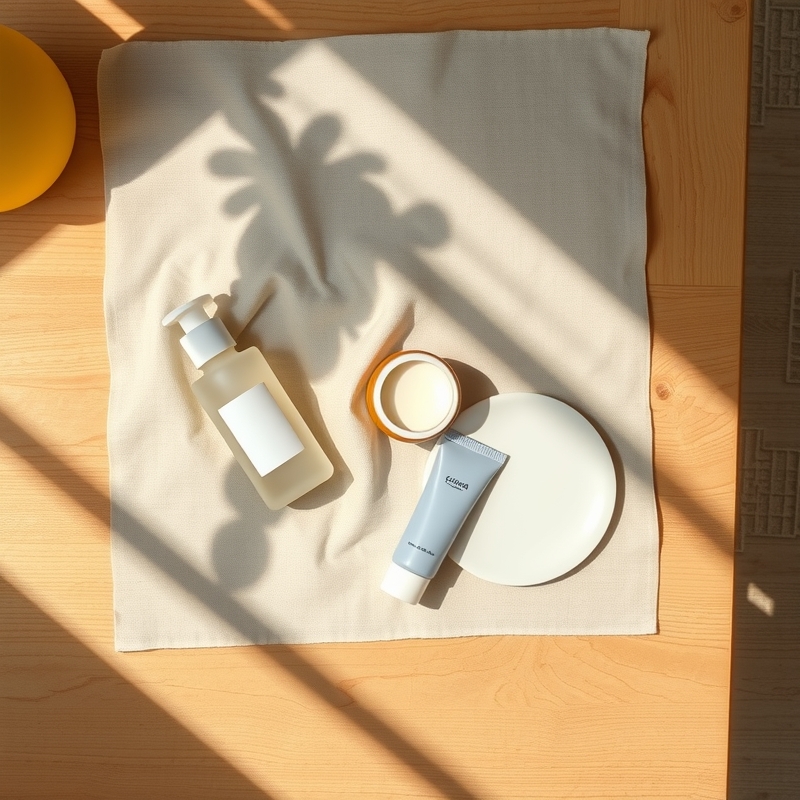
| # | Habit | Why It Matters After 40 | Time Required |
|---|---|---|---|
| 1 | Oil-first double cleanse | Preserves lipid barrier that thins with age | 3 minutes |
| 2 | Daily SPF (rain or shine) | Prevents 80%+ of visible aging signs | 30 seconds |
| 3 | Fermented ingredients over harsh actives | Delivers results without irritation | 1 minute (application) |
| 4 | Subtract, don’t add | Fewer products = stronger barrier after 45 | Saves time |
| 5 | 한방 (hanbang) herbal approach | Centuries-tested botanical anti-aging | 2 minutes |
| 6 | Eating for skin (미역국 and beyond) | Collagen support from the inside | Part of meals |
| 7 | Sleep as skincare | Cortisol control = less collagen breakdown | 0 extra minutes |
1. Double Cleansing — But Not the Way You Think After 40
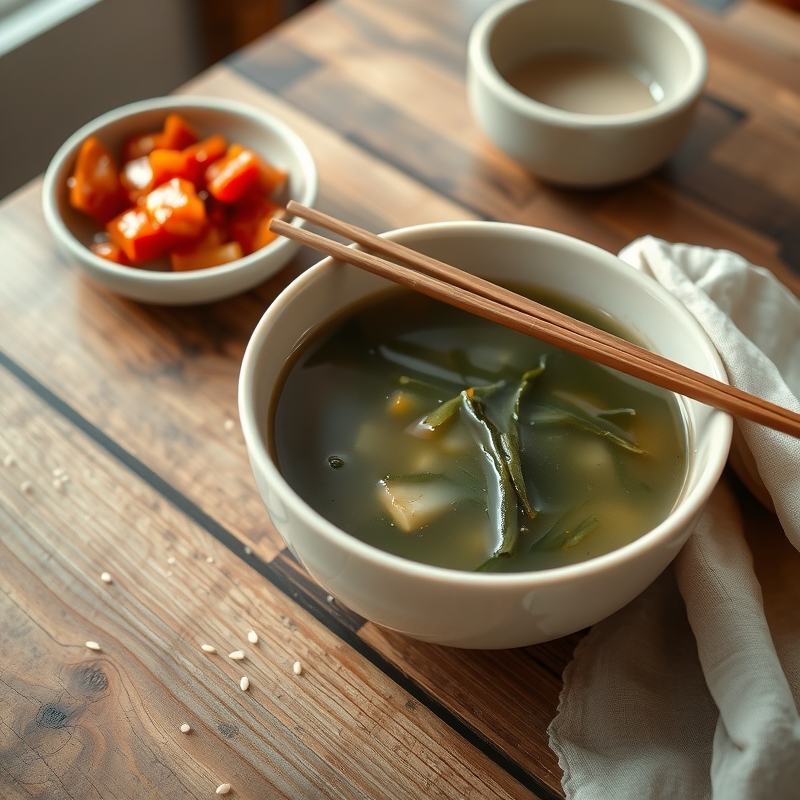
Korean anti-aging starts at the sink, not the serum shelf. Most Western advice treats cleansing as a quick pre-step. Korean women in their 40s treat it as the foundation of everything that follows.
Here’s what changes after 40: your skin’s natural lipid barrier gets thinner. Foam cleansers with high pH — the kind most American drugstores sell — strip what little protective oil you have left. Korean double cleansing solves this by starting with an oil-based cleanser that dissolves sunscreen and makeup without disrupting the lipid layer, then following with a gentle low-pH water-based cleanser.
The key detail most blogs miss: after 40, the oil step becomes more important than the foam step. Many Korean women in their late 40s skip the second cleanser entirely on days they didn’t wear makeup. Your skin simply cannot afford the stripping anymore.
- Use a cleansing oil or balm as step one — not micellar water (too much rubbing)
- Choose a second cleanser with a pH between 5.0 and 6.0
- On bare-skin days, oil cleanse only and rinse with lukewarm water
2. Daily SPF — The Korean Anti-Aging Rule That’s Non-Negotiable

Korean women apply sunscreen every single day, indoors included, and this one habit likely accounts for more anti-aging results than any serum they own. This isn’t an exaggeration. According to research reviewed by the Skin Cancer Foundation, up to 80% of visible facial aging — wrinkles, dark spots, loss of elasticity — comes from UV exposure, not chronological age.
Walk into any Korean convenience store and you’ll find an entire sunscreen wall. Not one or two options — dozens. Korean sunscreen formulas tend to be lighter, less greasy, and more cosmetically elegant than what you’ll find at a typical American pharmacy. That matters enormously for daily compliance, because the best sunscreen is the one you actually wear every day.
- Korean women reapply every 2-3 hours when outdoors — most American women apply once (if at all)
- SPF 50+ PA++++ is standard in Korea, not a “beach vacation” product
- Many Korean sunscreens double as a primer, eliminating one step from your morning
Beauty of Joseon Relief Sun SPF 50+
This is the sunscreen that converted thousands of Western women who “hated sunscreen.” Lightweight, no white cast, and it layers beautifully under makeup — finally, a daily SPF that doesn’t feel like punishment.
3. Fermented Ingredients Over Harsh Actives for Korean Anti-Aging
While Western anti-aging leans on high-concentration retinol and glycolic acid, Korean skincare for women over 40 increasingly relies on fermented ingredients that deliver comparable results without the irritation cycle.
Fermentation breaks active compounds into smaller molecules. Smaller molecules penetrate more effectively. That’s why fermented skincare ingredients like galactomyces, saccharomyces, and bifida ferment lysate show up across Korean anti-aging lines — they work with aging skin instead of against it.
Here’s the part nobody tells you: after 40, your skin’s tolerance for aggressive actives drops significantly. The retinol purge that a 28-year-old recovers from in a week can leave a 47-year-old with compromised barrier function for months. Korean women in their 40s know this. They choose fermented essences that build results gradually without the redness, peeling, and sensitivity.
- Galactomyces ferment filtrate — brightening and texture refinement
- Saccharomyces ferment — hydration and barrier support
- Bifida ferment lysate — calming and anti-inflammatory
COSRX Advanced Snail 96 Mucin Power Essence
Not fermented but deeply aligned with the same Korean philosophy — gentle, effective, no irritation. Women over 40 reach for this because it plumps and hydrates without a single harsh active. The texture feels odd for exactly three seconds, then your skin drinks it.
4. The Korean “Subtract, Don’t Add” Rule After 45
Most Western skincare advice tells women over 40 to add more products. Korean anti-aging wisdom says the opposite: subtract. This is the habit that surprises every American woman I talk to.
Korean women in their 20s might use 7-10 products. By their mid-40s, most have pared down to 4-5 carefully chosen steps. Why? Because a thinner, more reactive barrier can’t handle the chemical load of a decade-long product collection. Every unnecessary layer is a potential irritant.
The Korean approach after 45 typically looks like this:
- Oil cleanser
- Low-pH water cleanser (optional on light days)
- One hydrating essence or serum
- Moisturizer
- Sunscreen (morning only)
That’s it. Without the 10 extra products, the ones you keep actually work better because they’re not competing for absorption. Think of it this way: instead of a 45-minute routine that delivers diluted results, this takes under 10 minutes and every drop counts.
5. 한방 (Hanbang) — The Korean Herbal Anti-Aging Tradition Western Brands Can’t Copy
한방 (hanbang, traditional Korean herbal medicine) has been the backbone of Korean anti-aging for centuries — long before retinol existed. This isn’t a trend. It’s a living tradition that Korean mothers and grandmothers passed down through generations, and it’s the single biggest reason Korean anti-aging feels fundamentally different from anything on a Sephora shelf.
Hanbang skincare uses ingredients like 인삼 (insam, ginseng), 녹차 (nokcha, green tea), 쑥 (ssuk, mugwort), and 한련초 (hallyeoncho, eclipta). These aren’t thrown in for marketing — they come from 한의학 (hanuihak), the Korean system of traditional medicine that has been practiced for over a thousand years. Korean women in their 40s often shift toward hanbang-based products because these botanicals focus on restoring balance and resilience rather than forcing aggressive change on skin that’s already under stress.
In most Korean households, you’ll find hanbang philosophy beyond skincare too. 한방차 (hanbangcha, herbal teas) like 대추차 (daechucha, jujube tea) and 생강차 (saenggangcha, ginger tea) are evening staples — not because they’re trendy, but because Korean mothers have always understood that skin health starts with what you put inside your body.
- Ginseng — boosts circulation and supports collagen synthesis
- Mugwort (쑥) — calms inflammation, which accelerates aging
- Green tea (녹차) — antioxidant protection from environmental stress
Sulwhasoo Concentrated Ginseng Renewing Cream
This is what Korean women save up for when they turn 40. Sulwhasoo has refined their ginseng formulation for decades — it’s hanbang philosophy in a jar. Rich without being heavy, and the results compound over weeks, not days. There’s a reason Korean mothers gift this to their daughters on milestone birthdays.
6. Eating for Skin — 미역국 and Korean Anti-Aging From the Inside
Korean anti-aging has never been skin-deep — Korean women eat for their skin as deliberately as they apply products to it. This is the habit Western beauty culture almost entirely ignores.
미역국 (miyeokguk, seaweed soup) is the most iconic example. Every Korean woman eats this soup on her birthday and after childbirth — it’s loaded with iodine, calcium, and fucoidan, a compound that supports skin elasticity. But it’s not just a special occasion food. Many Korean households make it weekly as a quiet, ongoing investment in skin from the inside.
Beyond 미역국, Korean meals are naturally structured for anti-aging:
- Kimchi at every meal — fermented vegetables deliver probiotics that support gut health, which Korean women link directly to skin clarity
- Bone broth (사골, sagol) — simmered for hours, a natural collagen source
- Perilla leaves (깻잎, kkaennip) — rich in omega-3s and rosmarinic acid
- Sweet potato (고구마, goguma) — a preferred snack over processed sugar, packed with beta-carotene
The Korean approach isn’t “superfood of the month.” It’s decades of consistent, nutrient-dense eating woven into daily meals — not supplements, not powders, just real food.
7. Sleep as Skincare — The Korean Night Reset Nobody Talks About
Korean women treat sleep as their most powerful anti-aging product — and after 40, they’re not wrong. Cortisol, your body’s stress hormone, directly breaks down collagen. Poor sleep raises cortisol. The math is simple and brutal: chronic sleep deprivation ages your skin faster than almost anything else.
Korean nighttime culture supports this in ways American culture simply doesn’t. Most Korean homes go quiet by 10-11 PM. Screens get dimmed. A cup of 보리차 (boricha, roasted barley tea) replaces the evening wine. The Korean approach treats the hour before sleep as the start of your skincare routine, not the end of your day.
For women in their 40s juggling work, kids heading to college, and aging parents, this is the hardest habit to adopt — and the one with the highest return. Even shifting bedtime 30 minutes earlier shows measurable results within weeks.
- Apply your evening moisturizer right after cleansing — not right before bed (absorption window)
- Keep the bedroom cool and dark (Korean apartments often have blackout curtains as standard)
- Replace the evening scroll with 보리차 — caffeine-free, mildly calming
Korean Anti-Aging vs. Western Anti-Aging: A Side-by-Side Comparison
| Approach | Western Standard | Korean After-40 Method | Aggressive Western “Pro-Aging” |
|---|---|---|---|
| Cleansing philosophy | Foam cleanser, single step | Oil-first double cleanse, barrier-safe | Micellar water only |
| Key actives | High-dose retinol, glycolic acid | Fermented essences, gentle botanicals | No actives (water-only) |
| Number of products | 8-12 (more = better mindset) | 4-5 curated steps | 1-2 (extreme minimalism) |
| Sunscreen use | Beach/summer only | Daily, year-round, indoors included | Occasional |
| Nutrition role | Supplements and powders | Integrated into daily meals | Ignored |
| Timeline expectation | “See results in 7 days” | Gradual improvement over weeks | No expectations |
| Cost (monthly, approx.) | $80-150+ | $30-60 | Under $10 |
Frequently Asked Questions
What is the most important Korean anti-aging habit for women over 40?
Daily sunscreen is the single most impactful Korean anti-aging habit after 40. While all seven habits work together, UV protection prevents the majority of visible aging signs. Korean women treat SPF as essential as brushing teeth — not optional, not seasonal.
Is the 10-step Korean skincare routine good for anti-aging after 40?
No — most Korean women over 40 have moved away from 10-step routines. The 10-step method was popularized globally as a trend, but Korean skincare professionals generally recommend simplifying after your mid-40s. A thinner skin barrier benefits from fewer, better products rather than more layers.
What happens if I skip double cleansing at night?
Skipping the evening double cleanse leaves sunscreen residue and oxidized makeup on your skin overnight, accelerating collagen breakdown. For women over 40, this is especially damaging because the skin’s overnight repair cycle is already slowing. Even if you wore no makeup, the oil cleanse step removes environmental pollutants that a water cleanser alone misses.
Can Korean anti-aging methods replace retinol?
Korean fermented ingredients and hanbang botanicals offer an alternative path for women whose skin no longer tolerates retinol. They work through different mechanisms — barrier support and gentle stimulation rather than aggressive cell turnover. Many Korean dermatologists recommend low-dose retinol combined with fermented essences for the best of both approaches.
How long before I see results from Korean anti-aging habits?
Most women notice improved skin texture and hydration within 2-3 weeks, with more significant changes in firmness and tone appearing around 6-8 weeks. Korean anti-aging is designed for compounding results — the longer you maintain these habits, the more noticeable the difference. Quick-fix promises are a red flag, not a feature.
Key Takeaways
- Korean anti-aging after 40 is about protecting your skin barrier, not attacking wrinkles with harsh actives — a fundamentally different philosophy from most Western routines
- Daily sunscreen is the #1 Korean anti-aging habit, preventing the majority of visible aging that most women blame on genetics or time
- Korean women over 40 use fewer products, not more — the 10-step routine was never meant for mature skin, and most Korean mothers would tell you the same
- Fermented skincare ingredients deliver anti-aging results without the irritation cycle that high-dose retinol and acids cause on thinning post-40 skin
- 한방 (hanbang) herbal ingredients like ginseng and mugwort represent centuries of Korean anti-aging wisdom that no Western lab has managed to replicate
- Korean anti-aging is never skin-deep — 미역국, kimchi, and daily meals do as much for skin as any serum, and Korean women have always known this
Tonight, try just one thing: swap your foam cleanser for an oil-based one, massage it gently for 60 seconds, and rinse with lukewarm water. Feel how different your skin feels in the morning — that’s your barrier telling you it finally got to rest.
This article contains affiliate links. If you purchase through these links, we may earn a small commission at no extra cost to you. We only recommend products we genuinely believe in.