My Korean mother-in-law watched me salt the radish and immediately shook her head. “You’re drowning it,” she said — not too much salt, but wrong timing. That single correction fixed the watery puddle that had ruined every Korean radish side dish I’d attempted for three years. Here’s what most English-language recipes leave out: Korean radish (무, mu) releases up to 90% of its moisture in the first 15 minutes of salting — and if you season before draining, your banchan sits in a pool by dinner.
Korean radish side dishes — 무생채 (musaengchae, spicy julienned radish), 깍두기 (kkakdugi, cubed radish kimchi), and 무나물 (mu-namul, braised radish) — are the backbone of Korean home meals. They appear at virtually every table. Yet the #1 complaint from home cooks outside Korea? Soggy, limp results that taste nothing like the crunchy, bright banchan at Korean restaurants.
If you’ve been blaming your knife skills or your radish variety, stop. The problem is almost always moisture management — and the fix takes under 5 minutes of changed habit.
Why Your Korean Radish Side Dish Keeps Failing
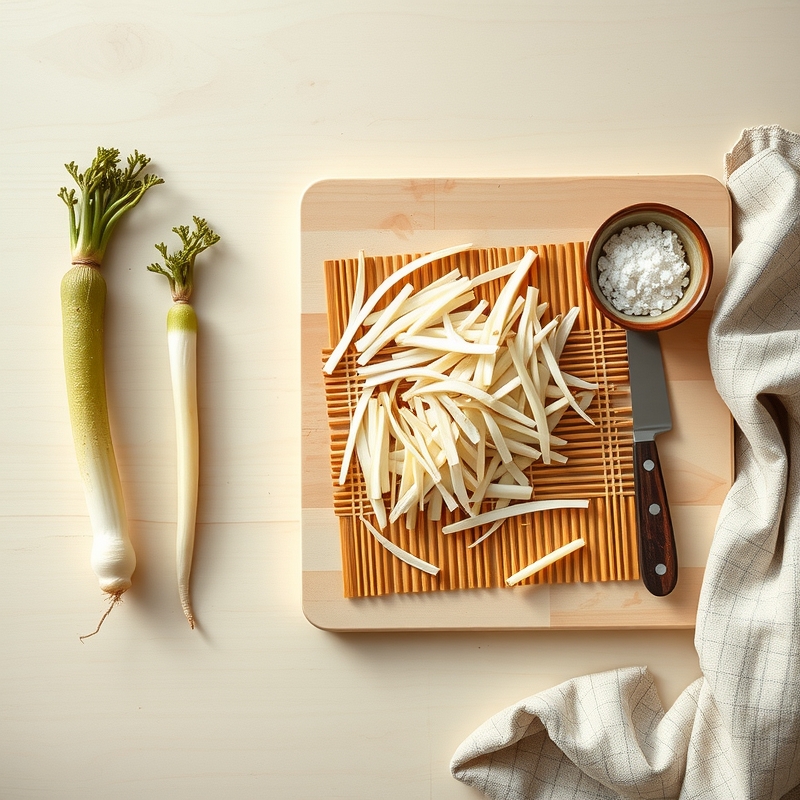
The core problem is osmotic timing — salt draws water from radish cells, and most Western-adapted recipes skip the critical drain-and-squeeze step entirely. This isn’t a minor detail. It’s the difference between a banchan that stays crunchy for 5 days in your fridge and one that’s swimming in liquid by hour two.
Here’s what typically goes wrong in a non-Korean kitchen:
- You season everything at once — salt, gochugaru, sugar, vinegar, all tossed together. The radish releases water directly into your seasoning, diluting flavor and creating soup.
- You skip the rest period — Korean mothers let salted radish sit for exactly 10-15 minutes, then drain. Most translated recipes say “toss with salt” without explaining why timing matters.
- You refrigerate immediately — cold radish continues releasing moisture more slowly, so by morning your container is half liquid.
Korean radish (무) has significantly higher water content than Western daikon or red radishes. According to the USDA FoodData Central database, radishes are approximately 95% water by weight. That moisture is your enemy if not managed — and your friend if extracted at the right moment.
Signs You Have This Problem
- Your 무생채 (musaengchae) has a pool of red liquid at the bottom within an hour
- The radish pieces are limp instead of snappy when you bite them
- Your seasoning tastes watered-down compared to restaurant banchan
- The dish gets worse each day in the fridge instead of better
- You’ve tried adding more gochugaru to compensate, but it just gets messier
The Korean Mother’s 3-Step Fix for Korean Radish Side Dish
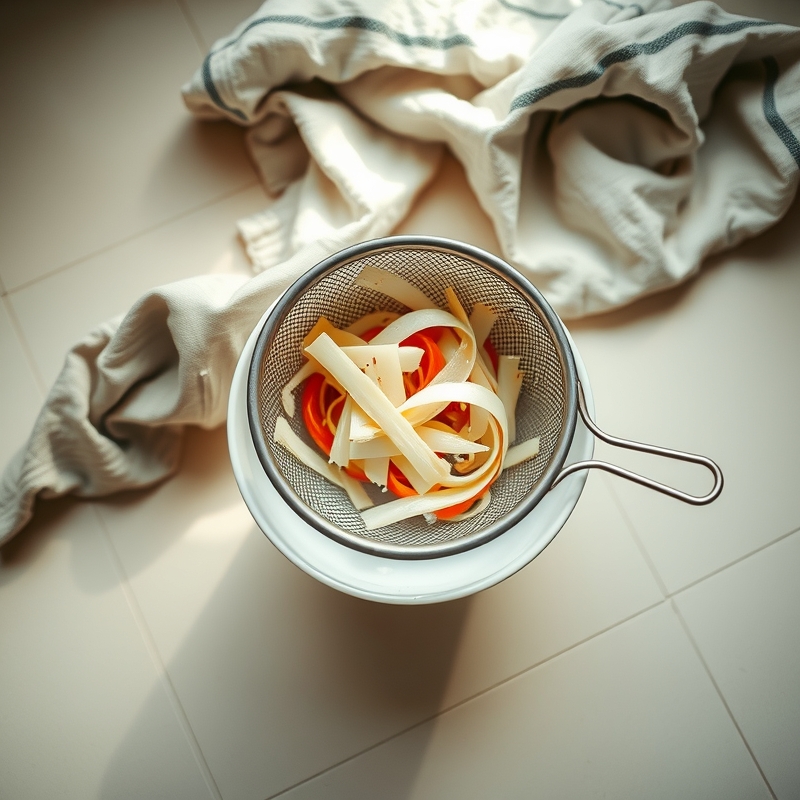
Korean households treat radish prep as a two-phase process — extraction first, seasoning second — and this sequence is non-negotiable. Walk into any Korean home kitchen during meal prep and you’ll see a colander of salted radish sitting over a bowl, draining quietly while the cook prepares other banchan. It’s so automatic that Korean recipe writers often don’t even mention it — like telling someone to breathe.
Step 1: Salt and Wait (Exactly 10-15 Minutes)
Cut your Korean radish (무) into julienne strips for 무생채, or 2cm cubes for 깍두기. Sprinkle with 1 teaspoon of coarse salt per 300g of radish. Toss gently. Set a timer for 10-15 minutes — no longer, or you’ll over-wilt the texture.
This is where the magic happens. The salt creates osmotic pressure that pulls internal water to the surface. You want this water OUT of the radish before any seasoning goes in.
Step 2: Drain and Gentle Squeeze
After 10-15 minutes, you’ll see visible liquid pooling. Tip the radish into a fine mesh strainer and press gently with your palm — don’t wring it like a towel. You want to remove about 70% of the released water while keeping the cell structure intact. Korean grandmothers do this by feel: one firm press, hold for 3 seconds, release.
This single step is what separates restaurant-quality banchan from home attempts. Without it, your seasoning fights against continuous water release for hours.
Step 3: Season the Drained Radish (Not Before)
NOW add your gochugaru, vinegar, sugar, sesame oil, and garlic. Because the radish has already released its excess moisture, the seasoning clings to the surface instead of dissolving into a puddle. The result: concentrated flavor, vibrant color, and crunch that lasts 4-5 days in the refrigerator.
- 2 tablespoons gochugaru (Korean red pepper flakes)
- 1 tablespoon rice vinegar
- 1 teaspoon sugar
- 1 teaspoon fish sauce or 새우젓 (saewujeot, salted shrimp)
- 1 teaspoon toasted sesame oil
- 1 minced garlic clove (added last — Korean grandmothers add garlic last to preserve its sharp bite)
Korean Radish Side Dish Varieties: Which One Fits Your Week
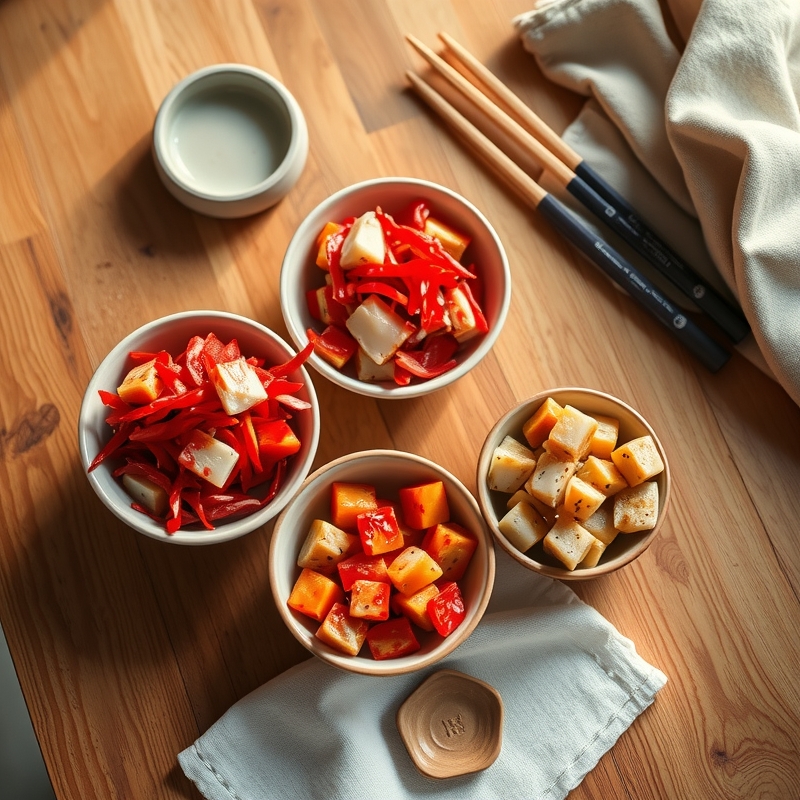
Not all Korean radish banchan require the same effort — and choosing the right one for your schedule is how Korean working mothers keep banchan rotation going without burning out. In Korean households, 반찬 (banchan) prep happens in strategic batches. A Korean woman in her 40s juggling work and family doesn’t make fresh banchan daily. She picks 2-3 that store well and rotates weekly.
Here’s what Korean mothers actually choose based on time available:
무생채 (Musaengchae) — The 10-Minute Weeknight Fix
Julienned radish, salted, drained, and dressed with gochugaru and vinegar. Ready in 10 minutes. Best eaten within 2-3 days (the crunch fades after that). This is your Tuesday-night banchan when you have nothing prepped.
깍두기 (Kkakdugi) — The Weekend Batch That Feeds You All Week
Cubed radish kimchi that ferments and actually improves over 5-7 days. Takes 20 minutes to prep on Sunday, then sits in the fridge developing flavor. By Wednesday it’s perfectly tangy. Korean mothers consider this the most efficient banchan investment — one batch, one week of flavor that gets better each day.
무나물 (Mu-namul) — The Gentle Cooked Option
Braised radish strips cooked with soy sauce and sesame oil. Soft, mild, slightly sweet. Takes 15 minutes on the stove. This is what Korean mothers make when someone in the house has a sensitive stomach — the cooking eliminates the raw bite while keeping radish’s digestive-supporting glucosinolates partially intact.
| Feature | 무생채 (Musaengchae) | 깍두기 (Kkakdugi) | 무나물 (Mu-namul) |
|---|---|---|---|
| Prep time | 10 minutes | 20 minutes | 15 minutes |
| Fridge life | 2-3 days | 7-14 days (improves) | 4-5 days |
| Texture | Raw, crunchy | Crunchy → tangy-soft | Soft, tender |
| Spice level | Medium-hot | Medium (mellows with time) | Mild |
| Best for | Quick weeknight side | Sunday batch prep | Sensitive stomachs |
| Skill needed | Julienne cut | Simple cube cut | Basic stovetop |
| Effort-to-reward ratio | Good | Best (one batch = one week) | Good |
If you’re just starting Korean banchan, 깍두기 is the smartest first investment — 20 minutes of work on Sunday gives you a side dish that genuinely improves through Friday. That’s the decoy most beginners miss: they start with musaengchae because it looks easier, but it dies in 2 days. Kkakdugi rewards patience.
시장 (Sijang) Wisdom: How Korean Market Culture Shaped Radish Banchan
Korean radish side dishes weren’t born in restaurant kitchens — they evolved from 시장 (sijang, traditional market) logic, where vendors needed banchan that stayed fresh without refrigeration for an entire market day.
Visit any traditional Korean market — 광장시장 (Gwangjang Market) in Seoul, 자갈치시장 (Jagalchi) in Busan — and you’ll see banchan stalls with dozens of radish preparations sitting at room temperature for hours, still crisp. This isn’t magic. It’s centuries of refined technique passed between market ajumma (아줌마, older women vendors) who couldn’t afford waste.
The techniques that keep Korean radish banchan stable — pre-salting to remove water, high-acid dressings, fermentation — all descend from market practicality. When Korean mothers say “drain the radish properly,” they’re echoing market women who needed their product to look fresh at 4 PM as it did at 7 AM.
This is why the watery-banchan problem is almost exclusively a non-Korean-kitchen issue. Korean home cooks absorbed these techniques by watching their mothers shop at 시장 and prep banchan on Saturday mornings — the drain step isn’t written because it was demonstrated, generation after generation.
For those of us who didn’t grow up watching, we have to learn it explicitly. And now you have.
Common Mistakes That Ruin Korean Radish Side Dish Texture
Beyond the salt-timing problem, there are three subtle mistakes that even experienced home cooks make with Korean radish banchan — and each one compounds the sogginess issue.
Mistake 1: Using the Wrong Radish
Korean radish (무, mu) is shorter, rounder, and denser than Japanese daikon. It has a slightly sweeter flavor and firmer texture that holds up to salting. If your grocery store only has daikon, it will work — but cut pieces 20% thicker to compensate for daikon’s softer cell structure. Never substitute red radishes; their skin bleeds color and the texture is completely wrong.
Mistake 2: Cutting Too Thin
Instagram-perfect paper-thin julienne looks elegant but wilts completely after salting. Korean mothers cut musaengchae strips about 3mm thick — thick enough to maintain crunch after the salt extraction, thin enough to absorb seasoning. If you can see through the strip, it’s too thin for banchan that needs to last.
Mistake 3: Adding Sugar Before Salt
Some Western-adapted recipes add sugar during the salting phase “to balance.” This is counterproductive. Sugar draws water too, but it also softens cell walls — meaning your radish loses structural integrity before seasoning. In Korean kitchens, sugar always comes AFTER draining, mixed into the seasoning paste. The order isn’t flexible.
Korean Radish (Mu) — Fresh Whole
If your local grocery store doesn’t carry Korean radish, this is the same dense, sweet variety that Korean mothers pick at the market — the firmness makes all the difference for banchan that stays crunchy through the week.
(paid link) Check Availability & Reviews →
Gochugaru (Korean Red Pepper Flakes)
The reason restaurant musaengchae glows that deep red without tasting like fire — Korean gochugaru is sun-dried and coarse-ground, giving color and mild sweetness rather than just heat. One bag lasts months of banchan.
(paid link) See Why Reviewers Love This →
Frequently Asked Questions
What happens if I don’t drain Korean radish before seasoning?
Your banchan will sit in a watery pool within 1-2 hours and the seasoning will taste diluted. The radish continues releasing moisture after you add gochugaru, effectively washing your seasoning off the surface. This is the #1 reason home-made Korean radish side dish tastes weaker than restaurant versions.
How long does Korean radish side dish last in the refrigerator?
Raw musaengchae lasts 2-3 days; kkakdugi lasts 7-14 days and improves with time. The vinegar in musaengchae slows spoilage but doesn’t stop texture loss. Kkakdugi is a fermented preparation, so it actively develops flavor over the first week — most Korean families consider day 3-5 the sweet spot.
Can I use daikon instead of Korean radish for banchan?
Yes, but cut pieces 20% thicker to compensate for daikon’s softer texture. Korean radish (무) has denser flesh and higher sugar content than Japanese daikon. Daikon works for musaengchae and kkakdugi but produces a slightly milder, softer result. Avoid red radishes entirely — wrong texture and the skin color bleeds.
Why does my Korean radish side dish taste bitter?
Bitterness comes from the radish skin or from using the top green portion. Korean mothers peel the radish before cutting for banchan — the skin contains compounds that turn bitter after salting. Also, use only the white lower two-thirds of the radish; the portion near the leaves has a sharper, more bitter profile.
How do Korean families keep banchan fresh all week without it going bad?
Pre-salting removes excess moisture (which causes spoilage), and proper fermentation or acidic dressings act as natural preservatives. Korean banchan tradition evolved specifically around week-long fridge stability. The drain step isn’t just about texture — less free water means fewer bacteria can grow, extending shelf life naturally.
Key Takeaways
- Salt Korean radish for exactly 10-15 minutes, then drain before seasoning — this single step eliminates the watery-banchan problem that ruins most home attempts.
- 깍두기 (kkakdugi) is the best effort-to-reward Korean radish banchan — 20 minutes of Sunday prep gives you an improving side dish all week long.
- Korean radish (무) is denser and sweeter than daikon — if substituting daikon, cut 20% thicker to maintain crunch after salting.
- Never add sugar during the salting phase — sugar softens cell walls and destroys the crunch you need for banchan that lasts days, not hours.
- Cut musaengchae strips 3mm thick, not paper-thin — Instagram-thin julienne wilts completely after salt extraction and won’t survive a day in the fridge.
- The market ajumma technique (pre-salt, drain, then season) is centuries old — it wasn’t designed for taste alone, but for banchan that stays stable all day without refrigeration.
Tonight, try this with whatever radish you have: julienne a quarter of a radish, salt it lightly, and set a 12-minute timer. When you drain it and see how much liquid comes out, you’ll understand instantly why every previous attempt turned into soup — and your next 무생채 will finally taste like the banchan counter at your favorite Korean restaurant.
This article contains affiliate links. If you purchase through these links, we may earn a small commission at no extra cost to you. We only recommend products we genuinely believe in.