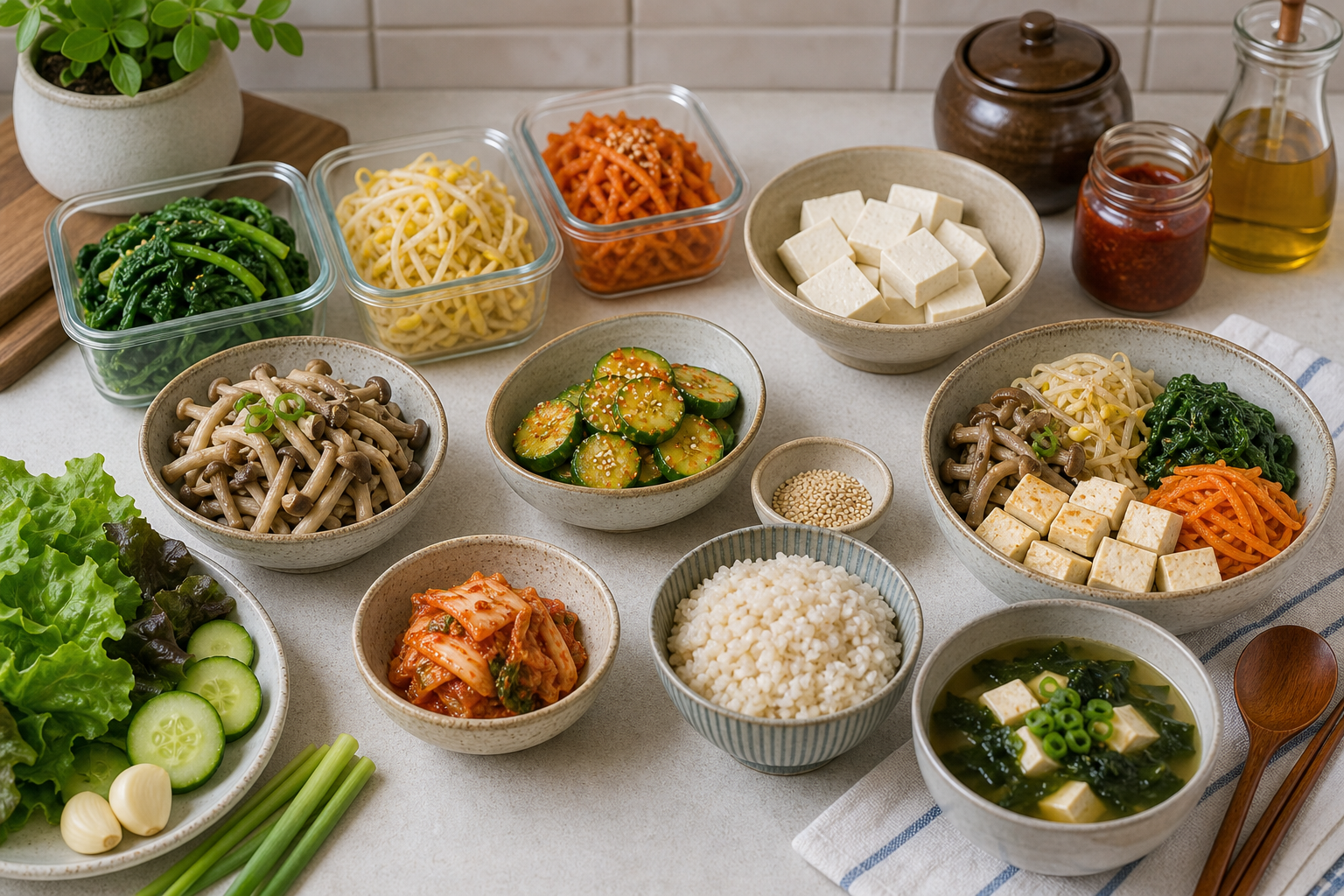
Most people assume Korean food is all about meat — BBQ, fried chicken, bulgogi. But step into any Korean grandmother’s kitchen on an ordinary Tuesday, and you’ll count six, maybe eight small dishes on the table. Almost all of them vegetarian. The truth is, everyday Korean home cooking is already one of the most vegetable-forward cuisines in the world, and the easiest entry point comes down to two paths: tofu-based dishes or vegetable banchan (small side dishes). Which one should you choose? That depends on your kitchen, your schedule, and what you actually want on your plate tonight.
Flavor and Variety: Easy Korean Vegetarian Recipes Head to Head

Korean tofu dishes deliver deep, satisfying umami that makes you forget meat entirely, while banchan offers an addictive variety that turns a plain bowl of rice into a full meal. These are two fundamentally different approaches to the same goal — delicious Korean vegetarian food with minimal effort.
The Tofu Path
Korean cuisine treats tofu nothing like the bland white block you might be picturing. Sundubu-jjigae (soft tofu stew) is the single most popular tofu dish in Korea, found in dedicated restaurant chains across Seoul with lines out the door at lunch. At home, it takes one pot and about 15 minutes of active cooking. The flavor comes from gochugaru (Korean red pepper flakes), sesame oil, and a base of dried kelp or mushroom broth — ingredients that do all the heavy lifting.
Then there’s dubu-jorim (braised tofu), where firm tofu slices get pan-fried until golden and simmered in a soy-garlic-gochugaru sauce. It’s the Korean equivalent of comfort food, and most Korean households make some version of it weekly.
The Banchan Path
Banchan — those small side dishes served with every Korean meal — are where Korean vegetarian cooking quietly shines. A typical Korean home meal includes 3-5 banchan, and the majority are naturally vegetarian: seasoned spinach (sigeumchi-namul), stir-fried zucchini (hobak-bokkeum), pickled radish (danmuji), and of course kimchi.
The beauty of banchan is batch cooking. You make 4-5 different ones on a Sunday afternoon, store them in the fridge, and eat all week. Each individual banchan takes 10-15 minutes. Together, they create a meal with more variety than most Western dinners dream of.
| Dimension | Tofu Dishes | Vegetable Banchan | Combination (Both) |
|---|---|---|---|
| Flavor profile | Deep umami, spicy, warming | Fresh, varied, light to savory | Full spectrum — hearty + refreshing |
| Dishes per meal | 1-2 main dishes | 3-5 small sides | 1 main + 3-4 sides |
| Cuisine authenticity | Restaurant-style Korean | Traditional home-style Korean | Most authentic home meal experience |
| Boredom factor | Can feel repetitive after a week | High variety prevents fatigue | Nearly impossible to get bored |
| Beginner friendliness | Start with 1 recipe | Need to learn 3-4 recipes minimum | Build gradually over time |
Flavor verdict: Banchan wins on variety, but tofu wins on satisfaction per dish. The real winner? Learning both — which is exactly what Korean home cooks do.
Prep Time and Effort: Which Korean Vegetarian Recipes Are Truly Easy?

Without understanding the actual time commitment, most beginners start with the wrong category and give up. Here’s what nobody tells you: banchan sounds harder because you’re making multiple dishes, but each individual banchan is often simpler than a tofu stew.
Tofu Dish Timelines
- Sundubu-jjigae (soft tofu stew): 20 minutes total — 5 min prep, 15 min simmer
- Dubu-jorim (braised tofu): 25 minutes — 10 min pressing/slicing, 15 min cooking
- Dubu-buchimgae (tofu pancake): 15 minutes — mash, season, pan-fry
- Mapo dubu (Korean-style): 20 minutes — uses gochujang instead of doubanjiang
Banchan Timelines
- Sigeumchi-namul (spinach): 8 minutes — blanch 2 min, season 3 min, done
- Kongnamul-muchim (bean sprouts): 10 minutes — boil, drain, toss with sesame oil
- Hobak-bokkeum (zucchini): 10 minutes — slice, stir-fry with garlic and salt
- Musaengchae (radish salad): 7 minutes — julienne, toss with gochugaru and vinegar
- Gamja-jorim (braised potato): 20 minutes — mostly unattended simmering
| Factor | Tofu Dishes | Vegetable Banchan | Combination Meal |
|---|---|---|---|
| Active cooking time per dish | 15-25 minutes | 7-15 minutes | Varies by selection |
| Total time for full meal | 20-30 minutes (1 dish + rice) | 40-60 minutes (4 sides + rice) | 45-60 minutes |
| Batch cooking potential | Low — best eaten fresh | High — lasts 3-5 days in fridge | Banchan prepped, tofu cooked fresh |
| Weekly time investment | ~2 hours (cooking daily) | ~1.5 hours (one batch session) | ~2 hours total |
| Skill level needed | Basic (knife + stove) | Basic (knife + stove) | Basic — nothing advanced |
| Dishes to wash | 1 pot + cutting board | 1 pan + 3-4 small bowls | 1 pot + 1 pan + bowls |
Time verdict: Banchan wins for the week if you batch-cook; tofu wins on any single night when you need dinner in 20 minutes. Here’s the Korean household strategy most food blogs skip: cook banchan on the weekend, then make one quick tofu dish fresh each evening. Your weeknight dinner prep drops to under 20 minutes while your table looks like a Seoul home restaurant.
Nutrition and Protein: Easy Korean Vegetarian Recipes Compared

The biggest concern for anyone switching to vegetarian Korean cooking is protein — and it’s the reason tofu dishes and banchan work best together, not separately. Relying on only one path leaves a gap that the other fills perfectly.
What Tofu Brings
Tofu is a complete protein, meaning it contains all nine essential amino acids your body can’t produce on its own. A single serving of firm tofu (about half a standard block) provides roughly 20 grams of protein. Korean tofu dishes tend to use generous portions — a bowl of sundubu-jjigae typically contains an entire tube of soft tofu.
Korean preparation methods also tend to pair tofu with sesame oil, which helps your body absorb the fat-soluble nutrients. This isn’t accidental — it’s centuries of kitchen wisdom baked into the cuisine.
What Banchan Brings
Where banchan shines nutritionally is in micronutrient diversity. Eating 4-5 different vegetable preparations in one meal means you’re consuming a wider range of vitamins, minerals, and fiber than most Western vegetarian plates. Fermented banchan like kimchi and doenjang-based sides provide probiotics that support gut health — a benefit that Korean food scientists have been studying extensively.
However, most vegetable banchan are low in protein. Bean sprout banchan (kongnamul) offers some, and dishes made with perilla seeds or black beans contribute more, but on their own, banchan won’t meet your protein needs.
| Nutritional Factor | Tofu Dishes | Vegetable Banchan | Both Together |
|---|---|---|---|
| Protein per meal | High (15-25g) | Low (3-8g) | High (20-30g) |
| Fiber per meal | Moderate | High | High |
| Vitamin variety | Limited (mostly B, iron) | Broad (A, C, K, folate) | Comprehensive |
| Probiotic content | None (unless with kimchi) | High (fermented sides) | High |
| Calorie density | Moderate (200-350 cal) | Low (30-80 cal per side) | Moderate (400-550 cal total) |
| Sodium concern | Moderate to high (stew base) | Moderate (soy + salt seasoning) | Watch portions — season lighter |
Nutrition verdict: Neither path alone is complete. Tofu provides the protein foundation, banchan provides the micronutrient breadth. Korean grandmothers figured this out long ago — that’s why you’ll always find both tofu and vegetable sides on the same table.
Cost and Accessibility: Korean Vegetarian Ingredients Where You Live
You don’t need a Korean grocery store to cook any of these recipes — but knowing where to find three key ingredients makes everything easier. Most people overthink the ingredient list. Korean vegetarian cooking relies on a surprisingly small pantry.
The Essential Korean Vegetarian Pantry
For both tofu dishes and banchan, you need the same core seasonings: gochugaru (Korean red pepper flakes), soy sauce, sesame oil, and garlic. That’s it for most recipes. Doenjang (fermented soybean paste) and gochujang (red pepper paste) expand your range but aren’t required for day one.
Walk into any well-stocked American supermarket and you’ll find tofu, sesame oil, and soy sauce in the international aisle. Gochugaru is the one ingredient worth ordering online if your local store doesn’t carry it — it’s fundamentally different from regular chili flakes, with a sweet, smoky depth that nothing else replicates.
| Cost Factor | Tofu Dishes | Vegetable Banchan | Both Together |
|---|---|---|---|
| Main ingredient cost per meal | Around $1.50-3 (tofu block) | Around $3-5 (mixed vegetables) | Around $4-7 total |
| Pantry startup cost | Around $15-25 for core Korean seasonings (gochugaru, sesame oil, soy sauce, doenjang) — lasts months | ||
| Grocery store availability | Tofu available almost everywhere | Most vegetables available everywhere | Only gochugaru may need online order |
| Cost per week (daily cooking) | Around $10-15 | Around $12-20 | Around $15-25 |
| Compared to Western vegetarian | Similar cost, more flavor | Similar cost, more variety | Comparable to any home cooking |
Prices vary by location and season, but Korean vegetarian cooking is consistently one of the most affordable ways to eat well. A block of tofu and a bunch of spinach cost less than most meat alternatives, and the seasonings stretch across dozens of meals.
Korean Red Pepper Flakes (Gochugaru)
This is the single ingredient that transforms ordinary stir-fries into Korean banchan. Unlike Western chili flakes, gochugaru has a sweet, slightly smoky flavor that gives kimchi, namul, and stews their signature warmth — once you cook with it, regular red pepper flakes feel one-dimensional.
Korean Doenjang (Fermented Soybean Paste)
If gochugaru is the soul of spicy Korean cooking, doenjang is the backbone of savory. One spoonful in a stew or dressing adds a deep, earthy umami that takes 30 minutes of cooking time to taste like it simmered all day — Korean home cooks consider it as essential as salt.
The Verdict: Which Easy Korean Vegetarian Recipes Should You Start With?
Start with tofu if you want one satisfying dinner tonight. Start with banchan if you want to transform your entire week. Here’s the honest answer: you’ll end up cooking both, because that’s how Korean meals actually work.
If you’re a complete beginner, here’s the exact progression that works best:
- Week 1: Make sundubu-jjigae (soft tofu stew) — one pot, 20 minutes, deeply satisfying. Serve with plain rice.
- Week 2: Add two banchan — sigeumchi-namul (spinach) and kongnamul-muchim (bean sprouts). Total added time: 20 minutes.
- Week 3: Learn dubu-jorim (braised tofu) and add hobak-bokkeum (zucchini stir-fry). Your table now looks like a real Korean home meal.
- Week 4: Batch-cook 4 banchan on Sunday. Make fresh tofu dishes on weeknights. You’re now eating better than most restaurants.
Overall winner: the combination approach — but if forced to pick just one category, tofu dishes give you the highest satisfaction with the least learning curve. One good sundubu-jjigae recipe will keep you happy for months while you slowly build your banchan skills on the side.
Frequently Asked Questions
What happens if I use regular chili flakes instead of gochugaru in Korean vegetarian recipes?
Your dishes will taste spicy but flat, missing the characteristic sweet-smoky depth that defines Korean flavor. Gochugaru is coarsely ground from sun-dried Korean peppers, which gives it a fruitier heat profile. Standard red pepper flakes are sharper and more one-note. For the closest substitute in a pinch, use a mix of sweet paprika and a small amount of cayenne, but the result still won’t be the same.
Are easy Korean vegetarian recipes actually vegan-friendly?
Most Korean banchan and tofu dishes are naturally vegan or easily adapted. The main non-vegan ingredients to watch for are anchovy stock (used as a soup base), fish sauce (sometimes added to kimchi and stews), and honey in some marinades. Swap anchovy stock for dried kelp and shiitake mushroom broth, use soy sauce instead of fish sauce, and substitute maple syrup for honey. Korean temple food — called sachal eumsik — is entirely plant-based and has been for centuries, so the cuisine already has a deep vegan tradition.
How long do Korean vegetable banchan last in the refrigerator?
Most seasoned vegetable banchan keep well for 3-5 days in airtight containers in the fridge. Fermented banchan like kimchi last much longer — weeks to months. Fresh namul (blanched and seasoned greens) are best within 3 days. Braised or pickled banchan like gamja-jorim (potato) or jangajji (pickled vegetables) can last up to a week. Always use clean chopsticks when serving to prevent bacterial contamination, which is the main reason banchan spoils early.
Can I meal prep easy Korean vegetarian recipes for the whole week?
Yes — banchan are specifically designed for batch cooking, making Korean food one of the most meal-prep-friendly cuisines in the world. Cook 4-5 banchan on a weekend afternoon (total time: about 60-90 minutes), store in separate containers, and pair with freshly cooked rice each day. Tofu dishes are best cooked fresh since the texture changes when reheated, but the sauce or stew base can be prepped in advance. This batch-plus-fresh approach is exactly how most Korean households operate.
What’s the difference between Korean vegetarian cooking and Korean temple food?
Korean temple food (sachal eumsik) is a stricter form that also excludes garlic, onions, green onions, chives, and leeks — known as the “five pungent vegetables” in Buddhist tradition. Regular Korean vegetarian cooking uses all of these ingredients freely. Temple food relies more heavily on mushrooms, perilla, wild greens, and natural fermentation for flavor. Both are plant-based, but home-style Korean vegetarian cooking is more accessible for beginners because garlic and green onions are the flavor backbone of most easy recipes.
Key Takeaways
- Everyday Korean home cooking is already one of the most vegetable-forward cuisines in the world — you’re not adapting it to be vegetarian, you’re just skipping the few meat dishes.
- Tofu dishes like sundubu-jjigae take about 20 minutes and deliver restaurant-level satisfaction from one pot — the best starting point for complete beginners.
- Banchan (vegetable side dishes) are Korea’s original meal prep — batch-cook 4-5 sides in 60-90 minutes on a weekend and eat well all week.
- You only need four core Korean seasonings to start: gochugaru, soy sauce, sesame oil, and garlic. Everything else is a bonus.
- The combination of tofu dishes and vegetable banchan creates a nutritionally complete meal — tofu provides protein, banchan provides micronutrient diversity and fiber.
- Korean vegetarian cooking costs roughly the same as any home cooking — the pantry staples run around $15-25 upfront and last for months of meals.
Tonight, try this: blanch a handful of spinach for two minutes, drain it, and toss it with a teaspoon of sesame oil, a pinch of salt, and a crushed clove of garlic. That’s sigeumchi-namul — your first banchan, done in under eight minutes. Tomorrow, you’ll want to make a second one.
This article contains affiliate links. If you purchase through these links, we may earn a small commission at no extra cost to you. We only recommend products we genuinely believe in.