A Korean mother-in-law doesn’t ask if your winter blankets “spark joy” — she asks why they aren’t vacuum-sealed and stored on the top shelf of your 붙박이장 (built-in wardrobe) by March. That single difference reveals everything about how Korean home organization and the Marie Kondo method diverge. Both promise a tidier home, but they disagree on almost every fundamental question: What do you keep? Where does it go? And does “joy” even matter when your apartment is 330 square feet? Here are 5 key differences most organization blogs completely miss — and why one approach might suit your home far better than the other.
Korean vs Marie Kondo Organization: The Core Philosophy
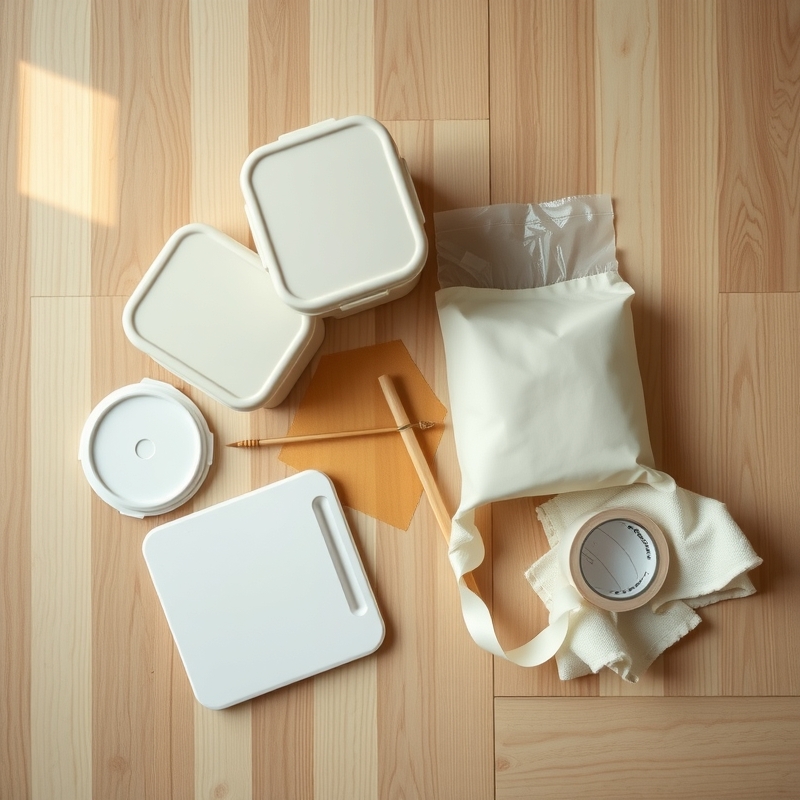
Marie Kondo’s KonMari method starts with emotion — keep only what sparks joy, discard everything else. Korean home organization starts with spatial logic — keep what your household needs, then engineer a place for every single item so nothing wastes a centimeter. These aren’t just different techniques. They’re different value systems.
KonMari treats your home as an extension of your inner self. If an object doesn’t serve your emotional well-being, it leaves. The method works by category — clothes, books, papers, miscellaneous items, sentimental items — and asks you to hold each possession and feel whether it deserves to stay.
Korean organization, rooted in the concept of 살림 (sallim), treats your home as a working system that serves the whole family. 살림 literally means “making a living” or “running a household,” and it carries deep cultural weight. A well-organized Korean home isn’t about personal joy — it’s about making daily life flow without friction for everyone under that roof.
The practical result? KonMari households often end up with fewer items. Korean households often end up with the same number of items — but stored so efficiently that the home feels twice as large.
Who Each Philosophy Serves Best
- KonMari works best for: People drowning in accumulated stuff who need emotional permission to let go — especially if you live alone or with a partner who shares your aesthetic values
- Korean organization works best for: Multi-person households, tiny apartments, anyone who can’t afford to replace seasonal items, and people who find “does this spark joy?” genuinely unhelpful when staring at a can opener
수납 (Sunap) Culture — The Korean Storage Secret KonMari Doesn’t Teach
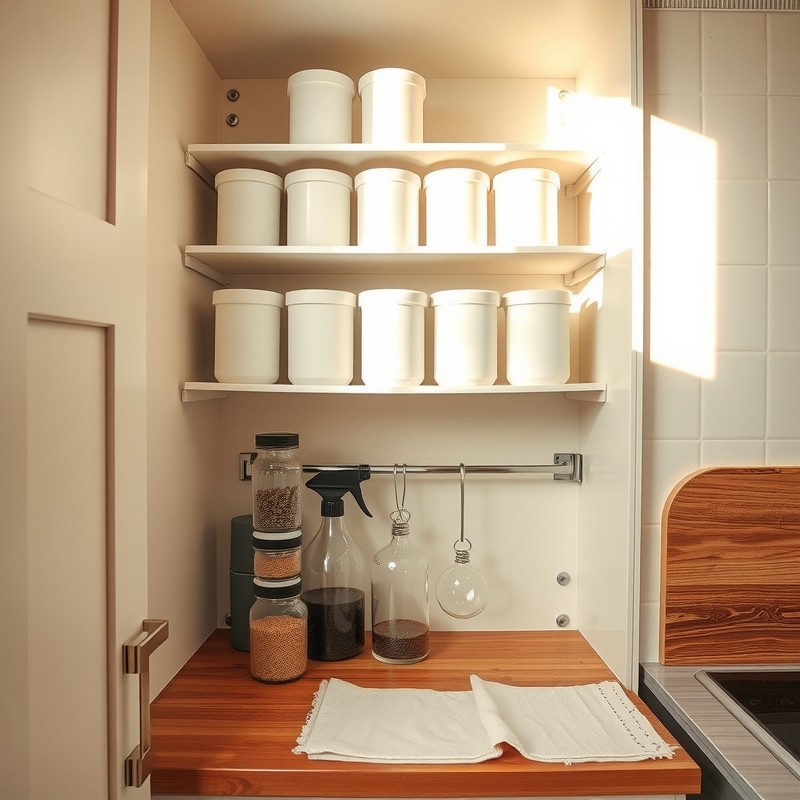
수납 (sunap) is the Korean art of storage — and it’s so central to Korean domestic life that there’s an entire TV genre dedicated to it. Shows like 신박한 정리 (roughly “Amazing Organization”) regularly pull millions of viewers who tune in to watch professional organizers transform cramped Korean apartments using 수납 principles. There’s no Western equivalent to this cultural obsession.
Walk into any Korean home goods store — Daiso, 모던하우스, or even the home section of a large 이마트 — and you’ll find an entire floor dedicated to stackable storage containers, drawer dividers, vacuum bags, door-mounted racks, and under-sink organizers. This isn’t a niche hobby. It’s how Korean families have adapted to living in apartments that average 25–33 pyeong (roughly 850–1,100 square feet) for a family of four.
The 3 Pillars of Korean 수납
- 수직 수납 (vertical storage): Stack everything upward. Korean kitchens use tiered shelving inside cabinets, stackable containers for 반찬 (side dishes), and wall-mounted magnetic racks. Without this step, a Korean-sized kitchen is nearly unusable.
- 계절 수납 (seasonal storage rotation): Korean households rotate possessions by season — winter bedding gets vacuum-sealed in spring, summer clothes replace winter coats in the wardrobe. This is the opposite of KonMari’s “once and done” approach. Korean organization is a cycle, not a single event.
- 구역 수납 (zone storage): Every family member’s belongings have a designated zone. Children’s school supplies, father’s work bags, grandmother’s medicine — all have a fixed home, so anyone can find anything without asking.
Marie Kondo’s method doesn’t address any of this. KonMari focuses on reducing what you own. 수납 focuses on engineering where things live. In a Korean household, getting rid of your winter blankets because they don’t spark joy in July would be considered wasteful — you’ll just need to buy them again in November.
Korean vs KonMari: 5 Key Differences Compared

Most comparison guides oversimplify this as “minimalism vs. maximalism,” but the real differences are more specific and more practical than that. Here’s exactly where Korean and KonMari organization diverge.
1. Decision Criteria: Logic vs. Emotion
KonMari asks: “Does this spark joy?” Korean organization asks: “Will someone in this household need this within the next 12 months?” One is personal and emotional. The other is practical and family-oriented. Neither is wrong, but they produce very different results — especially in households with children, elderly parents, or roommates who aren’t interested in holding each sock to check for joy.
2. Frequency: One-Time Event vs. Seasonal Cycle
The KonMari method is designed as a single, dramatic decluttering marathon — you do it once, properly, and the transformation is supposed to last. Korean organization operates on a seasonal rhythm, with major reorganizations happening at least twice a year (spring and fall), plus a thorough deep clean before 설날 (Seollal, Lunar New Year) and 추석 (Chuseok, harvest festival). Without seasonal rotation, Korean households simply can’t function in small spaces.
3. What Gets Discarded
KonMari encourages discarding anything that doesn’t spark joy — including functional items. Korean organization culture has a strong 아까운 (agga-un) instinct, meaning “it’s wasteful to throw away something still useful.” Korean households are far more likely to repurpose, pass items to relatives, or store them for future seasons than to discard functional possessions.
4. Storage Tools
KonMari famously uses the folding method — standing clothes upright in drawers. Korean organization relies heavily on 외부 도구 (external tools): vacuum compression bags, labeled stackable containers, door-mounted shoe racks, tension rods inside cabinets, and the iconic Korean 붙박이장 (built-in floor-to-ceiling wardrobe system). A Korean organizer’s toolkit is far more hardware-intensive.
5. Aesthetic Goal
KonMari aims for visible emptiness — clear counters, minimal shelves, the feeling of space. Korean organization aims for hidden fullness — the apartment looks minimal, but open any closet and you’ll find a perfectly engineered Tetris game of containers, each labeled and stacked.
| Dimension | Korean 수납 Method | Marie Kondo (KonMari) | Hybrid Approach |
|---|---|---|---|
| Core question | “Where does this belong?” | “Does this spark joy?” | Both — joy check, then assign a zone |
| Frequency | Seasonal (2–4× per year) | One-time event | Annual KonMari + seasonal rotation |
| Ideal space | Small apartments (under 1,000 sq ft) | Any size, best for larger homes | Medium apartments |
| Family suitability | Excellent — zone-based for each member | Moderate — requires everyone’s buy-in | Good — zones with personal joy criteria |
| Cost to start | Around $30–80 in storage containers | Free (no tools required) | Around $15–40 for basics |
| Waste generated | Low — repurpose and rotate | High initial purge — EPA estimates textiles alone generate 17 million tons of waste annually | Moderate — mindful discarding |
| Maintenance effort | Moderate — requires seasonal discipline | Low after initial marathon | Low-moderate |
| Emotional payoff | Pride in efficiency and family harmony | Joy, lightness, emotional release | Both — clarity plus functionality |
Kitchen Organization: A Side-by-Side Look
The kitchen reveals these differences most sharply. Here’s how each approach handles the same space:
| Kitchen Challenge | Korean 수납 Solution | KonMari Solution |
|---|---|---|
| Spice storage | Uniform labeled containers on tiered rack inside cabinet | Keep only spices that spark joy; discard expired ones |
| Tupperware chaos | Stackable 반찬통 (side dish containers) in matching sets, lids stored vertically | Discard mismatched lids, keep only what you actually use |
| Seasonal cookware | Hot pot equipment stored high in summer, 삼겹살 grill plate moved to accessible shelf in winter | If the hot pot doesn’t spark joy, let it go |
| Under-sink area | Tension rod for hanging spray bottles, stackable bins for cleaning supplies | Reduce cleaning products to essentials only |
The Verdict: Korean Organization or Marie Kondo?
There is no universal winner — but there is a clear winner for your specific situation. After comparing every dimension, here’s the honest breakdown:
Choose Korean 수납 organization if:
- You live in a small apartment (under 1,000 square feet)
- You share your home with family, children, or roommates
- You experience distinct seasons and need to rotate wardrobes and bedding
- You find the “spark joy” question frustrating for practical items
- You prefer investing in storage solutions over discarding possessions
Choose KonMari if:
- You’re overwhelmed by sheer volume of stuff and need an emotional framework to let go
- You live alone or with a willing partner
- Your home has adequate closet and storage space already
- You want a one-time transformation rather than an ongoing routine
- You’re moving, downsizing, or starting fresh in a new space
The smartest approach — and what many Korean organizers actually recommend on shows like 신박한 정리 — is a hybrid. Start with a modified KonMari purge to shed things you genuinely don’t need. Then apply Korean 수납 engineering to everything that remains. You get the emotional clarity of KonMari plus the spatial efficiency of Korean storage culture. This hybrid is the clear winner for most readers — it combines the emotional relief of decluttering with the practical reality that you still need your winter blankets in July, even if they don’t make your heart sing.
Korean-Style Stackable Storage Containers with Lids
The backbone of any 수납 system — uniform, stackable containers transform chaotic closets into that satisfying Korean wardrobe-grid look. Start with one shelf and you’ll end up redoing every cabinet in the house.
(paid link)
Check Availability & Reviews →
Vacuum Storage Bags for Seasonal Bedding
This is the single tool that makes Korean seasonal rotation possible. Compress winter duvets to a fraction of their size — suddenly that tiny closet shelf holds an entire season’s worth of bedding.
(paid link)
See Why Reviewers Love These →
Frequently Asked Questions
What happens if I use KonMari in a tiny apartment?
You’ll reduce clutter, but you may not solve your actual storage problem. KonMari was designed in Japan, where apartments are also small — but its focus on discarding rather than engineering storage means you might end up with fewer items that still don’t have logical homes. Combining a KonMari purge with Korean 수납 container systems gives you the best of both worlds in tight spaces.
Is Korean home organization only for people with families?
No — 수납 principles work for any household size. Solo dwellers in Korean studio apartments (원룸, one-rooms) are some of the most aggressive 수납 practitioners, because they have the least space to work with. The zone system simply means assigning clear areas for work, sleep, cooking, and storage — which matters even more when all four zones share one room.
Can I combine Marie Kondo and Korean organization methods?
Yes, and many Korean professional organizers already do exactly this. The recommended order is: first, KonMari-style emotional declutter to reduce volume. Second, Korean 수납 engineering to maximize how you store what remains. Third, build a seasonal rotation schedule so you repeat the process naturally twice a year instead of waiting until things feel overwhelming again.
How much does it cost to set up a Korean-style organization system?
Around $30–80 for a single room, depending on how many containers and tools you need. The essentials are uniform stackable containers (prices vary by size and brand), vacuum compression bags for seasonal items, and a few tension rods or door-mounted racks. Korean organizers prioritize buying matching, uniform containers — mismatched storage defeats the purpose of stackable efficiency.
What is 정리정돈 (jeongri jeongdon) and how is it different from KonMari?
정리정돈 means “organize and put in order” — it’s the Korean phrase for systematic tidying. Unlike KonMari’s emotional framework, 정리정돈 is taught to Korean children from elementary school as a structured discipline similar to the 5S methodology used in manufacturing: sort, set in order, shine, standardize, sustain. It’s a habit, not a one-time event.
Key Takeaways
- Korean organization (수납) focuses on where things belong, while Marie Kondo focuses on whether things deserve to stay — both valid, but they solve different problems
- Korean homes look minimal but are densely organized inside every closet and cabinet — the goal is hidden fullness, not visible emptiness
- Seasonal rotation is the biggest Korean concept KonMari misses entirely — Korean families reorganize at least twice a year, preventing the slow creep of clutter that makes you need a dramatic purge
- The hybrid method is the strongest approach for most people: KonMari emotional declutter first, then Korean 수납 storage engineering for everything that stays
- Korean 수납 costs around $30–80 to start (containers, vacuum bags, tension rods), while KonMari costs nothing but produces more waste upfront
- The 아까운 (agga-un) mindset — “it’s wasteful to discard useful things” — is the cultural reason Korean organization favors repurposing and rotating over purging
Here’s your one small start: pick a single drawer tonight — your kitchen utensil drawer or your sock drawer. Empty it completely, then put everything back in upright rows with the most-used items at the front. That’s your first taste of 수납. Once you see how satisfying one engineered drawer feels, you won’t be able to stop.
This article contains affiliate links. If you purchase through these links, we may earn a small commission at no extra cost to you. We only recommend products we genuinely believe in.
You Might Also Like
- Korean Diet Jelly: 5 Types Compared (1 Clear Winner)
- 7 Korean Skincare Products That Actually Work (2026)
- 7 Korean Beauty Tips for Glowing Skin Nobody Shares
Related Korean Living Guides
- Korean Tips For Homeowners