A friend visiting Seoul last spring grabbed my arm outside Olive Young in Gangnam and whispered, “Why does literally everyone here have perfect skin?” She’d spent hundreds of dollars on serums back home. She owned a LED mask. She’d tried retinol, vitamin C, and niacinamide — sometimes all in the same week. But after two days in Korea, she realized she’d been solving the wrong problem entirely. The difference isn’t one miracle product — it’s a sequence of 7 small, deliberate habits that Korean women treat like brushing their teeth. Most of these habits cost nothing. Some of them will feel counterintuitive. And almost none of them show up in the English-language beauty articles you’ve been reading.
What follows isn’t another generic “10-step routine” post. This is the version you’d get if you sat down with a Korean friend over iced Americanos and asked, “No, but what do you actually do?”
The Night Before Your Skin Glows: Korean Beauty Tips for Glowing Skin Start at the Sink
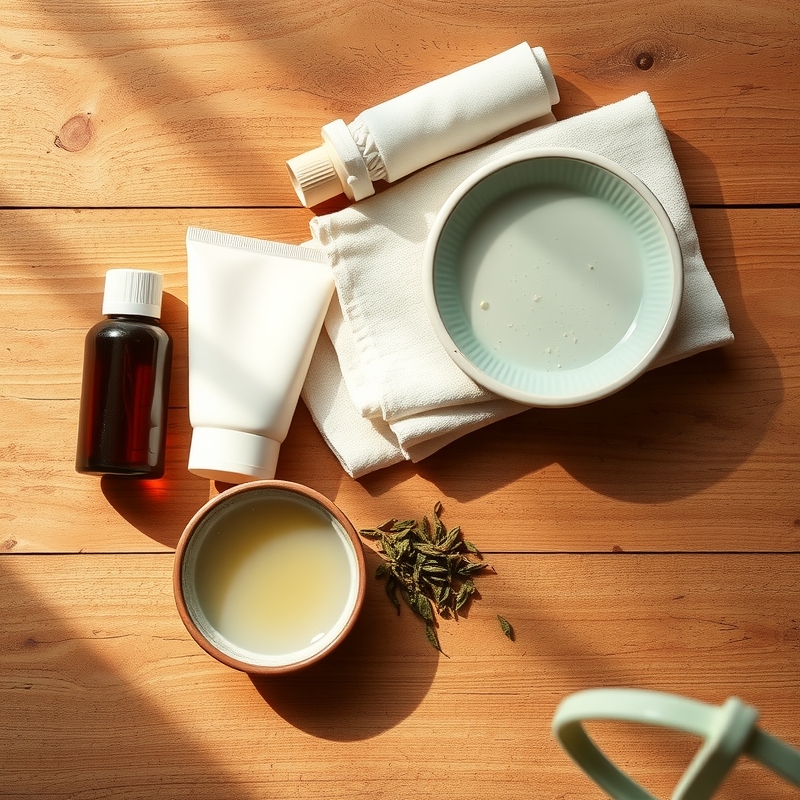
In Korea, skincare doesn’t begin with what you put on — it begins with what you take off. Most Western routines treat cleansing as a single, thirty-second step. Foam up, rinse, move on. In Seoul, that would be like washing dishes with cold water and no soap — technically you tried, but nothing’s actually clean.
The Korean approach uses double cleansing — an oil-based cleanser first to dissolve makeup, sunscreen, and sebum, followed by a water-based cleanser to clear what’s left. Oil binds to oil, which is why a foam cleanser alone leaves behind an invisible film of sunscreen and oxidized sebum that blocks everything you apply afterward.
Here’s what most blogs miss: the order matters less than the temperature. Korean dermatologists generally recommend lukewarm water — not hot, not cold. Hot water strips your skin’s lipid barrier. Cold water doesn’t open pores enough to release debris. Lukewarm is the sweet spot.
The 2-Minute Double Cleanse Sequence
- Oil cleanser on dry skin — massage gently for 60 seconds (set a timer; most people quit at 20 seconds)
- Emulsify with lukewarm water — the oil turns milky, lifting dissolved impurities
- Water-based gel or foam cleanser — 30 seconds maximum, no scrubbing
- Pat dry with a clean towel — rubbing creates micro-friction that irritates skin over time
Without the oil step, you’re layering serums on top of yesterday’s sunscreen. That expensive essence you bought? It’s sitting on a barrier it can’t penetrate.
COSRX Low pH Good Morning Gel Cleanser
This is the second-step cleanser you’ll find in nearly every Korean bathroom — a low-pH formula that cleans without stripping, so your skin is prepped to actually absorb what comes next.
(paid link) See Why Reviewers Love This →
The 7 Real Korean Beauty Tips for Glowing Skin — In the Order That Matters
Korean skincare isn’t about having more products — it’s about applying fewer products in a precise sequence that lets each one actually work. Think of it like cooking: the same ingredients in a different order produce a completely different dish. Toner before essence, essence before serum, serum before moisturizer — each layer is thinner than the next, and skipping ahead means the thicker product blocks the lighter one from absorbing.
1. The “7-Skin Method” for Deep Hydration
Most people apply toner once. In Korea, there’s a technique called the 7-skin method — patting on up to seven thin layers of a hydrating toner instead of one. You don’t need all seven. Even 3 layers of a lightweight toner delivers more hydration than one thick layer of moisturizer, because thin layers absorb fully while thick layers just sit on the surface.
Start with 3 layers tonight. Pat — don’t wipe — each layer in with your palms. Your skin should feel plump and slightly tacky before you move to the next step. If it feels wet, you’re using too much per layer.
2. Essence: The Step the West Skipped
Walk into any Korean woman’s bathroom and you’ll find an essence — that watery, almost invisible liquid that sits between toner and serum. Western routines jumped from toner straight to serum, missing the bridge that makes everything else work better. Essence delivers active ingredients in a lighter vehicle than serum, prepping skin cells to receive the heavier treatments that follow.
The most popular category in Korea right now? Fermented essences. Fermentation breaks active ingredients into smaller molecules, which means they penetrate deeper. It’s the same principle behind why kimchi is more nutrient-bioavailable than raw cabbage.
COSRX Advanced Snail 96 Mucin Power Essence
This is the essence that started the global K-beauty obsession — a lightweight, deeply hydrating formula that layers beautifully under any serum or moisturizer. You’ll feel the difference in texture within days.
(paid link) Check Availability & Reviews →
3. Sunscreen Is Not Optional — It’s the Entire Foundation
Here’s where Korean beauty culture diverges most sharply from the West. In Korea, sunscreen isn’t the last step you reluctantly add. It’s considered the single most important skincare product — more important than any serum, essence, or cream combined. Korean dermatologists generally agree that without daily SPF 50+ PA++++ protection, every other product in your routine is fighting a losing battle against UV-induced collagen breakdown.
The PA++++ rating system, widely used in Korea and Japan, measures UVA protection — the rays that cause aging, not just burns. Most American sunscreens don’t even display a PA rating. Korean sunscreens also tend to have lighter, more elegant textures — no white cast, no greasy residue — which is why people actually wear them daily instead of skipping them.
4. Sheet Masks: Not a Treat, a Tool
In the West, sheet masks are a Friday-night spa indulgence. In Korea, they’re a weeknight maintenance tool — like flossing. Most Korean women use sheet masks 2-3 times per week as a concentrated hydration boost, not a special occasion. At around $1-2 per mask at any Korean convenience store (prices vary by brand), they’re cheaper per use than most serums.
The key detail most people miss: leave a sheet mask on for 15-20 minutes maximum. After that, the mask begins to dry and actually pulls moisture back out of your skin. More is not more.
5. Sleep Habits That Show on Your Face
Korean beauty culture treats sleep as skincare. This isn’t metaphorical. Sleeping on a silk or satin pillowcase reduces friction that causes sleep creases, and Korean women widely prefer sleeping on their backs to avoid pressing product into the pillow. A sleeping mask — a thicker, occlusive layer applied as the final nighttime step — locks in all previous layers while you sleep.
6. The Inside-Out Approach: What You Eat Shows
Ask any Korean grandmother about good skin and she won’t mention serums. She’ll talk about food. The Korean approach to glowing skin treats diet as the first layer of skincare — bone broth soups like seolleongtang, fermented foods like kimchi, and collagen-rich pig’s feet (jokbal) are considered beauty foods, not just meals.
This isn’t folk wisdom. Fermented foods support gut microbiome diversity, and emerging research continues to explore the connection between gut health and skin inflammation. Korean women also drink significantly more water and green tea than coffee — a small shift that shows up in skin hydration over weeks, not days.
7. The “Less Makeup, More Skin” Philosophy
Korean beauty trends have been moving away from full-coverage foundation for years. The goal isn’t to cover skin — it’s to make skin good enough that you don’t need to. The “glass skin” and “honey skin” trends aren’t about a product — they’re about the cumulative result of a consistent routine that prioritizes hydration and protection over correction.
Instead of a 45-minute full-face routine, most Korean women on a typical workday apply sunscreen, a light cushion compact, and maybe a lip tint. That’s it. The skincare routine at night does the heavy lifting so the morning can stay simple.
Korean Beauty Tips for Glowing Skin: How Methods Compare
Not every approach works equally well, and the differences matter more than most beauty blogs admit. Here’s an honest comparison of three common paths to glowing skin — the shortcuts, the Korean approach, and the clinical route — so you can see exactly where the value sits.
| Feature | Western Quick Fix | Korean 7-Step Routine | Dermatologist Clinic Treatments |
|---|---|---|---|
| Daily Time Investment | 5 minutes | 15-20 minutes | Monthly 60-90 min visits |
| Monthly Cost (approx.) | $20-40 | $30-60 | $200-500+ |
| Visible Results Timeline | Immediate (cosmetic only) | 2-4 weeks (cumulative) | 1-3 sessions |
| Long-Term Skin Health | Minimal improvement | Significant improvement | Targeted improvement |
| Hydration Depth | Surface-level | Multi-layer deep hydration | Varies by treatment |
| UV Protection Emphasis | Optional / afterthought | Core foundational step | Recommended alongside |
| Accessibility | Any drugstore | Online or K-beauty retailers | Licensed clinic only |
| Best For | Minimal-effort seekers | Consistent daily improvers | Targeted concerns (scars, pigmentation) |
The Korean routine sits in the sweet spot: significantly better results than the quick-fix approach, at a fraction of the clinical cost. It does require consistency — but so does anything that actually works.
Innisfree Green Tea Seed Serum
If you’re building a Korean routine from scratch, this lightweight serum bridges the hydration gap between essence and moisturizer — the step that makes the whole sequence click into place.
(paid link) View Current Price →
Frequently Asked Questions
What happens if I skip double cleansing and just use one cleanser?
You leave behind a layer of oxidized sunscreen and sebum that blocks absorption of every product applied afterward. A single water-based cleanser cannot dissolve oil-based impurities. Over time, this invisible buildup contributes to clogged pores and dull skin texture — exactly the problems most people buy expensive serums to fix.
How long does it take to see results from a Korean skincare routine?
Most people notice improved hydration and skin texture within 2-4 weeks of consistent use. Deeper changes like reduced hyperpigmentation or fine lines take 2-3 months. The key word is consistent — using the routine three times and switching products won’t show results. Korean skincare rewards patience more than product-hopping.
Can I follow Korean beauty tips for glowing skin if I have sensitive or acne-prone skin?
Yes — the Korean approach is actually gentler than most Western routines because it emphasizes hydration over harsh actives. Start with fragrance-free versions of each step. Skip sheet masks with alcohol or heavy fragrance. The layering philosophy works for all skin types because you control which ingredients go into each layer.
Do I really need to spend a lot of money on K-beauty products?
No — many of the most effective Korean skincare products cost under $15. Korea’s beauty market is extremely competitive, which drives quality up and prices down. Brands like COSRX, Innisfree, and Etude House offer pharmacy-level formulations at drugstore prices. The technique and consistency matter far more than the price tag.
What’s the difference between “glass skin” and “honey skin”?
“Glass skin” refers to a clear, almost transparent-looking complexion with a reflective quality, while “honey skin” describes a warm, dewy glow with slightly more golden depth. Both are achieved through deep hydration layers rather than a specific product. Glass skin leans cooler and more luminous; honey skin feels warmer and more natural. The routine to achieve either is nearly identical — the difference is mostly in undertone and finish preference.
Key Takeaways
- Double cleansing is the most impactful single change you can make — it removes the invisible barrier that blocks every product you apply afterward
- Korean beauty tips for glowing skin prioritize sequence over products — applying thinner layers before thicker ones lets each step absorb fully
- Sunscreen with PA++++ is the non-negotiable foundation of every Korean skincare routine, valued above any serum or treatment
- The 7-skin method (layering toner 3-7 times) delivers deeper hydration than one thick coat of moisturizer, at no extra cost
- Sheet masks are a 2-3x weekly maintenance tool in Korea, not a luxury — but leaving them on past 20 minutes reverses the benefit
- Diet, sleep, and hydration are treated as the first layers of skincare — fermented foods and bone broth soups are considered beauty staples, not just meals
Tonight, try just one thing: double cleanse. Use any oil (even plain olive oil works in a pinch) to massage your face for 60 seconds, rinse, then follow with your usual cleanser. Touch your skin afterward — that’s what “actually clean” feels like, and it’s the foundation everything else is built on.
This article contains affiliate links. If you purchase through these links, we may earn a small commission at no extra cost to you. We only recommend products we genuinely believe in.
You Might Also Like
- 9 Korean Vegan Recipes That Were Never Meant for Vegans
- Korean DIY Skincare vs Store-Bought: 5 Hidden Differences
- 7 Korean Dry Skin Steps Most Routines Skip (2026)