A friend visiting my Seoul apartment for the first time stood in the doorway and said, “Wait — this is a studio? It feels like a one-bedroom.” It’s 180 square feet. The secret wasn’t expensive furniture or clever interior design — it was 7 Korean home organization rules that make small spaces function like rooms twice their size. These aren’t Instagram trends. They’re survival strategies that millions of Koreans have refined over decades of living in some of the world’s most compact urban housing.
Table of Contents
- Why Korean Home Organization for Small Spaces Is Different
- Before You Start: What You’ll Need
- The 7 Korean Organization Rules for Small Spaces
- Korean Small Space Storage: Method Comparison
- Frequently Asked Questions
- Key Takeaways
Why Korean Home Organization for Small Spaces Is Different
Korean home organization isn’t about aesthetics — it’s about making 15–25 pyeong (roughly 500–830 sq ft) work for an entire family. Most Korean apartments, especially in Seoul, are significantly smaller than their Western counterparts. A typical 원룸 (wonroom, studio apartment) — the standard for young professionals — can be as compact as 5–10 pyeong (165–330 sq ft). Korean housing culture evolved around this reality, not despite it.
This isn’t new. Korea’s rapid urbanization packed millions into dense city housing, and the culture adapted. The concept of 정리정돈 (jeongni jeongdon, “organizing and putting things in order”) isn’t just a hobby — it’s something Korean children learn from elementary school, where students clean and organize their own classrooms daily. That habit carries into adult life.
What makes the Korean approach different from, say, the Japanese KonMari method? Korean organization emphasizes SYSTEMS over sentimentality. While KonMari asks “does this spark joy?”, Korean organization asks “does this have a designated home within arm’s reach?” The focus is ruthless spatial efficiency — every cubic inch has a job.
Walk into any Korean home and you’ll notice: shoes lined up perfectly at the entrance in a 신발장 (sinbaljang, shoe cabinet), clear containers stacked uniformly in the kitchen, and almost nothing sitting on the floor. The floor in Korean homes is sacred — it’s where you sit, eat, and often sleep on a 이불 (ibul, floor mattress). Clutter on the floor doesn’t just look messy; it physically disrupts daily life.
Before You Start: What You’ll Need for Korean Home Organization
The most important Korean organization rule happens before you buy a single container: 비우기 (biugi), which means “emptying.” Korean organization experts — and there’s an entire industry of them in Korea, called 정리 컨설턴트 (jeongni keonsulteonteu) — always start by removing everything from a space before reorganizing it.
Here’s your setup list:
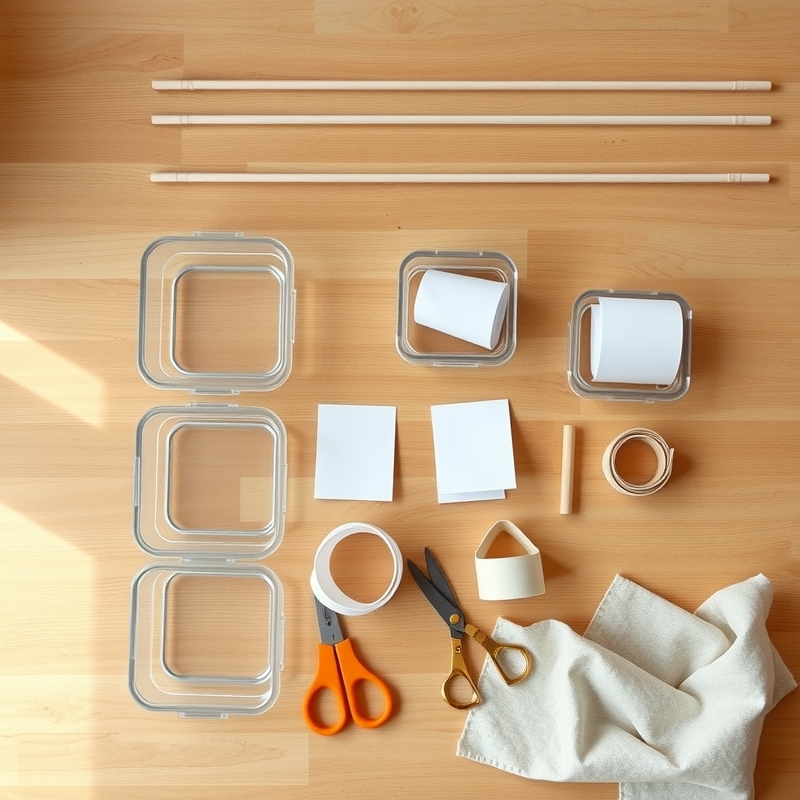
- 3 large bags or boxes — labeled 버리기 (beorigi, “throw away”), 나누기 (nanugi, “give away”), and 보관 (bogwan, “keep”)
- Clear stackable containers — Koreans overwhelmingly prefer transparent containers so contents are visible without opening
- Tension rods — the unsung hero of Korean small-space storage (more on this below)
- Over-door hooks and organizers — Koreans treat door backs as prime storage real estate
- Labels or a label maker — every container gets labeled in Korean households
- One free afternoon — the Korean approach is to do one complete room or zone at a time, not scattered 10-minute sessions
Research on household clutter and stress has consistently linked disorganized home environments with elevated cortisol levels. The Korean biugi method addresses this head-on: by physically emptying a space first, you break the mental paralysis of “where do I even start?” and confront the actual volume of what you own.
One critical mindset shift: Koreans don’t organize to make things look pretty. They organize to make the NEXT action faster. Every item is stored where it will be USED, not where it looks best. This distinction changes everything.
The 7 Korean Home Organization Rules for Small Spaces
Rule 1: 비우기 (Biugi) — Empty Before You Organize
Never organize clutter — eliminate it first. Korean organization starts with a brutal edit. The typical Korean household does a seasonal deep-clean called 대청소 (daecheongso, “big cleaning”) where every closet, cabinet, and drawer is emptied completely.
The test Koreans use: if you haven’t touched it in one full cycle of seasons (봄여름가을겨울 — spring through winter), it goes. Not “maybe I’ll need it someday” — it goes. This is more aggressive than most Western decluttering advice, but in a 200-square-foot studio, there’s no room for “maybe.” Most food blogs and lifestyle sites tell you to start buying organizers. Koreans start by filling trash bags.
Rule 2: Go Vertical — 위로 (Wiro, “Upward”)
Korean small-space organization treats walls and vertical space as the primary storage zone, not shelves and floor space. In a typical Korean studio, you’ll see:
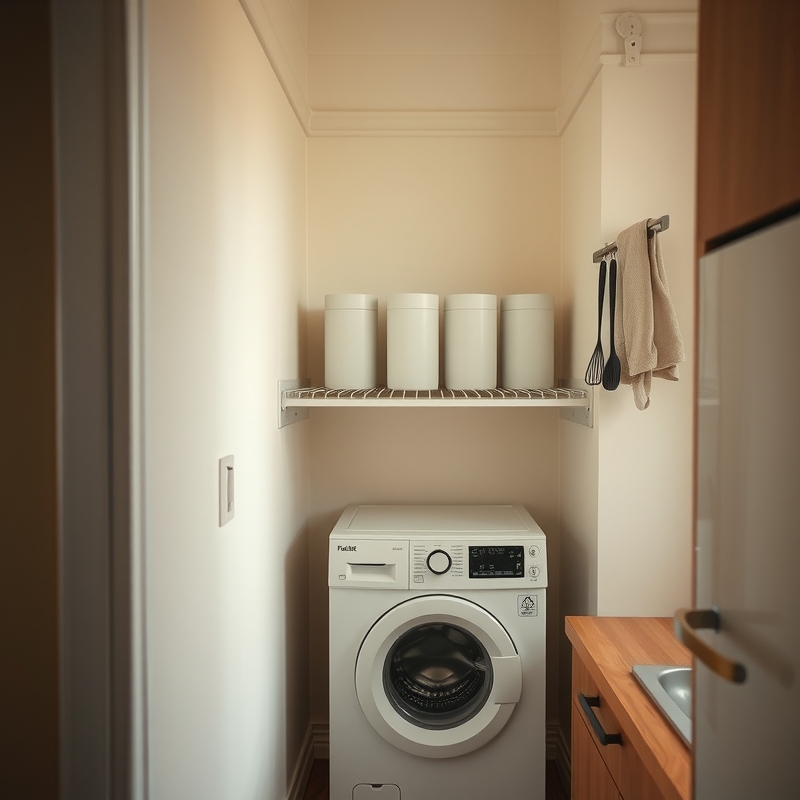
- Tension rod shelves installed above the washing machine
- Wall-mounted magnetic strips in the kitchen for knives and utensils
- Stacking shelf inserts that double cabinet capacity
- Pegboards behind doors for accessories and cleaning tools
The rule is simple: if it can go up, it goes up. Floor space is for living. Wall space is for storage. Most Korean studios have 8–9 foot ceilings, which means you’re wasting 3–4 vertical feet if you’re only using standard-height furniture. Instead of a 45-minute trip to a furniture store for a new shelving unit, a $10 tension rod creates an instant shelf in under 5 minutes.
Rule 3: Every Door Is Storage — 문 뒤 (Mun Dwi, “Behind the Door”)
Koreans treat the back of every single door as a free wall. Bathroom doors hold hair tools and toiletries in over-door organizers. Closet doors hold scarves, belts, and bags. Even the inside of kitchen cabinet doors gets adhesive hooks for measuring cups and pot lids.
In a small Korean apartment, door-back storage can add the equivalent of an extra shelf unit — without taking a single inch of floor space. Count the doors in your home right now. Each one is storage you’re not using. That’s the kind of wasted space that makes Koreans wince.
Rule 4: Clear Containers, Uniform Sizes — 통일 (Tongil, “Uniformity”)
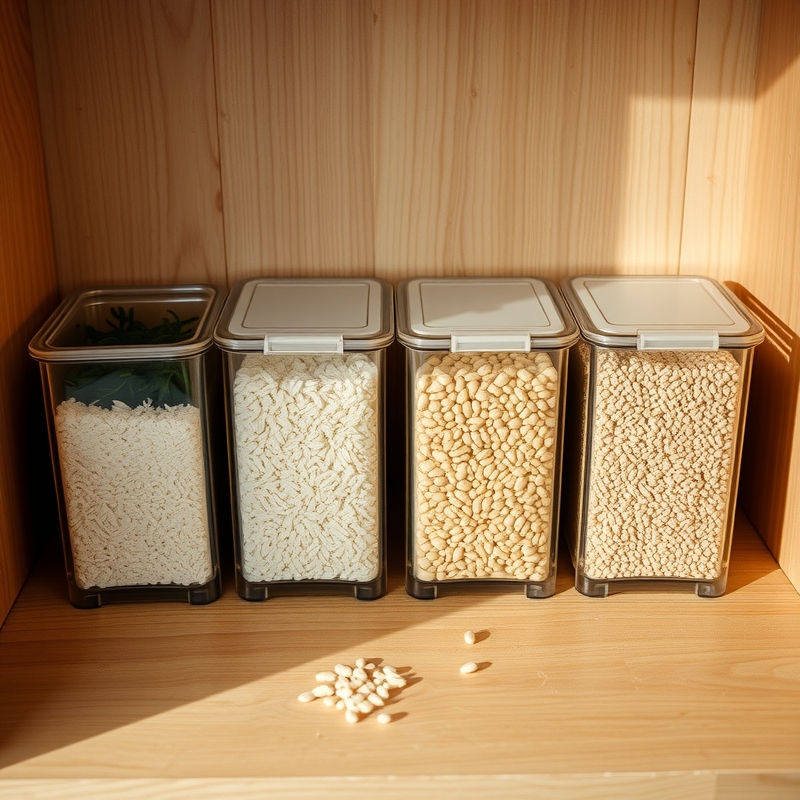
Mismatched containers waste more space than most people realize — uniform, square containers pack tighter and can increase usable cabinet space by roughly a third compared to random round tubs. Walk into any Korean kitchen and you’ll see rows of identical clear containers for rice, grains, dried seaweed, and 반찬 (banchan, side dish) ingredients.
The Korean logic: square or rectangular containers eliminate wasted corner space. Clear walls mean you never open a container just to check what’s inside. Same-size containers stack without wobbling. This isn’t perfectionism — it’s engineering for micro-spaces. The upfront cost of replacing mismatched containers pays back in years of daily efficiency.
Rule 5: 신발장 (Sinbaljang) — The Sacred Shoe Cabinet
In Korean culture, shoes never pass the entryway — and the shoe cabinet is the first piece of furniture Koreans invest in for a new home. This isn’t just about cleanliness (though Koreans are serious about not tracking outdoor dirt onto the 온돌 (ondol) heated floors where they sit and eat). It’s about creating a psychological boundary between outside chaos and indoor order.
Even in the tiniest studios, Koreans use slim rotating shoe racks or over-door shoe organizers to keep every pair contained at the entrance. A cluttered entryway sets the tone for the entire home. Research on home environments and behavior suggests that the first visual impression of a space significantly influences how orderly we keep the rest of it.
Rule 6: Multi-Use Furniture Only — 다용도 (Dayongdo, “Multi-Purpose”)
If a piece of furniture serves only one purpose, it probably doesn’t belong in a small Korean apartment. Common Korean multi-use solutions include:
- 수납침대 (sunapchimdae, storage bed) — beds with built-in drawers underneath are standard, not luxury
- Folding dining tables — wall-mounted or foldable tables that disappear after meals
- Ottoman storage — seating that opens to store blankets or seasonal clothing
- Clothing racks with shelves — replaces both a closet rod AND a dresser in one footprint
Before buying any furniture for a small space, Koreans apply the 다용도 test: “What ELSE can this do?” If the answer is “nothing,” they keep looking. That single-purpose side table? It needs to open up and store something. That decorative bench by the door? It better hold shoes inside.
Rule 7: The 5-Minute 정리 (Jeongni) Reset
Korean home organization isn’t a weekend project — it’s a 5-minute daily habit that prevents small spaces from falling apart. Most Korean households do a quick 정리 (jeongni, tidy-up) every evening: returning items to their designated spots, wiping surfaces, and resetting the space for tomorrow.
Without this daily reset, even the most perfectly organized small space devolves into chaos within a week. The 5-minute rule works because it’s too short to skip — and the results compound dramatically over time. Miss this step, and rules 1 through 6 slowly unravel. It’s the difference between a system that lasts and a one-time cleanup that fades.
Korean Small Space Storage: Method Comparison
Not all storage solutions deliver the same return in a small space. Here’s how the most popular Korean methods compare side by side:
| Feature | Tension Rod Shelving | Stackable Clear Containers | Over-Door Organizers |
|---|---|---|---|
| Typical Cost | Around $8–15 per rod | Around $20–35 for a set of 6–8 | Around $10–20 each |
| Space Gained | Creates an entirely new shelf where none existed | Increases existing cabinet capacity by roughly 30% | Uses otherwise wasted door-back space |
| Installation | No tools, no drilling — pressure fit in seconds | No installation needed — just place and stack | Hooks over door frame — no tools required |
| Best For | Above washing machines, inside closets, bathroom gaps | Kitchen pantry, fridge, bathroom cabinets | Bathrooms, closets, entryway shoe storage |
| Renter-Friendly | Yes — zero wall damage | Yes — fully portable | Yes — zero wall damage |
| Korean Popularity | Found in nearly every Korean studio apartment | Standard in Korean kitchens nationwide | Common in Korean bathrooms and entryways |
| Main Limitation | Needs two parallel walls — won’t work in open spaces | Higher upfront cost to replace all mismatched containers | Adds weight to door — check hinge strength first |
Best overall value: stackable clear containers. They cost slightly more than tension rods upfront, but they transform every single cabinet, shelf, and drawer in your home — not just spots between two walls. Most Korean organization experts recommend starting here and expanding to tension rods and door organizers next.
VTOPMART Airtight Clear Stackable Storage Containers
The same style of uniform, clear, square containers found in virtually every organized Korean kitchen. Square shape means zero wasted corner space — the exact reason Korean households ditched round tubs years ago.
(paid link) Check Availability & Reviews →
Expandable Tension Rod Shelf Organizer
Instant shelf, no drilling, fully renter-friendly. Install above your washing machine, inside a closet, or in a bathroom nook — the storage hack found in nearly every Korean studio apartment.
(paid link) See Why Reviewers Love This →
Frequently Asked Questions
What happens if I skip the 비우기 (emptying) step and just buy organizers?
You’ll end up organizing clutter instead of eliminating it. This is the single most common mistake. Korean organization experts call it 정리 착각 (jeongni chakgak, “the organization illusion”) — your space looks tidier for a week, then overflows again because you never reduced volume. Bins and baskets don’t create space. Removing things you don’t use creates space. Always empty and edit first.
How do Koreans organize small spaces without a built-in closet?
Koreans use open clothing racks with dust covers, plus vacuum-sealed bags for seasonal rotation. Many Korean studios don’t have built-in closets at all. Instead, a 행거 (haenggeo, standing clothing rack) combined with a fabric cover keeps clothes dust-free. Off-season items get vacuum-sealed and stored on high shelves or under the bed. The seasonal swap — done twice a year — keeps the active wardrobe small and accessible.
Is Korean home organization expensive to set up?
A full Korean-style organization system for a studio typically costs around $50–100 total. In Korea, 다이소 (Daiso) is the go-to store where most organization tools cost between $1–3 each. The Western equivalent is combining any dollar store for hooks and labels with one quality container set. The biggest investment is time spent on the initial biugi purge, not money spent on products.
What’s the biggest difference between Korean organization and Marie Kondo’s method?
Korean organization prioritizes spatial efficiency and daily systems over emotional attachment to objects. KonMari asks “does this spark joy?” The Korean approach asks “does this item have a designated functional spot, and can I reach it within 3 seconds during my daily routine?” Both methods reduce clutter effectively, but the Korean system is more practical for extremely small spaces where sentimentality becomes a spatial luxury.
How long does it take to fully organize a small apartment the Korean way?
Most Korean organization experts recommend one full weekend for the initial setup of a studio or one-bedroom. Day one is dedicated entirely to 비우기 — emptying and sorting. Day two is for setting up systems: installing tension rods, placing containers, labeling, and assigning every item a home. After that, the 5-minute daily 정리 reset keeps everything maintained indefinitely.
Key Takeaways
- Start with 비우기 (emptying), not shopping — Korean organization begins by removing everything from a space and ruthlessly editing before buying a single container.
- Korean apartments average 165–330 sq ft for studios, yet feel spacious because every organizational decision prioritizes function over aesthetics.
- Vertical space and door backs are free storage — tension rods and over-door organizers can add the equivalent of an entire extra shelf unit without touching your floor space.
- Uniform, clear, square containers increase usable cabinet space by roughly 30% compared to mismatched round containers — this is where Korean kitchens start.
- Multi-use furniture is non-negotiable in Korean small spaces — if a piece serves only one purpose, it fails the 다용도 (dayongdo) test and doesn’t earn its footprint.
- The 5-minute daily 정리 (jeongni) reset is what separates a one-time cleanup from a permanent system — without it, every other rule eventually falls apart.
Quick Reference: Korean Small Space Organization in Order
- 비우기 (Biugi) — Empty the space completely. Sort into throw away, give away, keep.
- 위로 (Wiro) — Install vertical storage: tension rods, wall hooks, stacking inserts.
- 문 뒤 (Mun Dwi) — Add over-door organizers to every door in your home.
- 통일 (Tongil) — Replace mismatched containers with uniform, clear, square ones.
- 신발장 (Sinbaljang) — Set up dedicated shoe storage at your entryway.
- 다용도 (Dayongdo) — Audit furniture — keep only pieces that serve 2+ purposes.
- 정리 (Jeongni) — Commit to 5 minutes every evening to reset your space.
Tonight, pick one door in your home — just one — and count what’s behind it. Nothing? That’s free storage you can set up with a $10 over-door organizer before bed. Start there. That’s exactly how Korean home organization for small spaces works: one small, specific change at a time, until your 500-square-foot apartment feels like it doubled overnight.
This article contains affiliate links. If you purchase through these links, we may earn a small commission at no extra cost to you. We only recommend products we genuinely believe in.
You Might Also Like
- Korean vs Marie Kondo: 5 Surprising Rules You’re Missing
- Korean Diet Jelly: 5 Types Compared (1 Clear Winner)
- 7 Korean Skincare Products That Actually Work (2026)
Related Korean Living Guides
- Korean Tips For Homeowners