A friend visiting Seoul once asked why her Korean host was up at 6 AM — not rushing, not stressed, just quietly moving through a series of small, deliberate steps before the day even started. By 7:30, breakfast was done, skin was prepped, and the apartment looked untouched. The Korean morning routine isn’t about doing more — it’s about doing 7 specific things in an order that makes the rest of the day almost effortless.
Most guides about Korean mornings focus on the 10-step skincare routine or picture-perfect breakfast spreads. The reality is simpler, faster, and far more practical than what you see on social media. What follows is what actually happens in most Korean households between 6 and 8 AM — the version nobody photographs because it’s just… Tuesday.
Why the Korean Morning Routine Starts the Night Before
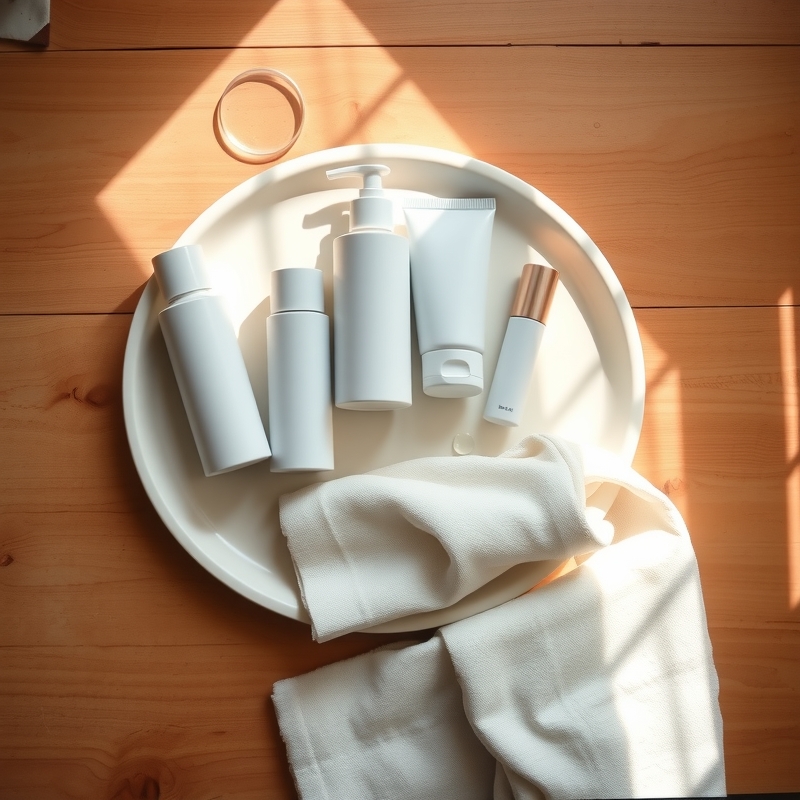
In Korean households, a smooth morning is built the evening before — not improvised at sunrise. This isn’t productivity hacking or meal-prep culture. It’s rooted in a deeper Korean concept: 준비 (junbi), which simply means preparation, but carries a cultural weight that goes beyond the English word.
Korean homemakers — and increasingly, young professionals living alone in 원룸 (one-room) studios across Seoul — treat the evening as setup time for tomorrow. Rice goes into the cooker with a timer set for 6:30 AM. The skincare products are already lined up in order on the bathroom shelf. Tomorrow’s outfit is draped over the chair, not crumpled in the closet.
This connects to the Korean cultural rhythm of 절기 (jeolgi, seasonal customs), where life follows natural preparation cycles. Just as 김장 (gimjang) — the annual kimchi-making season — requires days of prep for months of eating, the Korean morning is the harvest of last night’s small investments. Walk into any Korean convenience store at 7 AM and you’ll see office workers grabbing 삼각김밥 (triangle kimbap) they pre-decided on yesterday, not standing paralyzed by choices.
The practical takeaway: your Korean morning routine actually begins at 10 PM the night before. Set your rice cooker timer. Lay out your skincare in application order. Pick your clothes. These 5 minutes of evening prep buy you 20 minutes of calm the next morning.
Your Complete Korean Morning Routine, Step by Step
Step 1: Warm Water Before Anything Else
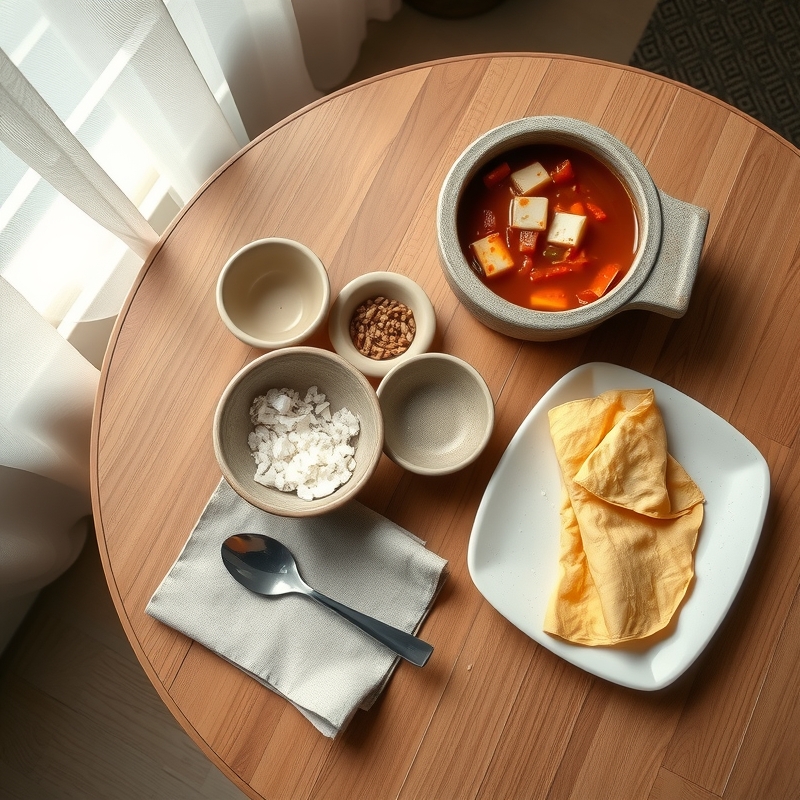
The first thing most Koreans reach for in the morning isn’t coffee — it’s a cup of warm water or 보리차 (boricha, roasted barley tea). In many households, a thermos of boricha sits on the counter overnight, ready for the morning’s first sip. The logic is simple: after 7-8 hours of sleep, your body is dehydrated, and warm liquid is gentler on an empty stomach than cold water or acidic coffee.
This isn’t a wellness trend — it’s a habit passed down from Korean grandparents who didn’t have coffee machines. The European Journal of Clinical Nutrition has noted that adequate morning hydration supports cognitive performance and metabolism throughout the day. Koreans just figured this out through common sense decades ago.
If boricha isn’t available near you, lukewarm water with a thin slice of lemon works. The point is warmth and hydration before stimulation. Coffee comes later — usually after breakfast, not instead of it.
Step 2: A Shortened Korean Morning Skincare Routine
Forget the 10-step routine — most Koreans use 3-4 products in the morning, and the whole process takes under 5 minutes. The elaborate routines you see on YouTube are evening rituals or weekend specials. Weekday mornings are about protection, not treatment.
Here’s the actual morning sequence in most Korean bathrooms:
- Gentle water rinse or mild cleanser — Many Koreans skip cleanser entirely in the morning, especially if they did a thorough double cleanse the night before. A splash of lukewarm water is enough to remove overnight sebum without stripping the skin’s moisture barrier.
- Toner (화장수, hwajangsu) — A hydrating toner patted on with hands, not a cotton pad. This takes about 15 seconds.
- Lightweight moisturizer or essence — Something that absorbs fast and sits well under sunscreen. No thick creams in the morning.
- Sunscreen (자외선차단제, jawoiseon chadanje) — This is the non-negotiable step. Korean dermatologists generally consider sunscreen the single most important anti-aging product, more effective than any serum or cream. Rain or shine, winter or summer, sunscreen goes on last before makeup.
The American Academy of Dermatology recommends broad-spectrum SPF 30 or higher for daily use — and Korean sunscreen formulations are widely recognized for achieving high protection without the heavy, white-cast finish that makes Western sunscreens unpopular for daily wear.
COSRX Aloe Soothing Sun Cream SPF 50+
This is the kind of sunscreen that disappears into skin — no white cast, no greasy layer, just lightweight protection that sits perfectly under makeup or on its own. The reason Korean sunscreens feel different is the formulation philosophy: daily wearability matters as much as SPF rating.
(paid link)
See Why Reviewers Love This →
Step 3: A Real Korean Breakfast in 15 Minutes
Korean breakfast isn’t a separate cuisine — it’s yesterday’s dinner, reheated and reassembled. This surprises most Westerners, who expect a distinct “breakfast food” category. In Korea, the line between meals barely exists. Rice, soup, and 2-3 small side dishes (반찬, banchan) are standard at 7 AM, just as they are at 7 PM.
A typical weekday Korean breakfast looks like this:
- Rice — already cooked by the timer-set rice cooker
- Soup — often 된장찌개 (doenjang-jjigae, fermented soybean paste stew) or 미역국 (miyeok-guk, seaweed soup), reheated from a batch made 2-3 days ago
- Kimchi — straight from the 김치냉장고 (kimchi refrigerator), a dedicated appliance found in most Korean homes
- One protein — a fried egg, leftover grilled fish, or 계란말이 (gyeran-mari, rolled egg omelette)
- One vegetable — 시금치나물 (sigeumchi-namul, seasoned spinach) or 콩나물 (kongnamul, bean sprouts)
Instead of a 45-minute cooking session, this takes about 15 minutes — because the soup was batch-cooked, the banchan were prepped over the weekend, and the rice cooker did its job overnight. The only thing made fresh is the egg.
Step 4: The 5-Minute Apartment Reset
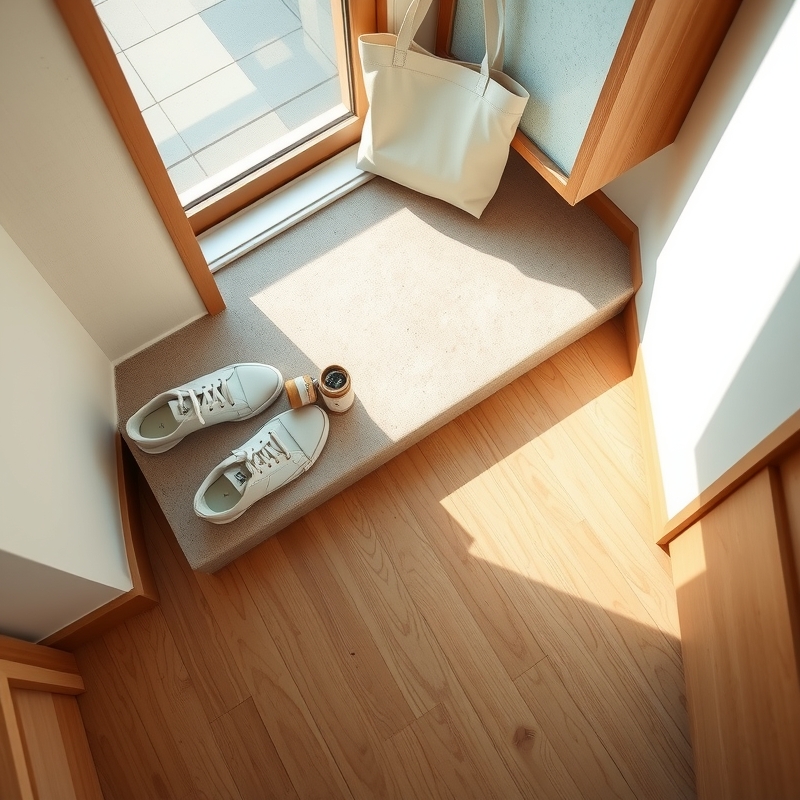
Before leaving home, most Koreans spend about 5 minutes tidying — not deep cleaning, just resetting surfaces. Dishes from breakfast go immediately into the drying rack (dishwashers are less common in Korea than in Western kitchens). The bathroom counter gets wiped down. Shoes are aligned at the entryway.
This isn’t perfectionism — it’s a practical response to small living spaces. When your entire apartment is 33 square meters (around 355 square feet), one messy corner makes the whole place feel chaotic. Korean interior culture emphasizes 정리정돈 (jeongni-jeongdon) — organized tidiness — not as an aesthetic choice but as a survival strategy for compact spaces.
Step 5: Getting Dressed — Function Over Fashion
Korean weekday dressing follows an unspoken rule: look put-together without looking like you tried. For most office workers, this means a small rotation of neutral, well-fitted basics. The concept of 꾸안꾸 (kku-an-kku) — short for “꾸민 듯 안 꾸민 듯,” meaning “styled as if unstyled” — describes this perfectly.
What this looks like in practice: a clean pair of trousers, a simple knit or blouse, and one accessory. Hair is usually styled simply — many Korean women keep a heated brush near the door for a quick 2-minute touch-up. The goal is consistency, not variety.
Step 6: Commute Fuel — Coffee on the Way
Coffee is a commute ritual, not a breakfast companion, in Korean morning culture. Walk past any Seoul subway station between 7:30 and 8:30 AM and you’ll see a line at the 편의점 (convenience store) coffee machine or the nearest 카페 (cafe). An iced Americano — yes, even in January — costs around 1,500-2,000 won (roughly $1.10-$1.50) from a convenience store, or 4,000-5,000 won ($3-$4) from a cafe chain.
The key difference: Koreans tend to drink coffee after eating, not on an empty stomach. This isn’t just cultural preference — consuming coffee after a meal, rather than before, may reduce the likelihood of stomach irritation, which is why many Korean offices have a post-lunch coffee run built into the workday rhythm.
Step 7: The Commute as Transition Time
Korean commuters treat travel time as a distinct phase of the morning routine — not dead time to endure. On the Seoul Metro, you’ll notice something specific: most passengers are either reading (on phones, not books), listening to podcasts, or doing a quick skincare check with a compact mirror. Very few are eating or talking loudly.
Many Korean women use the commute for a final makeup touch-up — a practice so common that it has its own slang: 지하철 화장 (jihacheol hwajang, “subway makeup”). A tinted lip balm, a touch of concealer under the eyes, and a quick eyebrow pencil stroke are standard. The entire process takes the length of 2-3 subway stops.
Korean Morning Routine vs. Western Morning Routine
The biggest difference isn’t what Koreans do — it’s what they don’t do. Korean mornings are shorter, more predictable, and involve less decision-making than typical Western routines. Here’s how they compare:
| Feature | Typical Western Routine | Korean Morning Routine | Why It Matters |
|---|---|---|---|
| First drink | Coffee, often on empty stomach | Warm water or 보리차 (boricha) | Gentler on stomach, hydrates before stimulation |
| Skincare steps | 1-2 products (cleanser + moisturizer) | 3-4 products (rinse, toner, moisturizer, sunscreen) | Sunscreen is the critical addition most skip |
| Breakfast type | Cereal, toast, or skipped entirely | Rice + soup + banchan (full meal) | Balanced meal prevents mid-morning energy crash |
| Breakfast prep time | 5-15 min or grab-and-go | 10-15 min (reheating pre-made food) | Batch cooking eliminates morning decisions |
| Morning tidying | Often deferred to evening | 5-minute reset before leaving | Small spaces demand daily maintenance |
| Outfit planning | Decided morning-of | Decided night before (꾸안꾸 approach) | Eliminates morning decision fatigue |
| Total routine time | 30-60 minutes (variable) | 60-90 minutes (consistent) | Longer but less stressful — no rushing |
Notice the pattern: the Korean routine is slightly longer overall, but each step is faster because decisions were made in advance. Without the morning scramble of “what should I eat, what should I wear, where’s my sunscreen,” the routine flows without friction.
What Most People Get Wrong About the Korean Morning Routine
The single biggest misconception is that Korean mornings are elaborate or high-maintenance. Social media shows the exception — the beautifully plated breakfast, the 7-product skincare flat lay — and presents it as the standard. The reality in most Korean apartments at 6:45 AM is a half-awake person in pajamas reheating soup while their toner dries.
Here’s what else gets misunderstood:
- Korean breakfast is not fancy — it’s functional. Leftover soup, rice from a timer, and kimchi from the fridge. There’s no Instagram staging involved.
- The skincare routine is not long — morning skincare is 3-4 steps in under 5 minutes. The extensive routines are for evenings and weekends.
- Not everyone wakes up early by choice — Korean work culture often demands early commutes. Seoul’s average commute is around 58 minutes each way, which means a 9 AM start requires a 6:30 AM wake-up for most workers.
- Young Koreans are simplifying — the 20-something generation in Korea is increasingly adopting 스킵케어 (skip-care), a deliberate reduction of skincare steps to only the essentials. This isn’t laziness — it reflects a broader cultural shift toward efficiency.
Dong Suh Roasted Barley Tea (보리차)
If you want to try the Korean morning hydration habit without any effort, barley tea bags are the simplest starting point. Brew a batch the night before, keep it in a thermos, and it’s ready when you wake up — slightly nutty, naturally caffeine-free, and the exact same thing sitting on most Korean kitchen counters right now.
(paid link)
Check Availability & Reviews →
Frequently Asked Questions
What time do most Koreans wake up in the morning?
Most working Koreans wake up between 6:00 and 7:00 AM. This is driven largely by commute times — Seoul’s public transit system is excellent but sprawling, and many workers face commutes of 45-60 minutes each way. Students often wake even earlier, as Korean schools typically start between 8:00 and 8:30 AM, and many attend early morning study sessions.
Do Koreans really eat rice and soup for breakfast?
Yes — rice and soup remain the most common Korean breakfast, especially in households with older family members. However, younger Koreans living alone increasingly eat simpler breakfasts: toast, yogurt, fruit, or convenience store options like triangle kimbap and banana milk. The full rice-soup-banchan breakfast is more common on weekends and in family homes.
What happens if I skip sunscreen in my Korean morning skincare routine?
Without daily sunscreen, every other skincare product you use becomes significantly less effective. UV exposure breaks down the active ingredients in serums and essences, and contributes to around 80% of visible skin aging according to dermatological consensus. Korean skincare philosophy treats sunscreen as the foundation, not an optional add-on — skipping it is like locking every window but leaving the front door open.
Can I follow a Korean morning routine if I don’t eat Korean food?
Absolutely — the principles transfer regardless of cuisine. The core ideas are: hydrate first, eat a balanced meal (not just sugar or caffeine), prep the night before, and keep your skincare simple but consistent. You can eat oatmeal and fruit instead of rice and soup and still follow the same structural logic that makes Korean mornings efficient.
How is the Korean morning routine different on weekends?
Weekend mornings in Korea are noticeably slower and more indulgent. Skincare expands to include sheet masks or exfoliation. Breakfast might be a more elaborate spread, or replaced entirely by brunch at a cafe. Many Koreans use Saturday mornings for batch-cooking banchan and soup for the coming week — turning weekend leisure into weekday efficiency.
Key Takeaways
- The Korean morning routine starts the night before — rice cooker timers, pre-selected outfits, and lined-up skincare eliminate morning decision fatigue.
- Morning skincare is only 3-4 steps, not 10. The non-negotiable product is sunscreen, which Korean dermatologists consider more important than any serum.
- Warm water or 보리차 (boricha) comes before coffee — hydrating on an empty stomach before introducing caffeine is a standard Korean habit, not a wellness trend.
- Korean breakfast is reheated, not cooked from scratch — batch-cooking soup and banchan on weekends is what makes a full morning meal possible in 15 minutes.
- The 5-minute apartment reset before leaving is essential — in compact Korean living spaces, daily maintenance prevents weekend cleaning marathons.
- 꾸안꾸 (kku-an-kku) — “styled as if unstyled” — is the Korean approach to morning dressing: minimal decisions, maximum polish through simplicity.
Quick Reference: Korean Morning Routine at a Glance
| Step | What to Do | Time |
|---|---|---|
| 1 | Drink warm water or boricha | 2 min |
| 2 | Morning skincare (rinse → toner → moisturizer → sunscreen) | 5 min |
| 3 | Breakfast (reheat soup, rice from cooker, banchan from fridge) | 15 min |
| 4 | Quick apartment reset (dishes, wipe surfaces, align shoes) | 5 min |
| 5 | Get dressed (outfit pre-selected the night before) | 5 min |
| 6 | Grab coffee on the way (after eating, not before) | 3 min |
| 7 | Commute transition (final touch-ups, reading, mental prep) | varies |
Tonight, try just one thing: set out your skincare products in order on your bathroom counter and pick tomorrow’s outfit before bed. That 3-minute evening habit is the seed of the entire Korean morning routine — and by 7:30 AM tomorrow, you’ll already feel the difference.
This article contains affiliate links. If you purchase through these links, we may earn a small commission at no extra cost to you. We only recommend products we genuinely believe in.
You Might Also Like
- Korean Home Organization: 7 Hidden Rules for Small Spaces
- Korean vs Marie Kondo: 5 Surprising Rules You’re Missing
- Korean Diet Jelly: 5 Types Compared (1 Clear Winner)