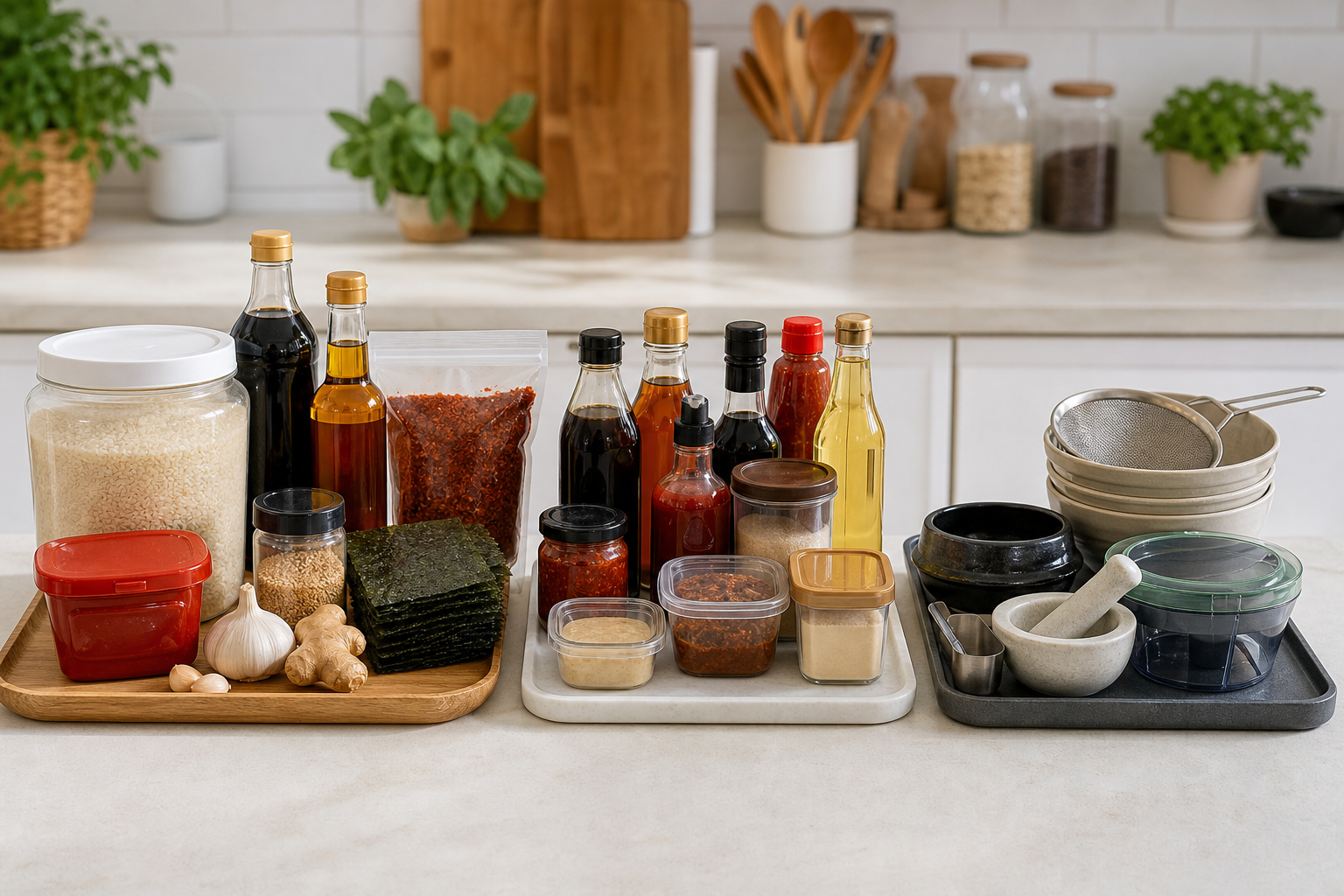
A beginner Korean pantry should make the first week easier, not more expensive. The best starter kit is short: buy the ingredients that unlock rice bowls, soups, banchan, and lunch boxes; wait on specialty gear; skip anything that only solves one rare recipe.
Quick Answer: The First Korean Pantry Staples To Buy
If you are starting from zero, buy rice, soy sauce, sesame oil, gochujang, garlic, scallions, eggs, tofu, kimchi, and one simple seaweed product. Add doenjang, gochugaru, rice vinegar, anchovy stock tablets, and dried kelp after you know which meals you actually repeat.
Buy Now, Buy Later, Skip
| Decision | Use When | Examples |
|---|---|---|
| Buy now | It unlocks several beginner meals immediately | rice, soy sauce, sesame oil, gochujang, eggs, tofu, kimchi |
| Buy now | It makes bowls and side dishes easier | garlic, scallions, roasted seaweed, sesame seeds |
| Buy later | You are ready for soups and stews | doenjang, dried kelp, anchovy stock, gochugaru |
| Buy later | You keep making Korean food weekly | rice vinegar, fish sauce, perilla oil, glass noodles |
| Skip first | It creates clutter before the habit exists | stone bowl, specialty serving plates, duplicate gadgets |
What Each Ingredient Unlocks
- Rice: the base for Korean rice bowls, lunch boxes, and quick breakfasts.
- Soy sauce + sesame oil: the fastest non-spicy sauce for rice bowls, tofu, eggs, and vegetables.
- Gochujang: a spicy-sweet anchor for bibimbap, dipping sauce, marinades, and quick stir-fries.
- Doenjang: a savory base for soups, stews, and vegetable seasoning.
- Kimchi: a side dish, bowl topping, fried rice shortcut, and soup starter.
- Tofu and eggs: low-effort proteins that work with most Korean sauces.
Substitutions When You Do Not Live Near A Korean Market
Use regular short or medium grain rice if Korean rice is hard to find. Use Japanese or Chinese soy sauce if that is what your supermarket carries, then adjust salt slowly. If gochujang is unavailable, start with soy-sesame bowls and add gochujang later. If fresh banchan is difficult, use cucumber, spinach, bean sprouts, or kimchi as your first repeatable sides.
First-Week Korean Meal Map
- Day 1: rice + fried egg + kimchi + sesame oil.
- Day 2: tofu bowl with soy-sesame sauce and cucumber.
- Day 3: kimchi fried rice with egg.
- Day 4: rice bowl with spinach or bean sprouts.
- Day 5: simple soup with doenjang if you bought it, or another rice bowl if you did not.
How This Connects To Your Next Guides
Once the starter pantry is working, use it to build Korean meal prep ideas, Korean lunch box ideas, and easy Korean side dishes. The pantry is not the goal. It is the system that makes the next meal easier.