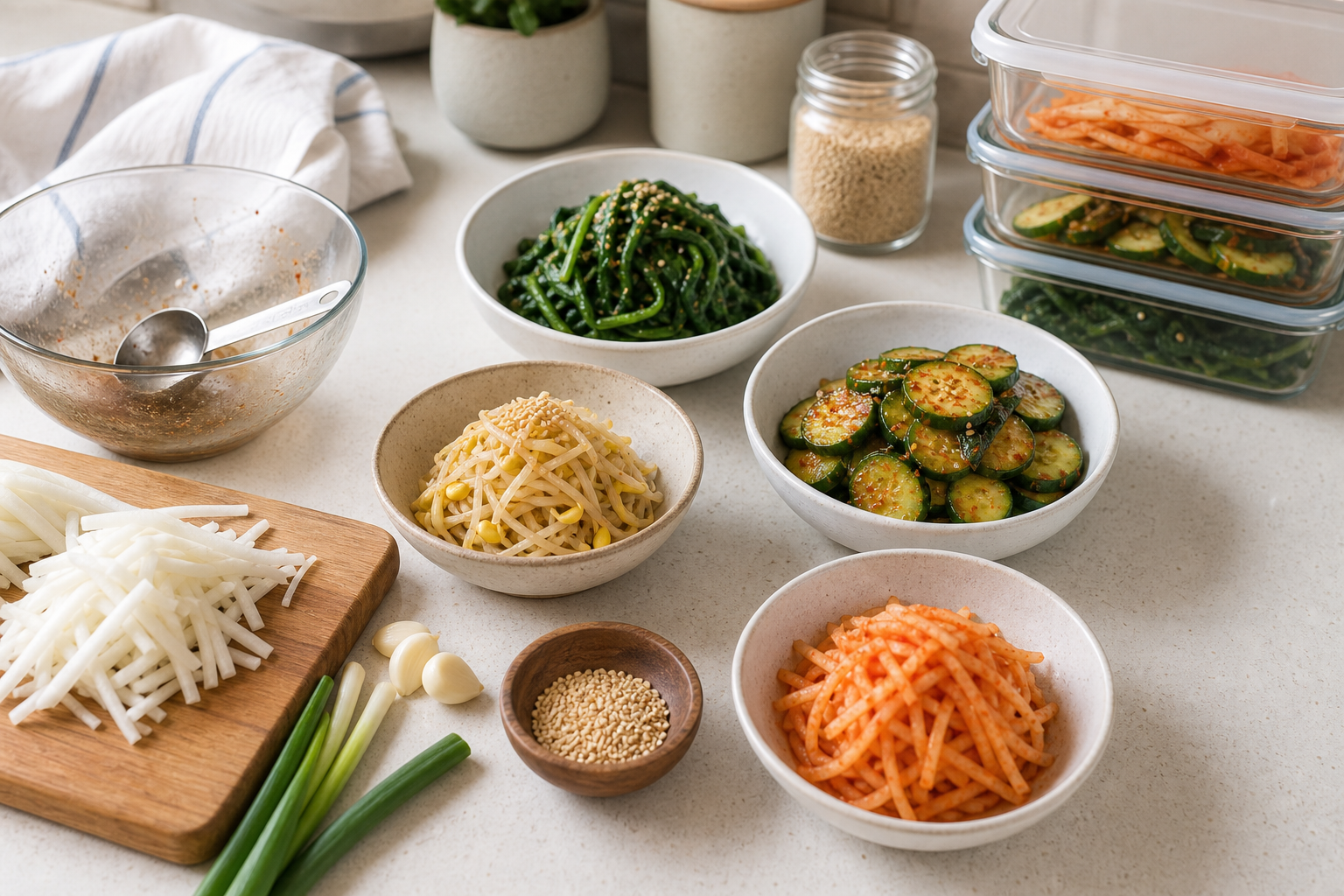
Easy Korean Side Dishes: Complete Guide to Banchan

In Korea, the main dish isn’t the star of the table — the side dishes are. Walk into any local restaurant in Seoul and before your main order even arrives, five to twelve small plates of banchan land on your table, free of charge. Most first-time visitors assume these dishes take hours to prepare. The truth? The 7 most common Korean side dishes each take under 20 minutes, use 5 or fewer core ingredients, and keep in the fridge for up to a week. This guide walks you through every one of them — the same recipes Korean home cooks actually make on a busy weeknight, not the elaborate versions you see on cooking shows.

Before You Start: The Korean Side Dish Pantry

Before You Start: The Korean Side Dish Pantry

Most Korean side dishes share the same 8 pantry staples, which means once you stock up once, you can make dozens of banchan without another grocery trip. This is something that surprises people — Korean cooking looks wildly varied on the table, but the backbone ingredients repeat across almost every recipe.

Here’s what Korean home cooks always keep on hand:

  • Soy sauce (간장, ganjang) — Get a Korean brand like Sempio or Chung Jung One. Japanese soy sauce works in a pinch, but it’s slightly sweeter.
  • Toasted sesame oil (참기름, chamgireum) — This is non-negotiable. It finishes almost every banchan. A single bottle lasts months.
  • Sesame seeds (깨, kkae) — Pre-toasted bags are sold at any Asian grocery for around $3-5.
  • Gochugaru (고추가루) — Korean red pepper flakes. Coarse, slightly sweet, mildly smoky. Not the same as crushed red pepper.
  • Garlic — Korean recipes use more garlic than you think. Buy pre-minced jars to save time.
  • Rice vinegar — For quick-pickled sides and dressings.
  • Sugar — Small amounts balance the salt in most seasoning mixes.
  • Salt — Coarse sea salt for blanching, fine salt for seasoning.

Without these eight ingredients, you’ll struggle with every recipe below. With them, you can make all seven side dishes tonight using only fresh vegetables from your regular grocery store — no special trip to an Asian market required beyond the initial pantry stock-up.

One more thing most recipes skip: have a large mixing bowl ready. Korean banchan is almost always seasoned by hand-mixing in a bowl, not by cooking sauce in a pan. This is the fundamental technique that makes banchan fast.

7 Easy Korean Side Dishes You Can Make Tonight

7 Easy Korean Side Dishes You Can Make Tonight

These are the seven banchan that appear most frequently on Korean dinner tables at home — not restaurant specials, not elaborate holiday dishes, but the everyday sides that Korean families actually rotate through each week. They’re listed from easiest to slightly more involved, so if you’re a complete beginner, start with number one.

1. Kongnamul Muchim (Seasoned Soybean Sprouts)

This is the single most common side dish in Korea. It shows up at nearly every meal, from home kitchens to school cafeterias. The entire recipe takes about 10 minutes.

  1. Boil a pot of water. Add 200g of soybean sprouts and cook for 6-7 minutes. Do not open the lid — this prevents a raw bean smell from developing.
  2. Drain and rinse with cold water.
  3. Toss in a bowl with: 1 tbsp soy sauce, 1 tsp sesame oil, 1 tsp sesame seeds, ½ tsp minced garlic, and a pinch of salt.
  4. Mix by hand (or with tongs). Taste and adjust salt.

Keeps in the fridge for 4-5 days. Koreans often make a large batch on Sunday and eat it through Wednesday.

2. Sigeumchi Namul (Seasoned Spinach)

If kongnamul is side dish number one, sigeumchi namul is number two. Together, they show up on Korean tables more than any other pairing.

  1. Blanch a large bunch of spinach in boiling salted water for 30-40 seconds. No longer — overcooked spinach turns slimy.
  2. Immediately transfer to ice water. Squeeze out every drop of moisture with your hands. This step matters more than the seasoning.
  3. Season with: 1 tbsp soy sauce, 1 tsp sesame oil, 1 tsp sesame seeds, ½ tsp minced garlic.
  4. Mix gently, keeping the spinach in long strands rather than chopping it.

The biggest mistake beginners make is skipping the squeezing step. Watery spinach dilutes the seasoning and turns soggy within hours. Korean home cooks squeeze it so aggressively the final volume is about one-third of what you started with.

3. Oi Muchim (Spicy Cucumber Salad)

This is the refreshing, crunchy side that balances heavier dishes like bulgogi or stews. It takes under 5 minutes — no cooking involved.

  1. Slice 2 Korean cucumbers (or English cucumbers) into thin rounds.
  2. Sprinkle with ½ tsp salt and let sit for 5 minutes, then squeeze out water.
  3. Toss with: 1 tbsp gochugaru, ½ tbsp rice vinegar, ½ tsp sugar, ½ tsp sesame oil, ½ tsp minced garlic, and sesame seeds.

Eat this one the same day — cucumber banchan doesn’t store well because it keeps releasing water. That said, it’s so fast to make that you can prepare it fresh every time.

4. Musaengchae (Spicy Radish Salad)

Korean radish (mu) is crunchier and less peppery than Western radish. This salad adds a sharp, tangy crunch that cuts through rich main dishes.

  1. Julienne one small Korean radish (about 200g) into thin matchsticks.
  2. Toss with: 1 tbsp gochugaru, 1 tbsp rice vinegar, ½ tbsp sugar, ½ tsp salt, ½ tsp minced garlic.
  3. Let it sit for 10 minutes before serving — the radish softens slightly and absorbs the dressing.

Stores well for 3-4 days in the fridge. The flavor actually improves on day two as the vinegar penetrates the radish.

5. Gyeran Mari (Rolled Omelette)

This is the one cooked banchan on this list that every Korean kid grows up eating in their packed school lunch. It looks impressive — a tight spiral of egg — but it’s simpler than a Western omelette.

  1. Beat 3 eggs with a pinch of salt. Mix in 2 tbsp finely diced vegetables — carrots, green onion, or both.
  2. Heat a rectangular pan (or any non-stick pan) over medium-low heat with a thin layer of oil.
  3. Pour in a thin layer of egg. When it’s 80% set, roll it to one side of the pan.
  4. Pour another thin layer of egg, lift the rolled portion so the new egg flows underneath, then roll again.
  5. Repeat 2-3 more times. Slice into 1cm rounds.

The secret to tight, clean spirals is low heat and thin layers. High heat makes the egg bubble and crack. If your first attempt looks messy, it’ll still taste perfect — presentation comes with practice.

6. Eomuk Bokkeum (Stir-Fried Fish Cake)

Korean fish cakes (eomuk) come in flat sheets at Asian grocery stores, usually in the refrigerated or frozen section for around $3-5 per pack. This sweet-savory stir-fry takes about 8 minutes.

  1. Cut fish cake sheets into bite-sized strips.
  2. Stir-fry in a dry pan over medium heat for 1 minute (this removes excess oil).
  3. Add: 1 tbsp soy sauce, 1 tbsp rice syrup (or corn syrup/honey), ½ tsp minced garlic, and a splash of water.
  4. Cook until the sauce reduces and coats the fish cake, about 3-4 minutes. Finish with sesame seeds.

Kids in Korea eat this cold, straight from the lunchbox. It stores for up to a week in the fridge, making it one of the best meal-prep banchan.

7. Japchae (Stir-Fried Glass Noodles)

Japchae is the most “impressive” banchan on this list — the one that gets posted on social media — but it follows the same simple pattern as everything above: cook, season, toss. The only difference is a few more vegetables.

  1. Soak 150g of sweet potato glass noodles (dangmyeon) in hot water for 10 minutes, or boil for 6-7 minutes. Drain and cut with scissors into manageable lengths.
  2. Stir-fry thinly sliced vegetables separately — carrot, spinach, onion, mushroom — seasoning each lightly with salt. This takes about 10 minutes total.
  3. Combine everything in a large bowl with: 2.5 tbsp soy sauce, 1 tbsp sesame oil, 1 tbsp sugar, sesame seeds.
  4. Toss well by hand (the traditional way). Taste and adjust seasoning.

Japchae is technically more of a party dish, but simplified weeknight versions with just 2-3 vegetables are completely normal in Korean homes. Without the full vegetable spread, it takes about 15 minutes.

Quick Comparison: Easy Korean Side Dishes at a Glance

Quick Comparison: Easy Korean Side Dishes at a Glance

Use this table to pick which banchan to make based on your available time, spice preference, and how long you need it to last. The middle column — shelf life — is what Korean home cooks actually optimize for when meal prepping.

Side Dish Prep Time Fridge Life Spice Level Cooking Required Difficulty
Kongnamul Muchim 10 min 4-5 days None Boil only Beginner
Sigeumchi Namul 8 min 3-4 days None Blanch only Beginner
Oi Muchim 5 min Same day Medium None Beginner
Musaengchae 10 min 3-4 days Medium None Beginner
Gyeran Mari 12 min 3 days None Pan-fry Easy
Eomuk Bokkeum 8 min 5-7 days None Stir-fry Beginner
Japchae 20 min 3-4 days None Boil + stir-fry Easy

Notice how most of these are either no-cook or require only blanching. That’s the pattern most food blogs miss about Korean side dishes: banchan is not about complex cooking techniques — it’s about mastering simple seasoning ratios.

How Korean Home Cooks Actually Meal-Prep Side Dishes

Korean families don’t make banchan fresh for every single meal — they batch-cook 3-4 side dishes on one day and rotate them throughout the week. This system, which Koreans call milchan (밑찬, meaning “base side dishes”), is the real reason Korean tables always look abundant. It’s not about spending more time cooking. It’s about spending time once.

Here’s a realistic weekly banchan prep schedule that most Korean households follow:

  1. Sunday evening (30-40 minutes): Make kongnamul muchim, sigeumchi namul, and eomuk bokkeum. These three cover Monday through Thursday.
  2. Wednesday (10 minutes): Make a fresh oi muchim or musaengchae to add variety for the rest of the week.
  3. As needed: Gyeran mari takes 12 minutes — make it fresh when you want something warm and protein-rich.

The trick to making this work: store each banchan in small, airtight containers rather than one large bowl. Korean homes use stackable rectangular containers specifically designed for banchan storage. You can find sets of 4-6 containers at Asian grocery stores or online for around $8-15. Without proper storage, even well-made banchan gets soggy or absorbs fridge odors within a day.

One thing that separates experienced Korean home cooks from beginners: they always make banchan in amounts that seem like too much. A single batch of kongnamul feeds two people for 4-5 meals. When you’re starting out, double every recipe above — the per-serving effort drops dramatically, and you’ll have a fridge that looks like a Korean grandmother stocked it.

Frequently Asked Questions

What is banchan and why is it served free at Korean restaurants?

Banchan (반찬) refers to the small shared side dishes served alongside rice and a main dish in Korean cuisine. They’re complimentary at restaurants because in Korean food culture, a meal isn’t considered complete without them — charging separately would be like a Western restaurant charging for the bread basket. Most restaurants offer free refills on banchan as well.

Can I make Korean side dishes without gochugaru?

Yes — 5 of the 7 banchan in this guide use zero gochugaru. Kongnamul muchim, sigeumchi namul, gyeran mari, eomuk bokkeum, and japchae are all seasoned with soy sauce and sesame oil instead. Only oi muchim and musaengchae require red pepper flakes. If you want to start without any special ingredients, begin with the soy-sesame-based dishes.

What happens if I skip the squeezing step for namul dishes?

The seasoning slides off and pools at the bottom of the container, leaving bland, watery vegetables on top. Squeezing removes excess moisture so the soy sauce and sesame oil actually cling to each strand. This is the most common reason homemade namul doesn’t taste like restaurant-quality banchan — it’s almost always a water problem, not a seasoning problem.

How long do Korean side dishes last in the fridge?

Most banchan lasts 3-5 days when stored in sealed containers, with some like eomuk bokkeum lasting up to a week. The main enemies of banchan shelf life are moisture and air exposure. Cucumber-based sides are the exception — oi muchim should be eaten the same day because cucumbers continue releasing water and dilute the dressing.

Can I use regular spinach instead of Korean spinach?

Regular flat-leaf or baby spinach works fine, though the texture will be slightly different. Korean spinach tends to have thinner stems and a slightly chewier texture. If using baby spinach, reduce the blanching time to about 15-20 seconds since it wilts much faster. Avoid pre-washed spinach in plastic containers — it’s too delicate and turns mushy when blanched.

Key Takeaways

  • All 7 core Korean side dishes take under 20 minutes each and rely on the same 8 pantry staples — one grocery trip sets you up for weeks of banchan.
  • Banchan is about seasoning, not cooking. Most recipes follow the same formula: blanch or prep a vegetable, then toss with soy sauce, sesame oil, garlic, and sesame seeds.
  • Squeezing out excess water is the single most important technique for namul-style dishes — it determines whether your seasoning sticks or slides off.
  • Korean families batch-cook 3-4 banchan once a week rather than making fresh sides daily. Prep Sunday, eat through Thursday.
  • Proper storage in small, sealed containers extends banchan life to 5-7 days — without it, even perfectly made side dishes deteriorate within a day.
  • Start with kongnamul muchim and sigeumchi namul — they’re the two most common, easiest to make, and require no special ingredients beyond sesame oil and soy sauce.

Pick one side dish from this guide — just one — and make it tonight alongside whatever you’re already cooking for dinner. Kongnamul muchim takes 10 minutes, and you’ll have enough for the next four meals. That’s how banchan starts: not with a full Korean spread, but with one small plate that changes the way your dinner table feels.


You Might Also Like

Leave a Comment

Your email address will not be published. Required fields are marked *

Scroll to Top