Quick Answer: A Korean style room makeover isn’t about buying more — it’s about removing 40-60% of what’s already in the room and replacing clutter with low furniture, natural textures, and intentional empty space. Here’s what you need to know:
- Korean rooms prioritize floor-level living — low tables, floor cushions, and open floor space
- The color palette stays within warm neutrals: cream, ivory, light oak, and soft sage
- Most Seoul apartments under 600 sq ft look spacious because of hidden storage and the “비우기 (biugi)” emptying principle
- You don’t need a full renovation — one wall and one furniture swap can shift the entire feel
- Budget range: around $150-400 for a single-room transformation (prices vary by source)
My friend Sarah visited Seoul last fall. She stayed in a 300-square-foot studio in Mapo-gu and texted me: “Why does this tiny apartment feel bigger than my entire living room back home?” The answer wasn’t some expensive renovation. It was seven design rules that most Korean households follow instinctively — rules that have almost nothing to do with what you see on Pinterest mood boards.
Before You Start Your Korean Style Room Makeover: The 비우기 Rule
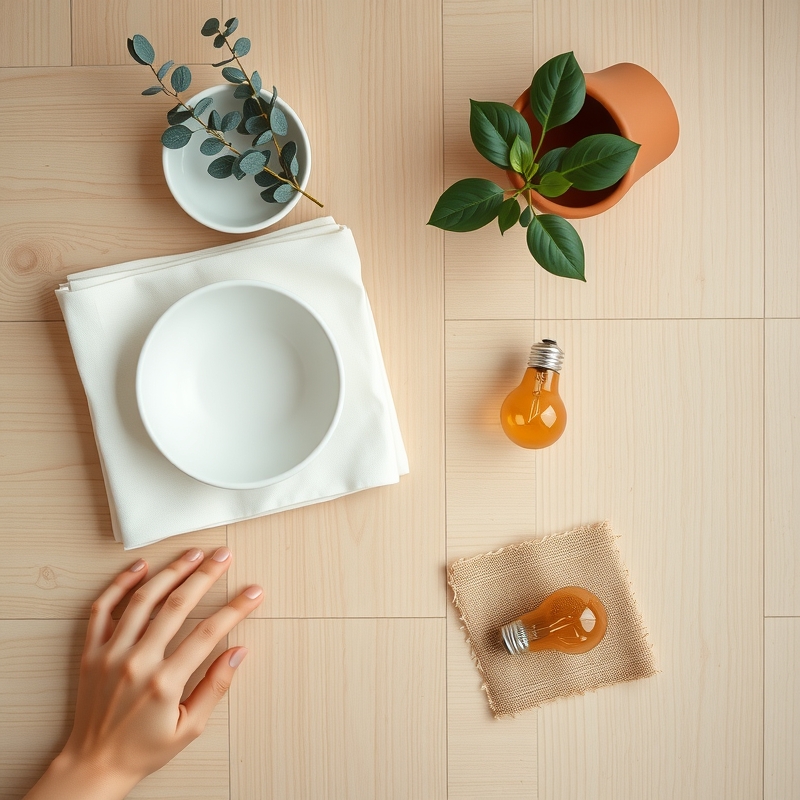
Every Korean room makeover begins with subtraction, not addition. The concept is called 비우기 (biugi), which literally means “emptying.” Before a single new item enters the room, at least a third of the existing stuff needs to leave. This isn’t the same as Western minimalism, which often feels cold and deliberately sparse. Korean 비우기 is warm — it creates breathing room so the things you keep actually stand out.
Walk into any Korean home and you’ll notice the floor. Not because of fancy flooring, but because you can actually see it. In most Korean households, visible floor space is treated as a design element itself, not wasted square footage. This connects directly to 온돌 (ondol), the traditional Korean underfloor heating system that has shaped how Koreans use rooms for centuries. When your floor is warm, you sit on it, sleep on it, eat on it. You need it clear.
What You’ll Need (and What You Won’t)
- Remove first: Oversized furniture that blocks floor space, decorative items that collect dust, anything you haven’t used in 6 months
- Keep or add: 1-2 low-profile furniture pieces, natural fiber textiles (linen, cotton, wool), plants in simple ceramic pots, soft indirect lighting
- Skip entirely: Matching furniture sets, accent walls with bold paint, open shelving crammed with objects, LED strip lights
Without clearing first, you’ll end up layering Korean-inspired décor on top of a Western layout — and it’ll look like a themed dorm room, not a Seoul apartment. That’s the mistake most room makeover guides skip over entirely.
7 Rules for an Authentic Korean Style Room Makeover
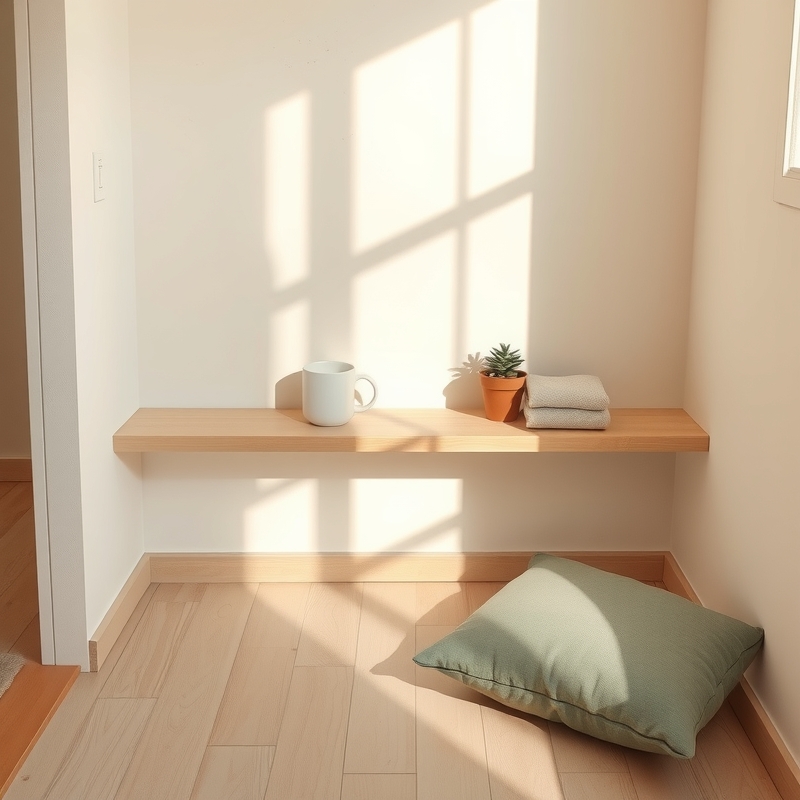
These seven principles come from how Korean apartments are actually designed and lived in — not from influencer staging. Most Seoul apartments are small (the average one-bedroom is around 330-500 sq ft), so every design choice is about making limited space feel calm, open, and functional.
Rule 1: Go Low — Floor Living Changes the Entire Room
This is the single biggest shift. Replace your coffee table with a low Korean-style table (about 12-14 inches high). Swap your couch for floor cushions called 방석 (bangsuk). The moment your sight line drops, the room feels twice as large. Korean families eat, study, and socialize at floor level — it’s not a design trend, it’s a lifestyle rooted in ondol underfloor heating that dates back over 2,000 years.
You don’t have to go fully floor-level overnight. Start with one zone: a reading corner with a floor cushion and low side table. Live with it for a week. Most people never go back to their old setup.
Rule 2: The Warm Neutral Palette (Not the Cold One)
Korean interiors lean into warm neutrals — cream, oatmeal, light oak, soft sage, muted terracotta. This is different from Scandinavian minimalism, which tends toward cooler whites and grays. The Korean palette feels like a warm bowl of rice: soft, comforting, and grounding. Walls stay white or very light cream. Wood stays natural or light-toned. Textiles add warmth without competing for attention.
A common mistake is going too white. Korean rooms aren’t sterile — they’re warm. Add texture through linen curtains, a woven jute rug, or a cotton throw in a muted tone. The warmth comes from materials, not color.
Rule 3: One Statement Piece, Everything Else Quiet
In most well-designed Seoul apartments, there’s one focal point per room — a single piece of art, a distinctive lamp, or a beautiful ceramic vase. Everything else recedes. This is the opposite of the Western “gallery wall” approach where every surface tells a story. Korean design philosophy says: let one thing speak, and give it silence around it to be heard.
Rule 4: Hidden Storage Is Non-Negotiable
Korean apartments are masters of concealment. Beds have built-in drawers. Wardrobes are floor-to-ceiling and usually built into the wall. Kitchen items disappear behind cabinet doors. If you can see it, it was meant to be seen. Everything else is tucked away. Invest in one good storage piece — a closed cabinet or storage ottoman — before spending on any decorative items.
Rule 5: Natural Materials Over Trendy Finishes
Wood, ceramic, linen, cotton, stone. These five materials cover about 90% of surfaces in a typical Korean home. You won’t find much plastic, chrome, or high-gloss lacquer. The preference for natural materials ties back to Korean design’s relationship with nature — even in a 15th-floor apartment in Gangnam, the room should feel connected to the outdoors through its textures.
- Flooring: Light wood tone or wood-look vinyl (most Korean apartments use this)
- Curtains: Sheer linen or cotton, never heavy drapes
- Dishes and décor: Matte ceramic in white, cream, or celadon
- Baskets: Woven rattan or seagrass for open storage
Rule 6: Lighting Should Be Warm and Layered
Most Korean homes avoid harsh overhead lighting for living spaces. Instead, you’ll find warm-toned floor lamps, paper lantern pendants, and indirect lighting. The goal is a room that feels like late afternoon sunlight — around 2700K-3000K color temperature. A single rice paper lamp can transform a room’s mood more than any furniture swap. This is probably the highest-impact, lowest-cost change you can make.
Rule 7: Bring in Living Green (But Keep It Simple)
Plants are everywhere in Korean apartments, but not in the “urban jungle” way. You’ll see one or two well-placed plants — a pothos on a shelf, a small monstera in a corner, herbs on the kitchen windowsill. The pots are always simple: plain terracotta, white ceramic, or concrete. The plant is the design element, not the pot.
정 (Jeong) and the Korean Home: Why Seoul Rooms Feel Different
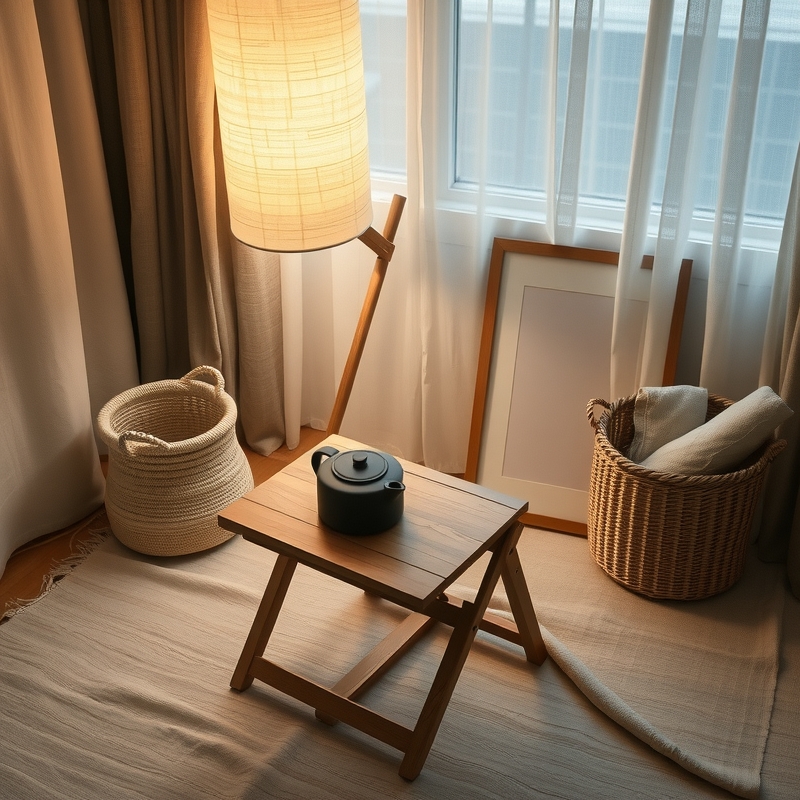
There’s a Korean concept that no interior design blog can fully replicate with furniture alone: 정 (jeong). It’s an untranslatable word that roughly means deep emotional attachment — the warmth that accumulates in a space through shared meals, conversations, and daily life. A Korean home isn’t designed to impress visitors. It’s designed to feel like a warm embrace for the people who live there.
This is why Korean rooms often feel “lived in” in the best sense — a well-worn floor cushion, a rice cooker that’s always warm, slippers lined up by the door. The design philosophy behind a Korean style room makeover isn’t about achieving a perfect magazine look. It’s about creating a space where 정 can grow. That means comfort and function always come before aesthetics.
Understanding this changes how you approach the makeover. Instead of asking “What looks Korean?”, ask “What makes this room feel like home?” In Korean culture, that answer almost always involves three things: a warm floor to sit on, a low table to gather around, and soft light that doesn’t strain the eyes. The concept of 정 is deeply connected to how Korean communities function — it’s a cultural bond built through shared experience and proximity, and the home is where it starts.
There’s a reason Korean housewarming gifts are practical — toilet paper (for things to “unroll” smoothly), laundry detergent (for a “clean” start). The message isn’t “decorate well.” It’s “live well in this space.” Let that philosophy guide your makeover.
Korean Room Makeover: Budget Comparison by Approach
Not every Korean style room makeover requires the same investment. Here’s how three approaches compare so you can choose what fits your budget and commitment level.
| Feature | Quick Refresh (1 weekend) | Room Reset (2-3 weekends) | Full Transformation (1 month) |
|---|---|---|---|
| Budget Range | Around $50-100 | Around $150-300 | Around $400-800 |
| Decluttering | Surface clutter only | Full room 비우기 (emptying) | Full room + closet reorganization |
| Furniture Changes | None — rearrange existing | Replace 1-2 key pieces (table, lamp) | Replace major furniture with low-profile pieces |
| Lighting | Swap bulbs to warm 2700K | Add 1 floor lamp or paper lantern | Full layered lighting setup |
| Textiles | Add linen throw or cushion cover | New curtains + bedding in neutral tones | Full textile overhaul (curtains, rugs, cushions, throws) |
| Storage | Use baskets to hide visible clutter | Add 1 closed storage unit | Built-in or fitted storage solutions |
| Impact Level | Noticeable refresh | Best value — room feels genuinely different | Complete transformation |
| Difficulty | Beginner | Beginner-intermediate | Intermediate (may need help with furniture) |
For most people, the Room Reset approach (middle column) hits the sweet spot. You get a genuinely transformed space without the cost or commitment of replacing all your furniture. Start with the 비우기 declutter, swap your main table and lighting, and change your textiles — that alone shifts the room’s entire personality.
Korean-Style Low Floor Table (Chabudai / 밥상 Style)
This is the single piece that anchors the whole room. A simple foldable low table in natural wood creates an instant floor-living zone — use it for meals, laptop work, or tea with friends. Most options fold flat for easy storage, which is exactly how Korean households use them in small spaces.
(paid link) Check Availability & Reviews →
Rice Paper Lamp (Korean Style Floor or Pendant)
Nothing transforms a room’s mood faster than swapping harsh overhead light for the soft warm glow of a rice paper lamp. The diffused light mimics that late-afternoon Seoul apartment feel — warm, calm, and surprisingly flattering. Under $30 for a piece that changes everything.
(paid link) See Why Reviewers Love This →
Frequently Asked Questions
What happens if I skip the decluttering step and just buy Korean-style furniture?
The room will feel crowded and staged, not Korean. Korean interior design works because of the negative space between objects. Adding low furniture and neutral textiles on top of existing clutter creates a hybrid that looks like neither your old room nor a Korean apartment. The 비우기 step isn’t optional — it’s the foundation everything else rests on.
Can I do a Korean style room makeover in a rental apartment?
Yes — most changes require zero permanent alterations. Floor cushions, a low table, warm-toned light bulbs, linen curtains on tension rods, and simple ceramic décor can all move with you. The only change that requires wall contact is hanging a single piece of art, and most landlords allow small nail holes. Korean renters do this constantly since most young Koreans rent rather than own.
Is Korean interior style the same as Japanese minimalism?
They share roots but differ in warmth and texture. Japanese minimalism tends toward cooler tones, sharper lines, and a more deliberate austerity. Korean interiors are warmer — more cream than white, more round than angular, more “cozy” than “zen.” Korean rooms also tend to have more soft textiles (cushions, throws, rugs) because of the floor-living culture. Think of it as minimalism with a blanket.
What’s the most impactful single change for a Korean style room makeover on a tight budget?
Replace your overhead light with a warm-toned rice paper lamp — around $15-30. Lighting affects how every other object in the room looks and feels. One warm paper lamp at floor or table height immediately shifts the room from “apartment with overhead fluorescent” to “calm Seoul studio.” Pair it with decluttering your surfaces, which costs nothing, and you’ve done 60% of the transformation for under $30.
Key Takeaways
- Korean room makeovers start with removing, not adding — the 비우기 (emptying) principle is the foundation that makes everything else work
- Floor-level living is the single biggest design shift — a low table and floor cushions change how the entire room feels and functions
- Warm neutrals, not cool whites — Korean interiors use cream, oatmeal, and light oak to create warmth that Scandinavian minimalism often lacks
- One statement piece per room, everything else quiet — this restraint is what separates a Korean-inspired room from a cluttered Pinterest board
- Hidden storage before decorative objects — if guests can see your stuff, it wasn’t meant to be seen
- The middle-budget approach (around $150-300) delivers the best transformation — swap your table, lighting, and textiles after a thorough declutter
Tonight, walk into your room and pick one surface — your desk, your nightstand, your coffee table. Remove everything from it. Put back only the one item you’d keep if you could only choose one. Leave the rest off for a week. That one cleared surface is the beginning of your Korean style room makeover — and it costs exactly nothing.
This article contains affiliate links. If you purchase through these links, we may earn a small commission at no extra cost to you. We only recommend products we genuinely believe in.