A friend visiting Seoul last spring pointed at a menu photo and said “this one” in English — the ajumma behind the counter stared blankly, then turned away. The guy at the next table leaned over and whispered: just say igeo juseyo. My friend repeated it, the ajumma smiled, and two minutes later he had the best knife-cut noodles of his life. These 12 Korean phrases for travel cover roughly 80% of the real interactions you’ll have in Korea — ordering food, asking directions, getting help, and earning the kind of warmth that only comes when you try someone’s language.
Quick-Pick Summary: 12 Korean Phrases for Travel at a Glance
| # | Phrase (Hangul) | Romanization | Meaning | When You’ll Use It |
|---|---|---|---|---|
| 1 | 안녕하세요 | annyeonghaseyo | Hello | Everywhere, every day |
| 2 | 감사합니다 | gamsahamnida | Thank you | After every interaction |
| 3 | 이거 주세요 | igeo juseyo | This one, please | Ordering food, shopping |
| 4 | 얼마예요? | eolmayeyo? | How much is it? | Markets, street stalls |
| 5 | 여기요 | yeogiyo | Excuse me (calling staff) | Restaurants, cafés |
| 6 | 화장실 어디예요? | hwajangsil eodiyeyo? | Where’s the restroom? | Daily survival |
| 7 | 추천해 주세요 | chucheonhae juseyo | Please recommend something | Restaurants, shops |
| 8 | 매운 거 빼 주세요 | maeun geo ppae juseyo | Not spicy, please | Ordering food |
| 9 | 계산이요 | gyesaniyo | Check, please | End of a meal |
| 10 | 괜찮아요 | gwaenchanayo | It’s okay / I’m fine | Declining politely |
| 11 | 사진 찍어도 돼요? | sajin jjigeodo dwaeyo? | Can I take a photo? | Temples, shops, cafés |
| 12 | 하나 더 주세요 | hana deo juseyo | One more, please | Refills, extra side dishes |
1. 안녕하세요 (Annyeonghaseyo) — The Korean Phrase That Opens Every Door
A single annyeonghaseyo when you walk into a shop changes the entire dynamic of your interaction. Staff relax, prices sometimes drop at market stalls, and you stop being “just another tourist.” This is the first Korean phrase for travel you should practice until it feels automatic.
Most phrasebooks teach the pronunciation as “ann-yong-ha-say-yo,” but here’s what they skip: the emphasis lands on ha, not the first syllable. Koreans can hear when someone learned this from a textbook versus when they’ve actually listened to native speakers. Spend five minutes on any Korean variety show clip and just mimic the rhythm.
One thing that surprises visitors — in Korea, you greet the space, not just the person. Walk into a small restaurant? Say it to the room. Enter a guesthouse lobby? Say it to whoever’s there. This isn’t awkward; it’s expected. Skipping the greeting in a Korean shop is like walking into someone’s living room without saying hello — technically not rude, but it creates invisible distance.
2. 감사합니다 (Gamsahamnida) — More Powerful Than You Think
Korean service culture runs on mutual respect, and gamsahamnida is how you participate in it. You’ll say this dozens of times per day — after paying, after receiving directions, after a taxi ride, after someone holds a door. It’s not just “thank you,” it’s your entry ticket into Korean social reciprocity.
There’s a shorter version — 고마워요 (gomawoyo) — that you’ll hear Koreans use with friends. Stick with gamsahamnida as a traveler. It’s the polite form, and using it signals that you respect the interaction. Korean shop owners notice. The Korean honorific system has multiple politeness levels, and choosing the formal version as a foreigner is always the right call.
Pair it with a slight head nod — not a full bow, just a dip of the chin. That small gesture combined with the words creates a micro-moment of genuine connection that English “thank you” alone doesn’t achieve.
3. 이거 주세요 (Igeo Juseyo) — The Phrase That Feeds You
This single phrase — “this one, please” — will get you through 90% of Korean food ordering situations. Point at the menu photo, point at what someone else is eating, point at the display case, and say igeo juseyo. Done. You’ve just ordered like a local.
Here’s why this works so well: most Korean restaurants, especially the ones worth eating at, have photo menus, plastic food displays, or numbered items. You don’t need to pronounce 김치찌개 perfectly. Just point and deploy this phrase.
- At a street food stall: point at the tteokbokki tray → igeo juseyo
- At a bakery: tap the glass near the pastry → igeo juseyo
- At a convenience store deli counter: point at the kimbap → igeo juseyo
Want two? Hold up two fingers and say 두 개 주세요 (du gae juseyo). But honestly, igeo juseyo plus pointing plus holding up fingers gets the job done without any extra vocabulary.
4. 얼마예요? (Eolmayeyo?) — Your Market Survival Phrase
Without eolmayeyo, you’re shopping blind at every Korean street market. Namdaemun, Gwangjang, Tongin — these markets are where the real deals and the real food live, but most vendors don’t post prices in English. Some don’t post prices at all.
The pronunciation tip nobody mentions: it sounds more like “ol-ma-yeh-yo” in fast speech. The first syllable is soft, almost swallowed. Practice it at a slower pace first, then speed up naturally.
After asking, the vendor will typically punch numbers into a calculator and show you, or hold up fingers. Korean market vendors are generally honest with pricing — this isn’t a haggling culture in most contexts. At traditional markets, prices are usually fixed. Where you might get a small discount is when buying multiple items, and a friendly eolmayeyo followed by pointing at several things sometimes prompts the vendor to offer a bundle deal unprompted.
5. 여기요 (Yeogiyo) — The Korean Phrase Every Restaurant Needs
In Korean restaurants, nobody comes to check on your table — you call them with yeogiyo. This catches more foreign visitors off guard than anything else. You’re not being ignored. Korean dining culture simply works differently: staff respect your space until you actively signal you need something.
Literally meaning “here” or “over here,” you’ll hear this word bouncing off the walls of any busy Korean restaurant. Say it at a normal speaking volume with a slight raise on the last syllable. No need to wave, snap, or stand up.
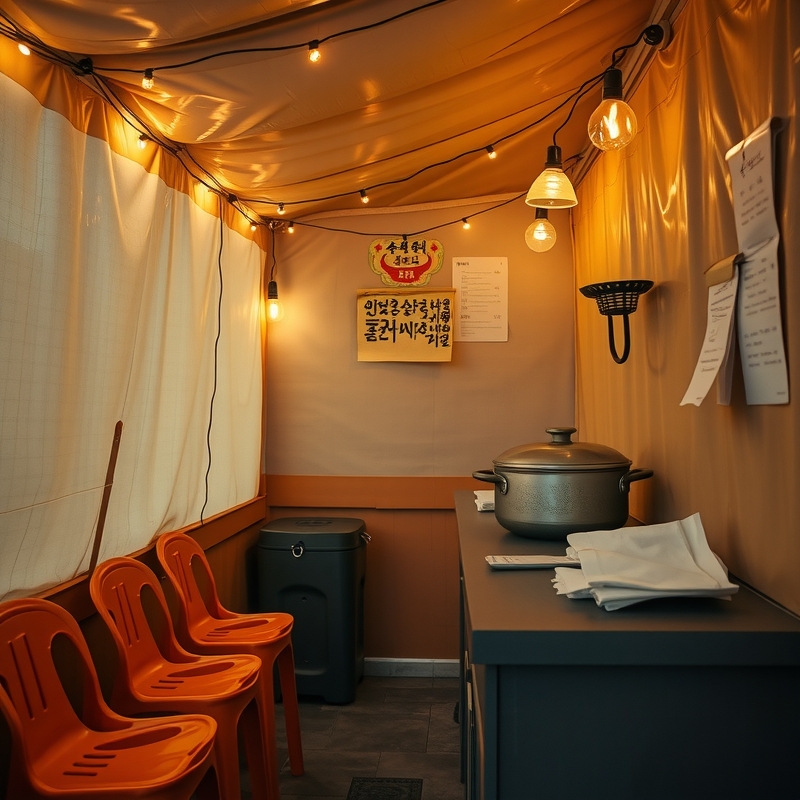
Many modern Korean restaurants now have a call button (벨, bel) on the table — a small electronic buzzer. Press it and staff come to you. But in older restaurants, neighborhood joints, and pojangmacha (street tent bars), yeogiyo is still the standard. Sitting silently and hoping someone notices you is the number one mistake foreign visitors make in Korean restaurants.
6. 화장실 어디예요? (Hwajangsil Eodiyeyo?) — Because You Will Need This
Korean public restrooms are everywhere and generally immaculate, but finding them requires asking — and hwajangsil eodiyeyo is the fastest route. The word 화장실 (hwajangsil) literally translates to “powder room,” which tells you something about Korean linguistic politeness.
In subway stations, restrooms are usually near the exits — but “near” can mean a 3-minute walk through tunnels. In restaurants, they’re often outside the establishment in a shared building hallway. This is normal and not a red flag about the restaurant.
- Subway stations: follow the 화장실 signs, or ask station staff
- Restaurants: ask your server — often located outside, down the hall
- Shopping areas: department stores have the nicest restrooms, always free
Quick cultural note: many Korean restrooms provide toilet paper at the entrance, not inside the stall. Grab some before you go in. This catches visitors off guard exactly once.
7. 추천해 주세요 (Chucheonhae Juseyo) — Unlock the Secret Menu
Asking a Korean restaurant owner to recommend something — chucheonhae juseyo — almost always gets you better food than choosing yourself. This phrase is insider currency. It signals trust, and Korean restaurant owners take that seriously.
Here’s what happens when you say it: the owner’s face changes. They stop seeing you as a tourist ordering the safe option and start treating you as someone who wants the real experience. At a raw fish restaurant in Busan, this phrase got me a seasonal fish that wasn’t even on the menu. At a pojangmacha in Jongno, the ajumma brought out a special kimchi jjigae she only makes for regulars.
This works because Korean food culture deeply values the host-guest relationship — the concept of 정 (jeong), an untranslatable bond of affection and care. When you ask for a recommendation, you’re participating in that relationship. You’re saying: I trust your expertise. That trust activates generosity you cannot buy with money.
8. 매운 거 빼 주세요 (Maeun Geo Ppae Juseyo) — Your Spice Safety Net
Korean “mild” and Western “mild” are not the same universe, and maeun geo ppae juseyo (“no spicy, please”) can save your meal. Most food blogs tell you to “be adventurous with spice.” That’s fine until you’re sweating through a supposedly mild tteokbokki and can’t taste anything for two hours.
This phrase is especially useful at:
- Tteokbokki stalls: even “less spicy” versions can be intense
- Jjigae (stew) restaurants: ask before they start cooking
- Bibimbap spots: the gochujang they add can vary wildly in heat
A softer alternative: 안 맵게 해 주세요 (an maepge hae juseyo) — “please make it not spicy.” This is slightly more polite and gives the cook flexibility to reduce heat rather than eliminate flavor. Korean chili peppers provide more than just heat; according to research indexed on PubMed regarding capsaicin, they contain compounds that contribute to the complex flavor profile Korean cuisine is known for. Removing all spice removes some of that depth — so the softer version often gives you a better-tasting result.
9. 계산이요 (Gyesaniyo) — How to Actually Pay in Korea
Saying gyesaniyo (“check, please”) or simply walking to the counter near the exit is how you pay in Korea — not by waiting for someone to bring a bill. This trips up Western visitors who sit waiting for a check that will never arrive.
Korean payment culture works like this: the register is almost always near the door. When you’re done eating, you either say gyesaniyo to your server, or you just walk up to the counter. Both are normal. Nobody will think you’re trying to leave without paying.
Tap-to-pay and credit cards work nearly everywhere in Korea — even tiny street stalls often have card readers. Cash is becoming rarer, but keep some for traditional market vendors and the occasional older restaurant. Korea is one of the most cashless societies in the world, so your credit card is your best travel companion after these phrases.
10. 괜찮아요 (Gwaenchanayo) — The Swiss Army Knife of Korean Phrases
Gwaenchanayo might be the most versatile Korean phrase for travel — it means “it’s okay,” “I’m fine,” “no thanks,” and “don’t worry about it,” all in one. You’ll use it constantly.
Someone bumps into you on the subway? Gwaenchanayo. A shopkeeper asks if you need help but you’re just browsing? Gwaenchanayo. A street vendor offers a sample and you’re not interested? Gwaenchanayo with a gentle hand wave.
The pronunciation is the trickiest on this list — it sounds like “gwen-chan-ah-yo” with the first syllable almost rhyming with “when.” Practice the “gwae” sound specifically. Most English speakers default to a hard “g” that sounds unnatural. Soften it.
This word also works as a question. Bump into someone? They might ask gwaenchanayo? (are you okay?). Your answer: ne, gwaenchanayo (yes, I’m okay). Two words, full conversation handled.
11. 사진 찍어도 돼요? (Sajin Jjigeodo Dwaeyo?) — The Respectful Photo Ask
Asking sajin jjigeodo dwaeyo? (“can I take a photo?”) before snapping pictures in Korean shops, temples, and cafés is the difference between being a respectful visitor and an annoying one. Many Korean business owners are sensitive about unauthorized photography — especially at trendy cafés where the interior design is their brand.
Places where you should always ask first:
- Buddhist temples: photography rules vary by hall — some allow it, some don’t
- Boutique cafés and dessert shops: some ban photos to protect their concepts
- Traditional markets: vendors generally don’t mind, but ask food stall owners first
- Museums: rules differ by exhibition; this phrase saves you from a scolding
When someone says 네 (ne, yes), smile and take your photo. If they say 안 돼요 (an dwaeyo, no), respect it without arguing. That graceful acceptance? Koreans remember it, and sometimes they’ll offer to help you find a better photo spot nearby.
12. 하나 더 주세요 (Hana Deo Juseyo) — The Free Refill Phrase
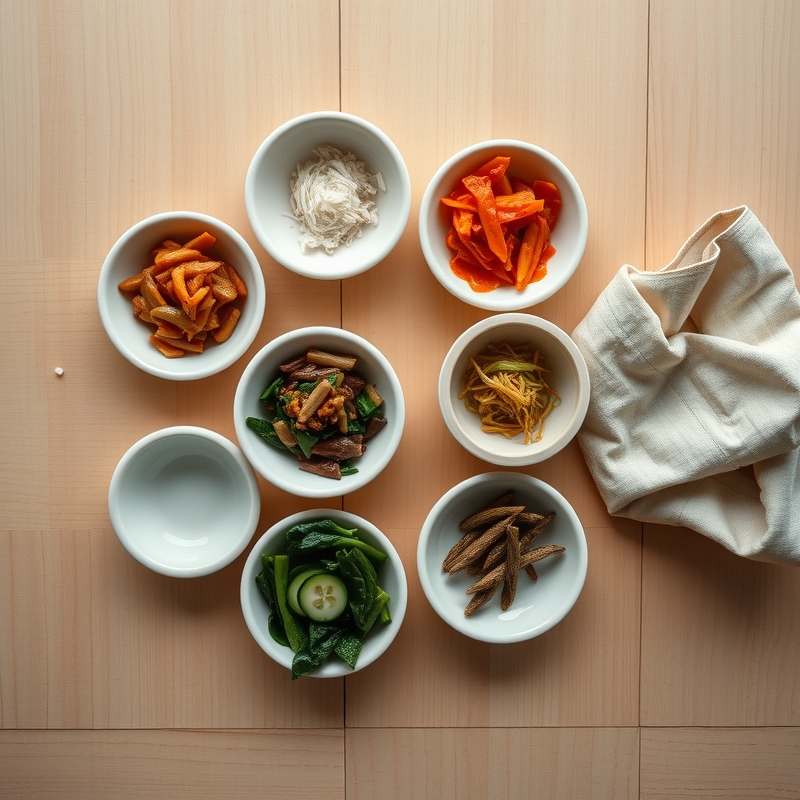
Here’s something most travel guides skip: Korean restaurants offer free refills on side dishes (반찬, banchan), and hana deo juseyo (“one more, please”) is how you get them. That kimchi, pickled radish, and seasoned spinach that came with your meal? All refillable. For free.
This concept shocks most Western visitors. In Korean dining culture, 반찬 (banchan) are part of the meal service, not individual charges. Running out of that incredible garlic soy cucumber? Point at the empty dish and say hana deo juseyo. The server will bring more without blinking.
This phrase also works for:
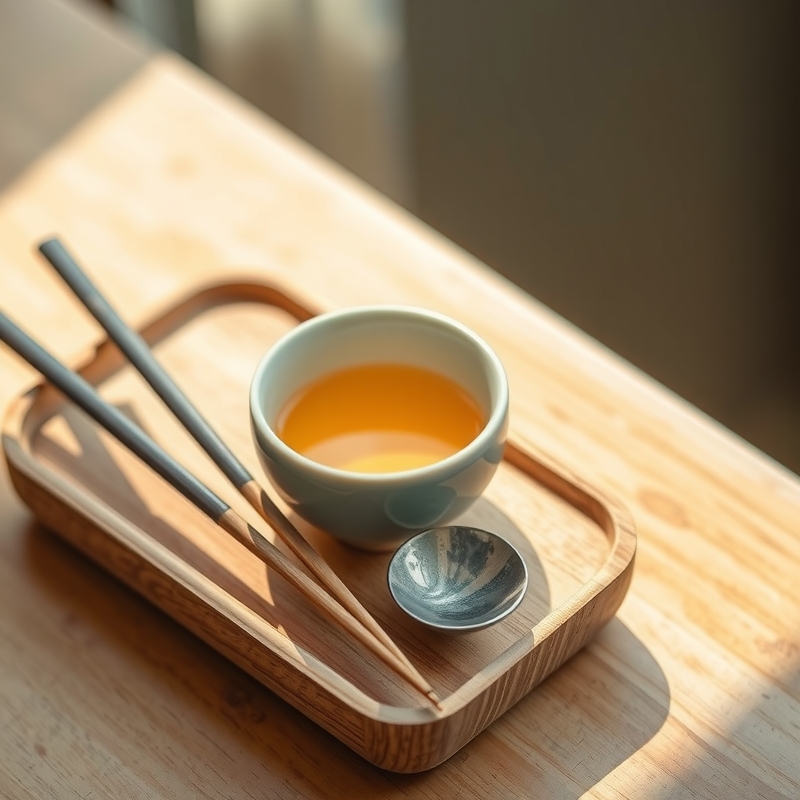
- Water or barley tea (물 or 보리차) — always free, always refillable
- Extra rice at many casual restaurants
- Another round of lettuce wraps at Korean BBQ spots
Not knowing about free banchan refills means you’re leaving half the meal on the table. Literally.
Why These Korean Phrases Work: 존댓말 and the Culture of Respect
Every phrase on this list uses 존댓말 (jondaenmal) — the formal, polite speech level in Korean — and that’s not an accident. Korean is one of the world’s most hierarchical languages. The Korean speech level system has roughly six to seven distinct levels of formality, and using the wrong one can turn a friendly interaction awkward fast.
As a traveler, 존댓말 (jondaenmal) is your safe zone. Every phrase ending in -요 (yo) or -습니다 (seumnida) is polite form. You don’t need to learn the casual forms (반말, banmal) — in fact, using casual speech with strangers, especially older Koreans, can come across as disrespectful even if your intention is friendly.
This is deeply woven into Korean daily life. Children learn 존댓말 before they learn casual speech. At restaurants, even regular customers who’ve visited for years still use polite forms with the owner. When you use these polite phrases as a foreigner, you’re not just communicating — you’re showing that you understand something fundamental about Korean culture. And Koreans genuinely appreciate that effort.
Formality Levels: Which Version to Use Where
| Situation | Casual (반말) — Avoid | Polite (해요체) — Use This ✓ | Formal (합쇼체) — Also Safe |
|---|---|---|---|
| Saying thank you | 고마워 (gomawo) | 고마워요 (gomawoyo) | 감사합니다 (gamsahamnida) ✓ |
| Ordering food | 이거 줘 (igeo jwo) | 이거 주세요 (igeo juseyo) ✓ | 이것 부탁드립니다 (igeot butakdeurimnida) |
| Asking the price | 얼마야? (eolmaya?) | 얼마예요? (eolmayeyo?) ✓ | 얼마입니까? (eolmaimnikka?) |
| Saying it’s okay | 괜찮아 (gwaenchana) | 괜찮아요 (gwaenchanayo) ✓ | 괜찮습니다 (gwaenchanseumnida) |
| Getting attention | 야 (ya) — NEVER use | 여기요 (yeogiyo) ✓ | 저기요 (jeogiyo) ✓ |
The middle column (polite/해요체) is the sweet spot for travelers — respectful enough for any situation, but natural enough that you don’t sound like a robot reading from a textbook. The formal column works too, especially gamsahamnida, which is the standard “thank you” regardless of context.
Frequently Asked Questions
What happens if I mispronounce these Korean travel phrases?
Koreans are remarkably forgiving of pronunciation mistakes from travelers. Most people will understand you from context — if you’re in a restaurant pointing at food and saying something close to juseyo, they’ll get it. The effort matters far more than perfection. A smile plus an attempt beats fluent English every time in local neighborhoods.
Can I just use English in Seoul instead of learning Korean phrases?
English works in major tourist areas like Myeongdong and Itaewon, but breaks down quickly everywhere else. Subway announcements are bilingual, but the pojangmacha owner in a residential neighborhood or the ajumma at Gwangjang Market likely speaks minimal English. These 12 phrases cover exactly those gaps — the real, memorable experiences happen where English doesn’t reach.
How long does it take to memorize these 12 Korean phrases for travel?
Most travelers report feeling comfortable with all 12 phrases after 3-5 days of casual practice. Start with the top 5 (hello, thank you, this one please, how much, excuse me) — those alone handle most daily situations. Add the rest gradually. Listen to Korean audio clips while commuting, and the sounds will start to feel familiar within a week.
What if I don’t know any Korean alphabet — should I learn Hangul first?
Learning the Korean alphabet (한글, Hangeul) takes most people 2-3 hours and dramatically improves your trip. You don’t need to read fluently — just recognizing characters helps you sound out subway station names, read menus, and spot restroom signs. Hangeul was specifically designed in the 15th century to be easy to learn, and it lives up to that promise.
Are these phrases the same in all parts of Korea or just Seoul?
These polite-form phrases work everywhere in Korea — Seoul, Busan, Jeju, Gyeongju, everywhere. Regional dialects (사투리, saturi) exist and can sound quite different, but standard polite Korean is understood nationwide. Locals might respond in their regional accent, but your phrases will always land correctly.
Key Takeaways
- 이거 주세요 (igeo juseyo, “this one please”) paired with pointing handles most food ordering in Korea — no menu-reading required
- Every phrase on this list uses polite form (존댓말), which is always safe and always respectful regardless of who you’re speaking to
- 여기요 (yeogiyo) is essential for Korean restaurants because staff won’t approach your table unless you call them — silence means you’re still deciding
- 반찬 (banchan, side dishes) are free to refill — just say 하나 더 주세요 and point at the empty dish
- 추천해 주세요 (please recommend) unlocks off-menu dishes and signals trust that Korean restaurant owners reward with their best food
- Attempting Korean phrases — even imperfectly — changes how locals treat you, opening doors to warmth, better food, and experiences that English-only visitors never access
Tonight, practice just one phrase: igeo juseyo. Say it five times out loud right now. When you land in Korea and point at your first street food stall, that phrase will come out automatically — and the ajumma’s smile will make every second of practice worth it.