Quick Answer: Most people layer their Korean skincare steps day and night in the wrong order — and the biggest culprit is applying essences before your skin is properly pH-balanced. Here’s what you need to know:
- Daytime Korean skincare uses 5 steps focused on protection and hydration
- Nighttime adds 2-3 extra steps focused on repair and active ingredients
- The order matters more than the products — wrong sequencing can make expensive serums useless
- Korean women follow a thin-to-thick texture rule, not a fixed product checklist
- The single most skipped step — toner right after cleansing — is the one that makes everything else absorb
A Korean dermatologist once told a packed lecture hall in Gangnam that the difference between good skin and great skin isn’t the products — it’s the 30-second gap between cleansing and toner. That pause, she explained, is where most routines quietly fail. Your cleanser strips your skin’s acid mantle. Every second you wait, your skin scrambles to rebalance on its own. Apply toner within 30 seconds, and you give it a head start. Wait three minutes while you scroll your phone, and your expensive essence is fighting an uphill battle on compromised skin.
If you’ve been following Korean skincare steps day and night but your skin still feels congested, dull, or reactive — the problem probably isn’t what you’re using. It’s how and when you’re using it.
Signs Your Korean Skincare Steps Day and Night Are Off
Before changing a single product, check whether your routine is actually working against you. Most skincare frustration isn’t about bad products — it’s about good products applied in the wrong sequence or at the wrong time of day.
Here’s a quick self-check. If three or more of these sound familiar, your layering order needs fixing:
- Your skin feels sticky or “pilled” after applying multiple products
- You use a vitamin C serum but haven’t noticed any brightening after 6+ weeks
- Your moisturizer sits on top of your skin instead of sinking in
- You break out more since starting a multi-step routine
- Your sunscreen balls up or separates over your other products
- Your skin feels tight within an hour of your morning routine
- You skip double cleansing at night because “one cleanser should be enough”
- You apply the same products morning and night with no variation
If you checked three or more boxes, your products aren’t the problem — your sequencing is. And that’s actually good news, because it means you can fix your results tonight without buying anything new.
Why Your Korean Skincare Steps Day and Night Aren’t Working — The 한방 Principle Most Blogs Miss
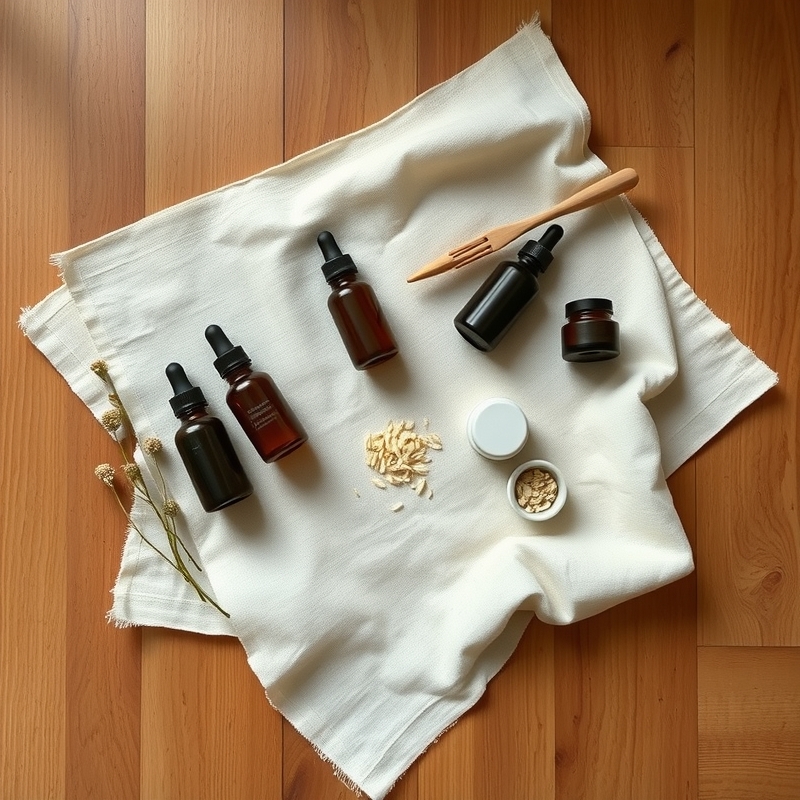
Korean skincare philosophy is rooted in 한방 (hanbang) — traditional Korean herbal medicine — which treats the skin as a living ecosystem, not a surface to coat with products. This is the single biggest thing Western beauty culture gets wrong about K-beauty. Most English-language guides present the “10-step Korean skincare routine” as a shopping list. But in Korea, the actual principle is simpler and more flexible than that.
The 한방 approach follows a concept called 피부결 (pibugeyol) — literally “skin texture grain.” The idea is that healthy skin has a fine, even grain, like well-tended fabric. Every step in a Korean routine exists to support that grain, not to add more layers on top of it. This is why Korean grandmothers — the original K-beauty experts — have used 한방 (hanbang) herbal ingredients like ginseng, mugwort, and rice bran for generations, long before the 10-step routine became a marketing phenomenon.
Walk into any Korean bathroom — not a beauty influencer’s, but a regular apartment in 마포구 (Mapo-gu) — and you’ll notice something surprising. There aren’t 10 products lined up. There are usually five or six, carefully chosen, applied in a specific order that changes between morning and night. The routine isn’t about more steps — it’s about the right steps at the right time.
Korean dermatologists generally recommend what they call the “수분 균형” (subun gyunhyeong) approach — moisture balance. Daytime steps focus on protection and lightweight hydration. Nighttime steps shift to repair and deeper treatment. Using heavy actives in the morning or skipping treatment steps at night is like wearing a winter coat in summer and a t-shirt in winter. Technically you’re dressed, but nothing is working as intended.
5 Hidden Mistakes in Your Korean Skincare Steps Day and Night

These five errors are so common that even experienced K-beauty users make at least two of them — and each one silently undermines your results.
Mistake 1: Skipping Oil Cleanser in the Morning
Wait — oil cleanse in the morning? Most Western guides say oil cleansing is only for PM to remove makeup and sunscreen. But here’s what Korean estheticians know: your skin produces sebum overnight. That sebum mixes with your nighttime products and creates a film that water-based cleansers alone can’t fully dissolve.
You don’t need a full oil massage. A quick 20-second pass with a light cleansing oil in the morning removes that overnight buildup without stripping your skin. The difference? Your morning toner and serum will actually penetrate instead of sitting on top of a sebum barrier.
Mistake 2: Applying Actives Before pH-Balancing Toner
After cleansing, your skin’s pH jumps from its ideal range of about 4.5-5.5 up to 7 or 8. According to the published research on skin pH and barrier function, this elevated pH temporarily weakens your skin’s acid mantle. If you apply vitamin C, niacinamide, or exfoliating acids directly onto alkaline skin, they either won’t work at their optimal pH — or they’ll irritate because your barrier is compromised.
The fix: always apply a pH-balancing toner before any active ingredient. In Korea, this step is so fundamental that skipping it is like brushing your teeth without opening your mouth.
Mistake 3: Using the Same Routine Morning and Night
Your skin has different needs at 7 AM and 10 PM. During the day, your skin faces UV damage, pollution, and dehydration from air conditioning. At night, your skin enters repair mode — cell turnover increases, and your skin becomes more permeable to active ingredients. The American Academy of Dermatology confirms that certain active ingredients work better at specific times of day.
Daytime Korean skincare steps prioritize antioxidants and sun protection. Nighttime steps prioritize repair ingredients and deeper hydration. Using retinol in the morning or skipping occlusive moisturizer at night are two of the most common ways people sabotage their routine.
Mistake 4: Layering Thickest Products First
This is the mistake that causes pilling — that annoying balling-up of product on your face. Korean skincare follows a strict thin-to-thick (묽은 것부터, mulgeun geotbuteo) layering rule. Watery toners go first, then lightweight essences, then serums, then emulsions, then creams. If you apply a thick cream before a watery essence, the essence literally cannot penetrate through the cream’s occlusive layer.
Think of it like painting: you prime before you paint, you paint before you varnish. Reverse any step, and the whole thing falls apart.
Mistake 5: Treating Sunscreen as Optional
In Korea, sunscreen isn’t the last “optional” step. It’s considered the single most important anti-aging product in the entire routine. Korean sunscreens are formulated to layer beautifully over multiple skincare steps because the entire routine is designed to end with sun protection. Without it, every step before it — the antioxidants, the brightening serums, the careful pH balancing — gets undone by UV exposure within minutes.
Korean women reapply sunscreen every 2-3 hours, even indoors. If that sounds excessive, consider that UV penetrates windows. Your morning routine is only as good as your sun protection commitment.
The Correct Korean Skincare Steps Day and Night — Fixed
Here’s the exact sequence Korean women actually follow, broken down by morning and night. Notice the differences — daytime is lighter and protective, nighttime is heavier and reparative.
| Step | Daytime (AM) | Nighttime (PM) | Why It Changes |
|---|---|---|---|
| 1. Oil Cleanse | Light pass (20 sec) | Full massage (60 sec) to dissolve makeup + SPF | PM has more buildup to remove |
| 2. Water Cleanse | Gentle low-pH gel cleanser | Same gentle low-pH cleanser | Same step, same product |
| 3. Toner | pH-balancing, lightweight | pH-balancing, can be more hydrating | Night toner can be richer |
| 4. Essence | Hydrating essence (hyaluronic acid, snail mucin) | Treatment essence (fermented, galactomyces) | PM essences focus on cell renewal |
| 5. Serum / Ampoule | Antioxidant (vitamin C, niacinamide) | Repair (retinol, peptides, AHA/BHA) | Actives matched to skin’s circadian needs |
| 6. Eye Cream | Lightweight, brightening | Rich, anti-wrinkle | Thin AM / thick PM rule |
| 7. Moisturizer | Light emulsion or gel cream | Rich cream or sleeping pack | PM moisture locks in actives |
| 8. Sun Protection | SPF 50+ PA++++ (non-negotiable) | Skip — no sun exposure | Sunscreen is AM-only |
Notice the pattern: daytime is 8 steps focused on defense, nighttime is 7 steps focused on repair. The products may differ, but the thin-to-thick layering principle stays constant.
The 30-Second Rule
Between steps 2 and 3, you have a critical window. Apply your toner within 30 seconds of patting your face dry after cleansing. Korean beauty professionals call this the “골든타임” (golden time). Your skin is most receptive immediately after cleansing, and every second you wait, absorption efficiency drops.
The Pat-Don’t-Rub Technique
For steps 3 through 6, Korean women pat products into the skin using fingertips rather than rubbing or swiping. This isn’t just gentleness — patting creates micro-warmth that helps products absorb, while rubbing can tug at delicate skin and actually push product off rather than in.
Banila Co Clean It Zero Cleansing Balm
This is the oil cleanser that turned double cleansing from a chore into a 60-second mini facial. The sherbet texture melts into oil on contact and dissolves even waterproof sunscreen — exactly what step 1 of your PM routine needs.
(paid link)
See Why Reviewers Love This →
COSRX Advanced Snail 96 Mucin Power Essence
If your skin feels tight after cleansing and toner, this essence changes everything. It’s the most-used essence step in Korean routines for a reason — the snail mucin delivers deep hydration without heaviness, making every product after it absorb better.
(paid link)
Check Availability & Reviews →
Beauty of Joseon Relief Sun: Rice + Probiotics SPF 50+
The reason Korean women actually reapply sunscreen is because Korean sunscreens feel like skincare, not like paint. This one layers seamlessly over a full routine without pilling — solving the single biggest frustration with SPF over multiple products.
(paid link)
View Current Price →
Frequently Asked Questions
What happens if I use the same Korean skincare steps day and night?
You’ll under-protect during the day and under-repair at night. Daytime skin needs antioxidants and SPF to defend against UV and pollution. Nighttime skin needs repair actives like retinol and richer hydration to support cell turnover. Using the same lineup for both means neither job gets done properly.
Do I really need all 8 Korean skincare steps in the morning?
No — even most Korean women skip steps on busy mornings. The three non-negotiable morning steps are: cleanser, moisturizer, and sunscreen. If you have 5 extra minutes, add toner and essence. The full 8-step routine is the ideal, not the daily minimum.
Can I use vitamin C and retinol in the same Korean skincare routine?
Yes, but not at the same time — use vitamin C in the morning and retinol at night. Vitamin C is an antioxidant that works best protecting skin from daytime UV damage. Retinol increases sun sensitivity, so it belongs in your PM routine only. This AM/PM split is standard in Korean dermatology practice.
How long should I wait between Korean skincare steps?
About 30-60 seconds between each step is ideal. Wait until the previous product feels absorbed but your skin is still slightly damp — this is when the next layer penetrates best. The exception is after cleansing: apply toner within 30 seconds to catch the “골든타임” (golden time) absorption window.
What’s the difference between Korean skincare and Western skincare routines?
Korean skincare focuses on layering multiple lightweight hydrating products, while Western routines typically use fewer but heavier products. The Korean approach prioritizes prevention and hydration over correction. This means more gentle, hydrating layers applied thin-to-thick, rather than one thick moisturizer expected to do everything.
Key Takeaways
- Korean skincare steps change between day and night — daytime protects with antioxidants and SPF, nighttime repairs with actives and richer hydration
- The thin-to-thick layering rule (묽은 것부터) determines product order more than any fixed step number — watery products first, creamy products last
- Apply toner within 30 seconds of cleansing to catch the pH-balancing “golden time” when skin absorption is highest
- Double cleansing belongs in both AM and PM routines — a quick morning oil cleanse removes overnight sebum that blocks product absorption
- Sunscreen is the most important step in your entire morning routine — without it, every prior step gets undermined by UV exposure
- The 한방 (hanbang) philosophy treats skin as an ecosystem, not a surface — focus on balance and sequence rather than adding more products
Tonight, try this one change: set a timer after you wash your face. Apply your toner before 30 seconds pass. Tomorrow morning, check how your skin feels compared to yesterday — that single timing adjustment is worth more than any new product you could buy.
This article contains affiliate links. If you purchase through these links, we may earn a small commission at no extra cost to you. We only recommend products we genuinely believe in.
You Might Also Like
- 7 Korean Ramen Recipes at Home That Actually Taste Real
- Korean Sunscreen Under Makeup: 5 I Wish I Found Sooner
- Korean Body Care Tips You’re Doing Wrong (5 Fixes)