Quick Answer: The secret to Korean ramen that tastes like Seoul isn’t the brand — it’s technique. Korean home cooks treat instant ramyeon as a base, not a finished product. Here’s what you need to know:
- Cook noodles 1 minute less than package directions (they finish in the hot broth)
- Add fresh ingredients in a specific order based on cook time
- Never drain the water — the starchy broth IS the sauce
- Egg timing matters more than egg style
- One melted cheese slice transforms spicy broth into something creamy and addictive
| Recipe | Spice Level | Time | Best For |
|---|---|---|---|
| Classic Shin Ramyeon Upgrade | 🔥🔥🔥 | 12 min | Weeknight comfort |
| Cheese Ramyeon (치즈라면) | 🔥🔥 | 14 min | Creamy spice lovers |
| Army Stew Style (부대찌개) | 🔥🔥🔥 | 25 min | Feeding a group |
| Egg Drop Ramyeon | 🔥 | 10 min | Mild and silky |
| Kimchi Ramyeon | 🔥🔥🔥🔥 | 15 min | Using aged kimchi |
| Cold Bibim Ramyeon | 🔥🔥 | 12 min | Summer meals |
| Jjapaguri (Ram-don) | 🔥 | 15 min | Rich and savory |
1. Classic Shin Ramyeon Upgrade — The One Every Korean Actually Makes
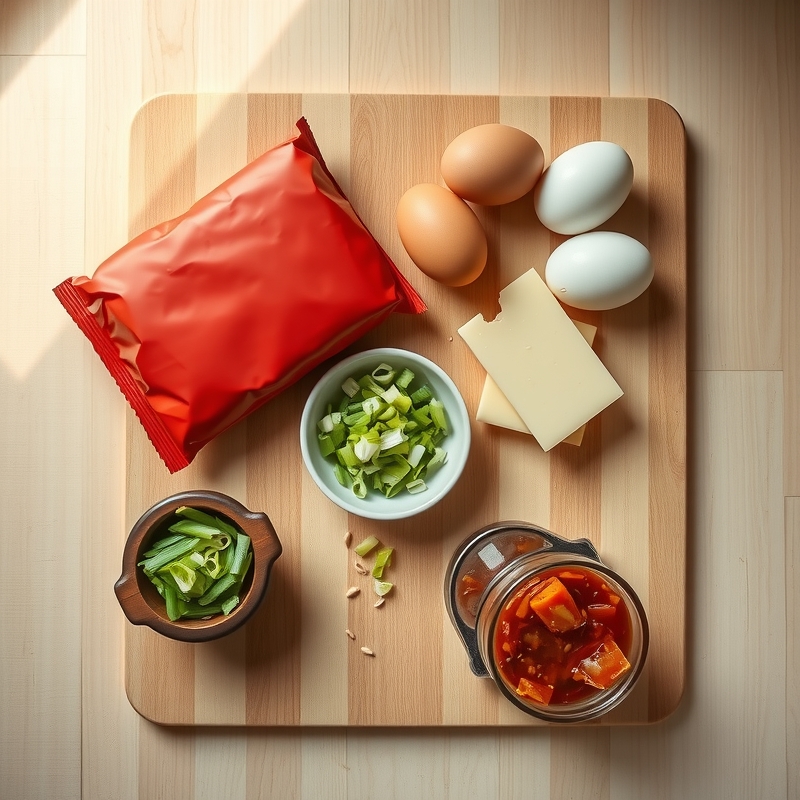
The difference between tourist ramen and Korean ramen is what happens in the last 90 seconds of cooking. Walk into any Korean office break room at lunch and you’ll see the same ritual: noodles go in, then exactly 90 seconds before the timer ends, a cracked egg and sliced green onion hit the bubbling pot.
Most food blogs get this wrong — they tell you to cook the noodles fully, then add toppings. Korean home cooks do the opposite. The toppings cook WITH the noodles in the final moments, which means the egg whites set in the spicy broth while the yolk stays molten.
The Upgrade Method
- Boil 550ml water (not 500ml — the extra accounts for evaporation)
- Add soup base and vegetable packet first, let it dissolve 30 seconds
- Add noodles, cook 3 minutes total
- At 1:30 remaining: crack in one egg, do NOT stir
- At 0:30 remaining: add sliced green onion and one slice of processed cheese on top
- Remove from heat, cover with lid for 60 seconds
That resting step is everything. The residual heat finishes the noodles to the perfect 쫄깃 (jjolgit — bouncy chewy) texture that Koreans obsess over. Without it, you’ll overcook your noodles every single time.
2. Cheese Ramyeon (치즈라면) — Korea’s Midnight Comfort Food
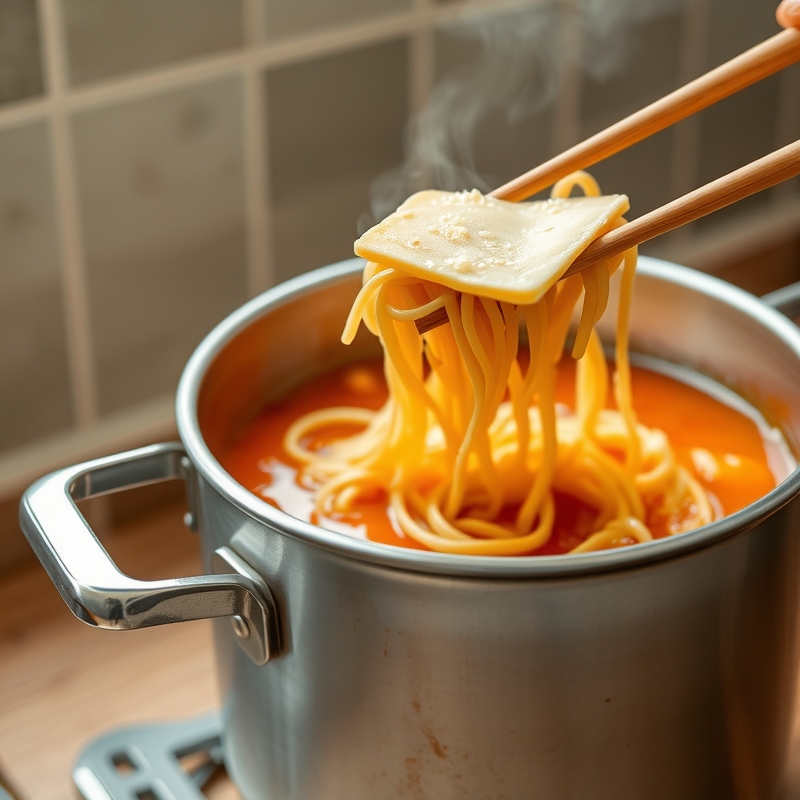
Cheese ramyeon isn’t just ramen with cheese on top — it’s a specific cooking technique that creates a creamy, spicy emulsion. This is what Korean university students eat at 2 AM after studying, and what office workers crave when they’ve had the worst day. The cheese doesn’t just melt — it transforms the broth chemistry entirely.
According to food science research on casein protein and emulsification, the sodium caseinate in processed cheese acts as a natural emulsifier, binding the oil from the spicy soup base into a creamy suspension rather than letting it float on top.
Why Processed Cheese, Not Fancy Cheese
Korean convenience stores stock individually-wrapped processed cheese slices specifically for this. Cheddar or mozzarella won’t work the same way — they separate and get stringy. Processed cheese melts uniformly because it’s already an emulsion.
- Cook your preferred spicy ramyeon as normal
- Use slightly less water (500ml instead of 550ml) — you need concentrated broth
- When noodles are 80% done, reduce heat to low
- Lay one slice of processed cheese on top of noodles
- Cover and wait 40 seconds — do NOT stir yet
- Now stir gently until cheese integrates into broth
The result is a sunset-orange, creamy broth that coats every noodle. This is the version that Korean mukbang creators film most often — because it looks as good as it tastes.
3. Army Stew Style Ramyeon (부대찌개) — The One You’re Missing
부대찌개 (budae-jjigae) started as post-war resourcefulness and became one of Korea’s most beloved shared meals — and you can make a weeknight version in 25 minutes. Most people think army stew requires a trip to a Korean grocery store. It doesn’t. The core principle is simple: spicy ramyeon broth as a base, canned proteins for depth, and kimchi for fermented funk.
This recipe uses what’s probably already in your pantry. The original budae-jjigae was born in the 1960s near U.S. military bases in Uijeongbu, where Koreans combined American surplus (spam, hot dogs, processed cheese) with Korean staples (kimchi, gochugaru, ramyeon). It’s fusion food that predates the word “fusion.”
Weeknight Version
- Slice 3-4 pieces of spam (or any canned luncheon meat) into thin rectangles
- Chop ½ cup aged kimchi into bite-sized pieces
- In a wide pot, layer: kimchi on bottom, spam slices, 1 sliced hot dog, 1 slice cheese
- Add 700ml water + your ramyeon soup packet
- Bring to boil, then add noodles
- Cook 4 minutes, finish with green onion and a drizzle of sesame oil
The key nobody mentions: use a wide, shallow pot so ingredients cook in a single layer. The spam should sear slightly against the pot bottom before the water goes in — that caramelization is where the deep savory flavor hides.
Korean Ramyeon Pot (양은냄비) — Aluminum Traditional Pot
When I make budae-jjigae or any ramyeon at home, I use a Korean aluminum yangeun pot because it heats fast and evenly — the same style used in every Korean drama ramen scene. Under $15 for the real thing.
(paid link)
Check Availability & Reviews →
4. Egg Drop Ramyeon — The Mild One That Converts Skeptics
If you think Korean ramen is always fiery, this silky egg drop version will change your mind in one bowl. Korean parents make this for kids and for anyone recovering from a cold. It uses a mild ramyeon base (like Nongshim Ansungtangmyun or Samyang Original) and turns the broth into something resembling egg drop soup married with noodles.
The technique comes from Chinese-Korean cooking (중화요리 influence), and the key is creating thin ribbons of egg rather than chunky scrambled pieces.
The Ribbon Egg Technique
- Beat 2 eggs with a fork until completely uniform — no white streaks
- Cook mild ramyeon normally, using full water amount
- When noodles are done, keep broth at a GENTLE simmer (not a rolling boil)
- Slowly pour egg in a thin stream while stirring the broth in one direction
- The circular motion creates thin ribbons instead of clumps
- Add a pinch of white pepper and sesame oil off-heat
Rolling boil = chunky egg bits. Gentle simmer + thin stream = silk ribbons. This is the kind of detail that separates “I followed the recipe” from “this tastes like the ones in Korea.”
5. Kimchi Ramyeon — The Fermented Powerhouse
The single most important ingredient in kimchi ramyeon isn’t fresh kimchi — it’s OLD kimchi that’s been fermenting in your fridge for weeks. Koreans call it 묵은지 (mugeun-ji, aged kimchi), and it has a sour, funky depth that fresh kimchi simply cannot replicate. If your kimchi is getting “too sour to eat plain,” it’s actually reaching its perfect state for cooking.
The lactic acid bacteria produced during kimchi fermentation create complex flavor compounds that intensify over time. When heated in broth, these compounds release umami and tartness that makes a simple packet of ramyeon taste like it simmered for hours.
The Stir-Fry-First Method
- Chop ½ cup aged kimchi (the sourer the better)
- In your pot, stir-fry kimchi with ½ teaspoon sesame oil for 2 minutes
- Add ½ teaspoon sugar — this balances the acidity and creates slight caramelization
- Add water and soup packet, bring to boil
- Add noodles and cook as usual
- Top with a fried egg and toasted sesame seeds
That stir-fry step before adding water is what Korean grandmothers do for 김치찌개 (kimchi stew). It concentrates the kimchi flavor by evaporating excess moisture and caramelizing the sugars. Most recipes skip this and end up with watery, one-dimensional kimchi flavor.
6. Cold Bibim Ramyeon (비빔라면) — Summer’s Overlooked Answer
When Seoul hits 35°C in July, nobody eats hot ramen — they eat 비빔라면 (bibim ramyeon), cold spicy noodles that take 12 minutes and require zero cooking skill. This style is massively popular in Korea from June through September but almost unknown in Western Korean food content. You’re about to become the friend who introduces this to everyone.
The concept is simple: cook noodles, drain, ice bath, toss in sweet-spicy sauce. But the sauce ratio is everything.
The Sauce Formula
- Cook ramyeon noodles in boiling water (discard the soup packet or save for another day)
- Drain and rinse under cold water until noodles are completely chilled
- Mix sauce: 2 tbsp gochujang + 1 tbsp rice vinegar + 1 tbsp sugar + 1 tsp sesame oil + ½ tbsp soy sauce
- Toss cold noodles in sauce until evenly coated
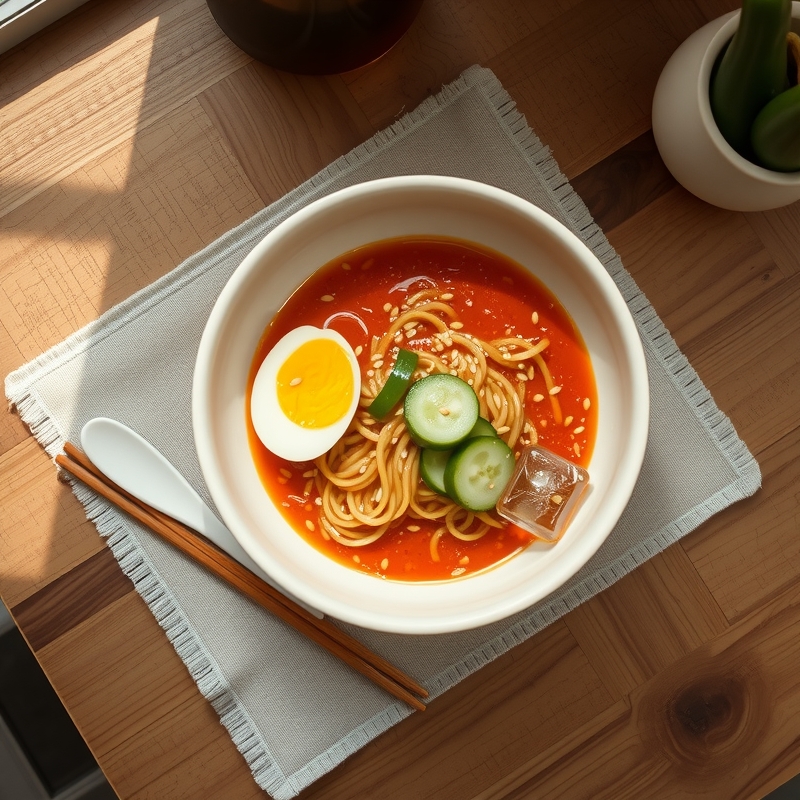
- Top with: sliced cucumber, halved boiled egg, toasted sesame seeds
- Add ice cubes directly on top if eating immediately (they melt and loosen the sauce)
The ice cube trick is something you’ll see at Korean 분식 (bunsik, snack restaurants). It looks strange but it prevents the noodles from clumping while adding a refreshing chill. Try this once on a hot day and you’ll never go back to eating hot ramen in summer.
7. Jjapaguri (짜파구리) — The Parasite Recipe Done Right
Jjapaguri became globally famous after the 2020 film Parasite, but most recreations miss the point — it’s meant to be a rich person’s version of a poor person’s dish. The original 짜파구리 is a college student hack: mixing Chapagetti (black bean noodles) with Neoguri (spicy seafood noodles) to get the best of both worlds. The film version added expensive steak to highlight class contrast.
Here’s what matters for taste: the ratio between the two packets and the water reduction.
The Correct Method
- Boil both Chapagetti and Neoguri noodles together in 600ml water (less than the combined recommendation)
- Cook noodles 4 minutes
- Drain MOST water, leaving only 3-4 tablespoons in the pot
- Add: full Chapagetti powder + Chapagetti oil packet + only HALF the Neoguri powder
- Stir vigorously on medium heat for 1 minute until sauce coats noodles
- Optional: top with cubed pan-seared beef or diced spam
Using full Neoguri powder is the most common mistake — it overwhelms the black bean flavor. Half packet gives you the seafood depth without turning it into spicy soup noodles. The reduced water means the sauce clings instead of pooling at the bottom.
라면 문화 (Ramyeon Munhwa) — Why Ramen Means Something Different in Korea
In Korea, 라면 (ramyeon) isn’t a cheap fallback meal — it’s a cultural ritual embedded in daily life, relationships, and even romance. The phrase “라면 먹고 갈래?” (ramyeon meokgo gallae — “want to come in for ramen?”) is Korea’s equivalent of “Netflix and chill.” It appears in K-dramas constantly, and every Korean watching knows exactly what it implies.
Korean convenience stores (편의점) have dedicated hot water dispensers and eating counters specifically for ramyeon. Office workers eat ramyeon from the pot lid — not because they’re lazy, but because the aluminum lid keeps noodles hotter longer and it’s considered the “proper” casual way to eat. When you’re camping, hiking, or at a rest stop on the highway, ramyeon is the default meal. It’s social glue.
This cultural weight explains why Koreans are so particular about their ramyeon technique. It’s not fussy cooking — it’s respecting something that carries emotional weight. When a Korean friend tells you “you’re cooking it wrong,” they care because ramyeon carries memories of late-night study sessions, first apartments, and midnight conversations with friends.
Korea consumes more instant noodles per capita than any other country — not because of poverty, but because 라면 occupies a unique emotional space between home cooking and convenience that no other food fills.
Korean Ramen Recipes Compared: Which One Should You Make Tonight?
| Feature | Cheese Ramyeon (Best Value) | Classic Upgrade | Jjapaguri |
|---|---|---|---|
| Extra ingredients needed | 1 (cheese slice) | 2 (egg + green onion) | 2 ramyeon packets + protein |
| Total time | 14 minutes | 12 minutes | 15 minutes |
| Skill level | Absolute beginner | Beginner | Intermediate (water control) |
| Cost per serving | Under $2 | Under $2 | Around $3-5 with protein |
| Spice tolerance needed | Medium (cheese mellows heat) | High | Low-medium |
| Leftovers? | No — eat immediately | No — noodles absorb broth | Passable next day (microwave) |
| Impress factor | High (looks restaurant-quality) | Medium (classic comfort) | Very high (movie connection) |
If you’ve never upgraded your ramyeon before, start with cheese ramyeon. One extra ingredient, zero extra skill, maximum transformation. Once you’ve nailed that, kimchi ramyeon and budae-jjigae style open up a completely different level of depth.
Nongshim Shin Ramyeon (Multipack)
The base that most of these recipes build on. Shin Ramyeon’s broth has a beef-and-mushroom backbone that responds to add-ins better than any other Korean instant brand — it’s what Korean households stock by default.
(paid link)
See Why Reviewers Love This →
Frequently Asked Questions
What happens if I use too much water in Korean ramen?
Too much water dilutes the soup base and makes noodles soggy instead of chewy. Korean home cooks measure carefully — typically 550ml for one packet. The starchy cooking water is meant to become a concentrated, flavorful broth, not a thin soup. Reduce by 50ml if you like thicker, more coating broth.
Can I use Japanese ramen noodles for these Korean recipes?
Korean ramyeon noodles are specifically designed to stay chewy in boiling broth — Japanese fresh ramen noodles will overcook. Korean instant noodles are fried and have a different starch structure that holds up to the aggressive boiling technique these recipes use. If substituting, look for other Korean brands (Samyang, Ottogi, Paldo) rather than Japanese alternatives.
How do I make Korean ramen less spicy without ruining the flavor?
Add one slice of processed cheese or a splash of milk (2 tablespoons) to neutralize capsaicin without diluting flavor. The casein protein in dairy binds to capsaicin molecules. Alternatively, use only ¾ of the spice packet and compensate with a teaspoon of soy sauce for salt depth. Adding more water just makes it bland AND spicy.
Why do Koreans eat ramen from the pot lid?
The aluminum lid retains heat better than a bowl, keeping noodles at optimal eating temperature longer. It’s also a practical habit from small Korean kitchens where minimizing dishes matters. Eating from the lid is considered casual and friendly — you’d do it with close friends, not at a formal dinner.
What’s the best Korean ramen brand to start with?
Nongshim Shin Ramyeon is the default starting point — it’s Korea’s best-selling brand and the most versatile base for recipe upgrades. For milder options, try Nongshim Ansungtangmyun. For next-level spice, Samyang Buldak (fire noodles) is the challenge brand. Each recipe above specifies which style works best.
Key Takeaways
- Cook noodles 1 minute less than package directions — the residual heat after removing from the stove finishes them to perfect Korean-style chewiness
- Stir-fry kimchi before adding water — this single step transforms watery kimchi ramen into something that tastes slow-cooked
- Processed cheese is not optional, it’s chemistry — the emulsifying salts create a creamy broth that real cheese cannot replicate
- Cold bibim ramyeon exists and it’s what Koreans actually eat in summer — hot ramen in July is a Western assumption
- Use only HALF the Neoguri packet in jjapaguri — full packet is the #1 reason home versions taste wrong compared to the Parasite version
- The pot matters more than you think — Korean aluminum 양은냄비 pots heat faster and more evenly than thick stainless steel, giving you better boil control
Tonight, grab whatever instant ramyeon you have, cook it with 50ml less water than usual, and kill the heat 1 minute early. Cover the lid and wait 60 seconds. That one change — you’ll never cook it the old way again.
This article contains affiliate links. If you purchase through these links, we may earn a small commission at no extra cost to you. We only recommend products we genuinely believe in.
You Might Also Like
- Korean Sunscreen Under Makeup: 5 I Wish I Found Sooner
- Korean Body Care Tips You’re Doing Wrong (5 Fixes)
- Korean Style Room Makeover: 7 Unexpected Rules from Seoul