Quick Answer: The five Korean beef soups worth knowing are seolleongtang (milky bone broth), galbitang (short rib), yukgaejang (spicy shredded beef), gomtang (clear bone broth), and miyeokguk (seaweed beef soup) — each serves a different purpose, and Korean women in their 40s choose based on what their body needs that week, not what’s trending. Here’s what you need to know:
- Fastest to make: Miyeokguk — under 40 minutes, weeknight-friendly
- Deepest nutrition: Seolleongtang — collagen-rich bone broth simmered 8+ hours
- Best for cold or fatigue: Yukgaejang — spicy, clears sinuses, warms from inside
- Most impressive for guests: Galbitang — elegant short rib soup, restaurant-quality
- Gentlest on digestion: Gomtang — clear, clean, easy on a tired stomach
My Korean neighbor — a working mother of two college-aged kids — doesn’t Google “beef soup recipes.” She opens her fridge, checks her energy level, and picks from a mental rotation of five soups her own mother made. Each Korean beef soup exists for a specific reason: recovery, warmth, celebration, or simply getting through a hard week. That’s something most Western recipe sites miss entirely. They list these soups alphabetically. Korean women choose them like medicine.
If you’ve been staring at Korean soup recipes with beef and wondering which one to actually try first — or which one is worth the long simmer on a Saturday — this comparison breaks it down honestly. No “all of them are amazing!” filler. Real trade-offs, real cook times, real reasons Korean women in their 40s and 50s keep coming back to specific bowls.
Korean Beef Soup Recipes Compared: The 5 Soups You Need to Know
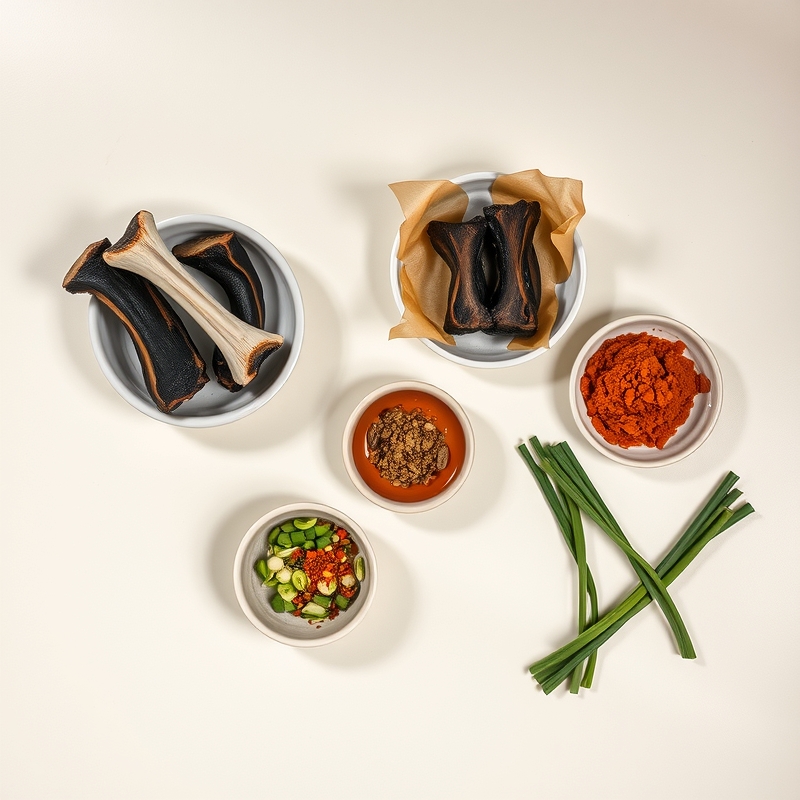
Korean cuisine has over a dozen beef-based soups, but five dominate everyday Korean kitchens — and each one fills a gap the others can’t. Understanding the difference saves you from wasting a Sunday afternoon on the wrong pot.
Here’s the honest overview before we go deeper:
| Soup | Korean Name | Cook Time | Difficulty | Best For |
|---|---|---|---|---|
| Seolleongtang | 설렁탕 | 8-12 hours | Easy (but long) | Collagen, joint support, deep nourishment |
| Galbitang | 갈비탕 | 1.5-2 hours | Moderate | Guests, special meals, elegant comfort |
| Yukgaejang | 육개장 | 1-1.5 hours | Moderate | Colds, fatigue, clearing congestion |
| Gomtang | 곰탕 | 5-8 hours | Easy (but long) | Gentle recovery, light eating days |
| Miyeokguk | 미역국 | 30-40 min | Easy | Weeknight meals, postpartum, birthdays |
Notice something? The two soups with the longest cook times — seolleongtang and gomtang — are actually the easiest to make. You’re not standing over a stove. You’re simmering bones while you do laundry, answer emails, or watch the next episode of your K-drama. The pot does the work. That’s a detail most recipe roundups skip, and it changes which soup you’ll realistically make on a busy week.
Cook Time vs. Nutrition: Which Korean Beef Soup Gives You the Most?
Without understanding what each soup actually delivers nutritionally, you’ll default to whichever looks prettiest on Instagram — and miss the one your body is asking for. Korean mothers don’t think in terms of “recipes to try.” They think in terms of 보양식 (boyangsik) — nourishing food that restores what’s been depleted.
설렁탕 Seolleongtang (Milky Ox Bone Soup)
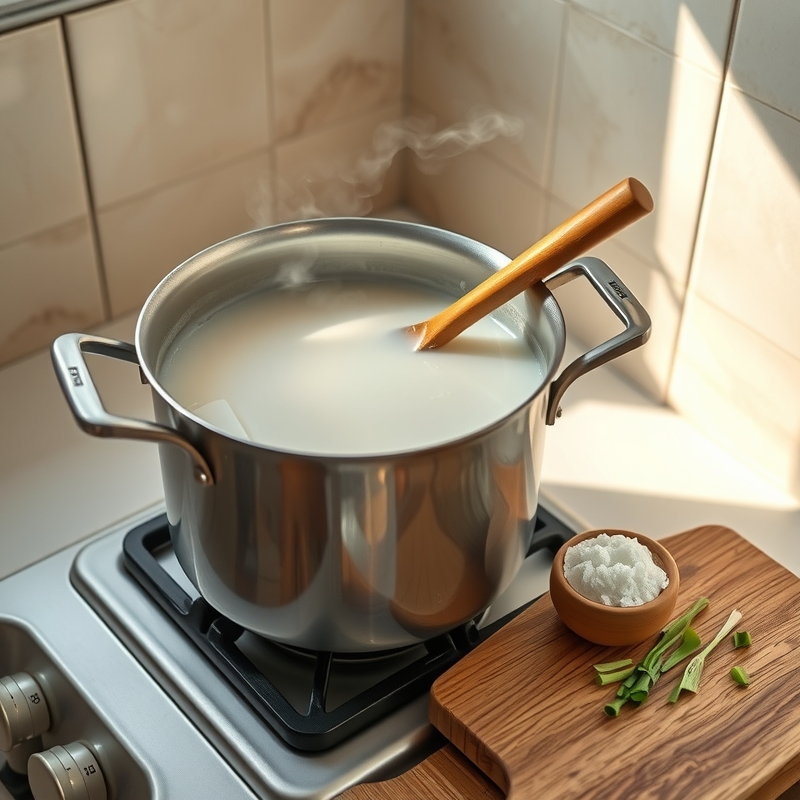
This is the soup Korean women in their 40s simmer when their joints ache, their skin feels thin, or they’re just depleted. Ox bones — leg bones, knuckle bones — boil for 8 to 12 hours until the broth turns opaque white. That milky color isn’t dairy. It’s collagen, marrow, and minerals that have broken down into the liquid. You season it yourself at the table with salt and chopped scallions.
Bone broth is rich in glycine and proline, amino acids that support connective tissue. According to research indexed on PubMed on bone broth and collagen, long-simmered animal bones release bioavailable forms of these amino acids. Korean grandmothers didn’t need the study — they watched their mothers do it.
갈비탕 Galbitang (Short Rib Soup)
Galbitang is the soup you make when someone important is coming over — or when you want to feel like someone important. Beef short ribs simmer with Korean radish, garlic, and scallions until the meat is fall-off-the-bone tender. It’s clear-brothed, elegant, and deeply satisfying without being heavy.
Galbitang sits in the sweet spot between effort and reward. Unlike seolleongtang, it doesn’t demand a full day. Unlike miyeokguk, it feels like an event. For a weeknight where you need a win — a meal that makes the house smell like a Seoul restaurant — this is it.
육개장 Yukgaejang (Spicy Shredded Beef Soup)
When a Korean woman in her 40s feels a cold creeping in, or she’s bone-tired after a brutal work week, she makes yukgaejang. Shredded beef brisket simmers with gosari (fernbrake), bean sprouts, scallions, and a generous amount of gochugaru (red pepper flakes). The heat isn’t for show — it’s functional. The capsaicin opens airways, the broth replaces fluids, and the protein rebuilds.
Capsaicin, the active compound in chili peppers, has well-documented effects on nasal congestion and metabolism. The NIH Office of Dietary Supplements notes that many traditional food compounds have measurable physiological effects — yukgaejang stacks several of them in one bowl.
곰탕 Gomtang (Clear Beef Bone Broth)
Gomtang is seolleongtang’s quieter sibling. It uses similar bones but produces a clear, clean broth instead of a milky one — the difference is technique. Gomtang bones are carefully rinsed and simmered at a gentler boil, so the fat and marrow stay separated rather than emulsifying into the liquid.
Korean women recovering from illness, surgery, or simply a rough perimenopause week reach for gomtang. It’s the soup that says “I need to eat something, but nothing heavy.” If seolleongtang is a deep-tissue massage, gomtang is a warm compress.
미역국 Miyeokguk (Seaweed Beef Soup)
Every Korean person eats miyeokguk on their birthday. Every Korean mother eats it daily for weeks after giving birth. 미역 (miyeok, wakame seaweed) is exceptionally rich in iodine, calcium, and iron — exactly what a body needs during hormonal transitions, including perimenopause.
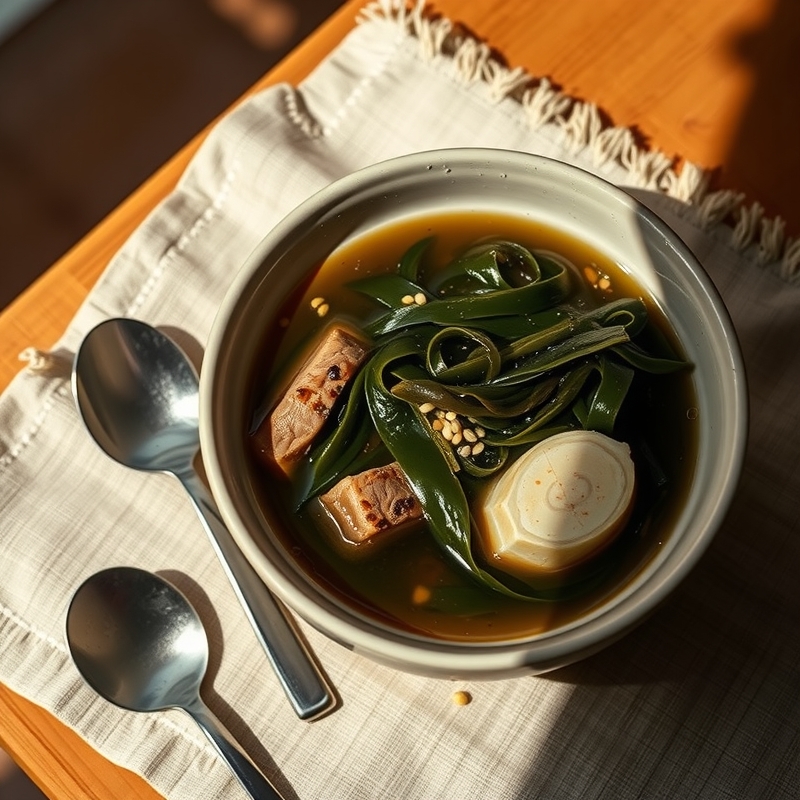
The beef version uses thinly sliced brisket or flank, sesame oil, garlic, and soy sauce. It comes together in under 40 minutes. This is the Korean beef soup you’ll make most often — not because it’s the most impressive, but because it’s the most practical. And honestly? After a long Wednesday, practical wins.
Korean Beef Soup Recipes: Cost, Ingredients, and Effort Compared
The biggest mistake with Korean beef soups is choosing based on how exciting the recipe sounds instead of what your real week actually looks like. A soup you never make because it requires a specialty cut you can’t find isn’t helping anyone.
| Factor | Seolleongtang | Galbitang | Yukgaejang | Gomtang | Miyeokguk |
|---|---|---|---|---|---|
| Main Beef Cut | Ox bones (leg, knuckle) | Beef short ribs | Brisket or shank | Beef bones (various) | Brisket or flank |
| Approx. Cost (per pot) | Around $8-15 | Around $15-25 | Around $8-12 | Around $8-15 | Around $5-8 |
| Key Pantry Items | Salt, scallions | Garlic, radish, soy sauce | Gochugaru, gosari, sesame oil | Salt, scallions | Dried miyeok, sesame oil, soy sauce |
| Special Ingredients? | No | No | Gosari (dried fernbrake) | No | Dried miyeok (seaweed) |
| Where to Find Beef | Any butcher, Asian mart | Asian mart, Costco | Any grocery store | Any butcher, Asian mart | Any grocery store |
| Servings per Pot | 6-8 | 4-6 | 5-7 | 6-8 | 4-5 |
| Freezes Well? | Excellent | Good | Good | Excellent | Fair (seaweed softens) |
See the pattern? Seolleongtang and gomtang are the best value soups — cheap bones, massive yield, freeze beautifully. Korean mothers make a big pot on the weekend and portion it into containers for the week. Galbitang costs the most because short ribs aren’t cheap anywhere in the world. But for a special Friday dinner? Worth every dollar.
If you’re stocking a Korean pantry for the first time, miyeokguk requires the least commitment: dried seaweed, sesame oil, soy sauce, garlic, and whatever affordable beef cut your grocery store has. Start there.
Korean Dried Miyeok (Wakame Seaweed)
When I make miyeokguk on a Tuesday night, I grab a small handful of dried miyeok — it expands to five times its size in water, so a single bag lasts months. This is the most cost-effective entry point into Korean beef soups.
(paid link) Check Availability & Reviews →
Why Korean Mothers Choose Different Beef Soups for Different Seasons — 보양식 (Boyangsik) Culture
In Korean households, soup isn’t a recipe you “feel like making.” It’s 보양식 (boyangsik) — restorative food chosen to match your body’s current state. This concept doesn’t have a clean English translation, and that’s exactly why Western soup advice falls flat for women in their 40s who are dealing with shifting hormones, depleted energy, and bodies that don’t bounce back the way they did at 30.
Here’s how Korean women actually rotate their beef soups through the year:
- Winter (cold, dry): 설렁탕 or 곰탕 — deep bone broth to warm from the core and support joints that stiffen in cold weather
- Summer (hot, humid): 육개장 — counterintuitive, but Koreans practice 이열치열 (iyelchiyeol, “fight heat with heat”). A bowl of spicy soup makes you sweat, which actually cools you down
- Spring/Fall transitions: 갈비탕 — moderate, balanced, a reset between extremes
- Birthdays, postpartum, recovery: 미역국 — always. This isn’t optional. It’s cultural protocol.
- After illness or surgery: 곰탕 first (gentle), then 설렁탕 (richer) as strength returns
This rotation isn’t random — it follows 절기 (jeolgi), the traditional Korean seasonal calendar that divides the year into 24 micro-seasons. Korean grandmothers tracked these shifts instinctively. Modern Korean women in their 40s have inherited a simplified version: listen to your body, match the soup to what’s depleted, don’t eat the same thing every week just because you found one recipe you like.
Walk into any 한식당 (hansikdang, Korean restaurant) in Seoul and the soup menu changes with the season. The ajumma running the kitchen isn’t following trends. She’s following her mother’s logic. That’s the difference between a recipe collection and a food philosophy.
Korean Beef Soups: Healing Benefits Compared for Women in Their 40s and 50s
After 40, your body stops being polite about what it needs. Joint stiffness, thinning skin, disrupted sleep, digestive sensitivity, perimenopause symptoms — Korean women have been addressing these with specific soups for generations, long before “bone broth” became a Western wellness trend.
| Health Concern | Best Korean Beef Soup | Why It Helps |
|---|---|---|
| Joint stiffness / collagen loss | 설렁탕 (Seolleongtang) | 8+ hours of bone simmering releases glycine and proline — building blocks for connective tissue |
| Coming down with a cold | 육개장 (Yukgaejang) | Capsaicin clears airways; hot broth replaces fluids; protein supports immune function |
| Digestive sensitivity | 곰탕 (Gomtang) | Clear broth, low fat, easy to absorb — won’t aggravate a sensitive stomach |
| Iron / mineral depletion | 미역국 (Miyeokguk) | Seaweed provides iodine, calcium, and iron; beef adds B12 and heme iron |
| Perimenopause fatigue | 설렁탕 or 미역국 | Mineral-dense, warming, easy to digest — addresses multiple depletions at once |
| Entertaining / morale boost | 갈비탕 (Galbitang) | Not every need is physical — sometimes you need a soup that makes Friday feel special |
Notice the last row. Korean mothers understand something Western wellness culture often forgets: food that lifts your mood is also healing food. Galbitang on a Friday night with your family isn’t indulgent. It’s 정 (jeong) — the uniquely Korean concept of deep, accumulated emotional warmth built through shared meals and presence.
Korean Gochugaru (Red Pepper Flakes) for Yukgaejang
The difference between yukgaejang that clears your sinuses and one that just tastes generically spicy comes down to gochugaru quality. Korean-made flakes are sun-dried and slightly sweet — nothing like crushed red pepper from the pizza shop. Under $12 for a bag that lasts months.
(paid link) See Why Reviewers Love This →
Which Korean Beef Soup Should You Make First? The Verdict
If you’ve never made Korean beef soup before, start with miyeokguk. Here’s why — and here’s when to graduate to the others:
| Your Situation | Make This First | Why |
|---|---|---|
| Total beginner, weeknight cook | 미역국 (Miyeokguk) ★ Winner | 30 minutes, 5 ingredients, forgiving technique, affordable |
| Weekend project, meal prep queen | 설렁탕 (Seolleongtang) | Hands-off simmering, freezes perfectly, feeds you all week |
| Impressing someone this Friday | 갈비탕 (Galbitang) | Restaurant-level results, under 2 hours, elegant presentation |
| Fighting a cold right now | 육개장 (Yukgaejang) | Spicy, clearing, restorative — the Korean answer to chicken soup |
| Sensitive stomach, recovering | 곰탕 (Gomtang) | Gentlest option, won’t upset anything, quietly nourishing |
The overall winner for women in their 40s and 50s who are new to Korean cooking: miyeokguk. It’s the lowest barrier to entry, delivers serious minerals (iodine, calcium, iron — all of which deplete faster during perimenopause), and you can make it on a Tuesday after work. Once you’ve got that in your rotation, seolleongtang on a lazy Saturday is your next move. Then you’ll build from there naturally, the way Korean daughters learn — one soup at a time, watching their mothers.
Korean Sesame Oil (Chamgireum) — Essential for Miyeokguk and Yukgaejang
Korean sesame oil is darker, nuttier, and more fragrant than what you’ll find in the international aisle at most American grocery stores. It’s the first ingredient that hits the pot in both miyeokguk and yukgaejang, and it’s the single upgrade that makes your Korean soup taste like Seoul, not a vague approximation. Around $8-12 for a bottle that lasts through dozens of pots.
(paid link) View Current Price →
Frequently Asked Questions
What happens if I don’t blanch the beef bones before making Korean soup?
Your broth will be cloudy, gritty, and have an off-putting gamey taste. Blanching — boiling the bones for 10 minutes, then draining and rinsing — removes blood, impurities, and surface fat. Every Korean grandmother does this step first. It takes 15 minutes and it’s the difference between broth you want to drink and broth you pour down the drain.
Can I use a slow cooker or Instant Pot for seolleongtang?
Yes, but expect a different result. A slow cooker on low for 12-16 hours produces decent seolleongtang. An Instant Pot on high pressure for 2-3 hours gets you close but the broth won’t be as deeply milky. Korean mothers who’ve tried both generally prefer stovetop for seolleongtang specifically — the rolling boil is what emulsifies the collagen into that white broth. For gomtang and galbitang, a pressure cooker works well.
Which Korean beef soup has the most collagen for skin health?
Seolleongtang delivers the most collagen because it uses knuckle and leg bones simmered the longest — 8 to 12 hours. Gomtang is second. Both rely on prolonged heat to break down connective tissue into gelatin. You’ll know the collagen content is high when the leftover broth turns to jelly in the fridge.
What’s the best beef cut if my grocery store doesn’t have Korean cuts?
For most Korean beef soups, standard American grocery store cuts work fine. Use beef shank or chuck for yukgaejang (shred it after cooking). Use any marrow bones or knuckle bones for seolleongtang and gomtang — ask your butcher, who usually has them cheap. For miyeokguk, flank steak or stew beef works perfectly. The only soup that genuinely benefits from a Korean or Asian market is galbitang, where flanken-cut short ribs are ideal.
How long do Korean beef soups last in the fridge and freezer?
Most Korean beef soups keep 4-5 days refrigerated and 2-3 months frozen. Seolleongtang and gomtang freeze best — the bone broth base thaws beautifully. Miyeokguk is the trickiest to freeze because the seaweed gets mushy; it’s best made fresh. For meal prep, make a big pot of seolleongtang on Sunday, portion into individual containers, and reheat through the week.
Key Takeaways
- Korean beef soup recipes aren’t interchangeable — each of the five main soups serves a specific purpose, from joint recovery (seolleongtang) to cold-fighting (yukgaejang) to mineral replenishment (miyeokguk).
- Miyeokguk is the best starting point for beginners: 30 minutes, 5 ingredients, rich in iodine, calcium, and iron that women in their 40s and 50s increasingly need.
- The longest Korean beef soups to cook (seolleongtang, gomtang) are actually the easiest — they simmer unattended while you live your life, and they freeze perfectly for weeknight meals.
- Korean mothers choose soup based on 보양식 (boyangsik) — matching food to what the body is missing, not based on what recipe looks most photogenic.
- You don’t need a Korean grocery store for most of these soups. Standard beef bones, brisket, shank, and flank steak from any American grocery store work for four out of five recipes.
- The blanching step is non-negotiable. Skipping it ruins the broth — 15 minutes of prep prevents hours of disappointment.
Tonight, soak a small handful of dried miyeok in cold water for 10 minutes — watch it bloom to five times its size. Tomorrow, slice some beef, heat sesame oil, and make your first pot of miyeokguk. It’ll take less time than your commute, and your kitchen will smell like a Seoul apartment on a birthday morning.
This article contains affiliate links. If you purchase through these links, we may earn a small commission at no extra cost to you. We only recommend products we genuinely believe in.
You Might Also Like
- Korean Beauty Supplements After 40 (And 3 to Skip)
- Spring Korean Skincare After 40: 5 Steps Most Women Skip
- Korean BBQ Pork Recipes Korean Mothers Actually Make at Home