Korean breakfast can be as simple as rice, soup, and one leftover side dish—or as quick as toast, eggs, and fruit. There is no single breakfast that represents every household. Weekday meals often depend on what is already in the refrigerator, how much time is available, and whether the meal needs to travel. This guide offers ten practical combinations, a small prep plan, and clear storage rules so beginners can assemble a Korean-style breakfast without cooking a full table of dishes at dawn.
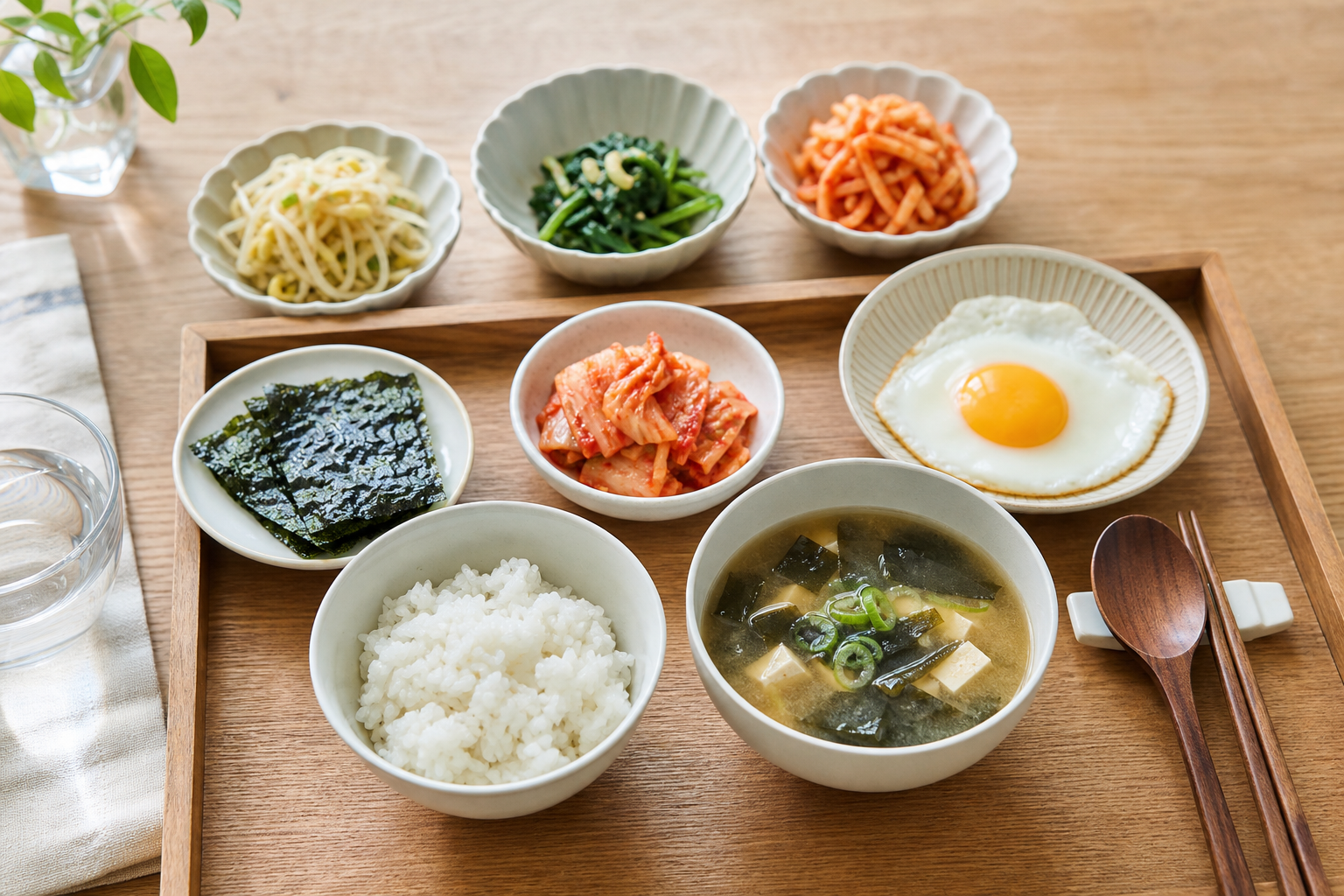
Quick answer: what can a Korean breakfast include?
A home-style breakfast may follow the same basic pattern as another Korean meal: cooked rice, a soup or stew, kimchi, and one or two banchan. A rushed morning may look completely different, with gyeran mari, toast, yogurt, fruit, or a convenience-store rice roll. The useful idea is not to copy a large ceremonial spread. It is to combine one staple, one protein food, and one vegetable or fruit in a format that fits the morning.
For a beginner, start with a small base:
- Staple: warm rice, juk, toast, sweet potato, or a small rice bowl.
- Protein food: egg, tofu, canned tuna, leftover chicken, beans, or plain yogurt.
- Vegetable or fruit: spinach namul, cucumber, kimchi, roasted seaweed, berries, or a piece of fruit.
- Optional warm element: a light soup or reheated broth when time allows.
This framework is flexible enough for traditional combinations and modern weekday breakfasts. It also helps use leftovers intentionally instead of preparing several new dishes.
10 simple Korean breakfast combinations
1. Rice, fried egg, gim, and kimchi
This is the easiest entry point. Put a modest serving of hot rice in a bowl, add a fried egg, and serve roasted seaweed and kimchi on the side. The seaweed can wrap small bites of rice and egg. Keep kimchi separate until eating so its liquid does not soften the gim. For a less spicy plate, replace kimchi with sliced cucumber dressed with a little sesame oil and salt.
2. Gyeran bap with scallions
Gyeran bap is a practical rice-and-egg bowl. Add a freshly cooked egg to warm rice, then season lightly with soy sauce and sesame oil. Finish with sliced scallions and sesame seeds. The goal is balance, not a heavy pool of sauce. Add leftover spinach or mushrooms for more texture. This bowl is best assembled just before eating because the egg and rice are most pleasant while hot.
3. Kimchi fried rice with a fully cooked egg
Cold cooked rice works well for a quick pan meal. Chop kimchi into small pieces, cook it briefly, add rice, and stir until everything is steaming hot. A fully cooked egg can go on top. If the kimchi is very salty, season only after tasting. This is a useful way to turn a small amount of rice into a complete breakfast, but it should not be left at room temperature for a long commute.
4. Doenjang soup, rice, and one banchan
A small bowl of doenjang soup can make leftover rice feel like a new meal. Use tofu, zucchini, onion, and mushrooms, and keep the portion light enough for the morning. Prepare the soup the night before, cool it promptly, and reheat only the amount needed. Pair it with the Korean spinach side dish or another simple vegetable rather than trying to make several banchan.
5. Vegetable juk
Juk is a soft rice porridge that can be made from cooked rice and water or mild broth. Simmer until the grains loosen and the texture becomes spoonable, then add finely chopped carrot, zucchini, or mushroom. Season near the end. Make a small batch because repeated cooling and reheating lowers quality. For more substance, stir in beaten egg while the porridge simmers and cook it completely.
6. Gyeran mari, rice, and cucumber
Gyeran mari is a rolled omelet that can be prepared with finely chopped scallion, carrot, or bell pepper. Slice it after it has set, then pair it with rice and crisp cucumber. For a packed breakfast, cool the omelet and rice before sealing the container and keep the meal chilled. This combination also fits the packing logic in the adult Korean bento guide.
7. Korean street-toast-inspired egg sandwich
A home version can use toasted bread, a thin cabbage-and-egg patty, and a small amount of ketchup or another preferred sauce. Cook the egg mixture through and let excess steam escape before closing the sandwich. This keeps the bread from becoming wet. The sandwich is convenient, but it should still be treated as a perishable egg meal and kept cold if it will not be eaten promptly.
8. Steamed sweet potato, egg, and fruit
Steamed or roasted sweet potato is a useful alternative when no rice is ready. Pair it with a hard-cooked egg and fruit. Prepare the sweet potato in advance, refrigerate it after cooling, and reheat if a warm breakfast is preferred. Keep the egg refrigerated. This combination is portable and needs very little morning assembly.
9. Tofu rice bowl with spinach
Pan-sear firm tofu, place it over warm rice, and add spinach or another cooked vegetable. A small spoonful of soy-sesame dressing provides enough flavor. Store sauce separately for a packed version. The Korean high-protein meal-prep guide explains how tofu fits into a broader bowl rotation without treating one ingredient as a complete solution.
10. Leftover banchan breakfast tray
Use two small portions already on hand, such as spinach, braised potato, tofu, or cucumber, with fresh rice and a simple protein food. This is efficient only when the leftovers were cooled and stored safely. Do not combine every container in the refrigerator. Choose two items with different textures and finish older leftovers first within their safe storage window.
A 15-minute morning assembly plan
- Start the staple: reheat one portion of rice or put prepared sweet potato on a plate.
- Cook one fresh item: fry an egg, sear tofu, or heat soup until fully hot.
- Add one cold or reheated side: choose spinach, cucumber, kimchi, or fruit.
- Keep wet components separate: sauce, kimchi, and soup should not soak rice, toast, or seaweed before eating.
- Pack or serve: use a shallow plate at home or a leak-resistant container for travel.
The time-saving move is repetition. Cook rice in batches, keep one or two simple sides, and change only the egg, tofu, soup, or seasoning. The meal-prep mistakes guide covers cooling, moisture, and sauce separation in more detail.
What to prepare the night before
Preparation should reduce morning work without creating a food-safety shortcut. Wash and cut vegetables, portion cooked rice into shallow containers, mix a dressing, and choose the next morning’s combination. Soup and cooked side dishes should be cooled promptly and refrigerated. Keep roasted seaweed dry and outside the refrigerator until serving.
A small rice cooker can be convenient for households that regularly eat rice, but capacity, cleaning, timer behavior, and counter space matter more than a long feature list. Compare models without assuming that one size fits every kitchen: (paid link) compare small rice cooker options on Amazon. Product availability and details can change, so confirm the current listing before buying.
Storage and reheating rules
Cooked rice, soup, egg dishes, tofu, and other perishable foods need time and temperature control. The U.S. Department of Agriculture advises refrigerating perishable food within two hours, or within one hour when the surrounding temperature is above 90°F (32°C). Use shallow containers for faster cooling. Most cooked leftovers should be used within three to four days, and reheated leftovers should reach 165°F (74°C). See the USDA guidance on leftovers and food safety and its food-safety basics.
For a breakfast taken to work or school, keep cold food cold with an insulated bag and cold source, or use a suitable insulated food container for a meal that is packed hot according to the manufacturer’s directions. Container design matters: check leak resistance, material, usable capacity, cleaning instructions, and replacement-part availability. (paid link) compare insulated food jar options on Amazon. Prices, availability, and specifications may change.
Beginner pantry list
- Short- or medium-grain rice
- Eggs or firm tofu
- Roasted seaweed sheets
- Soy sauce and sesame oil
- Sesame seeds and scallions
- Kimchi or a mild pickled vegetable
- One quick-cooking vegetable such as spinach, zucchini, or mushrooms
- Doenjang for simple soup
Buy only what supports two or three repeatable meals. The Korean pantry staples guide can help separate versatile basics from ingredients that may sit unused.
Common breakfast mistakes
- Trying to cook five dishes before work: one staple, one protein food, and one vegetable is enough.
- Packing hot and cold foods together: use separate containers and temperature control.
- Sealing steaming food immediately: trapped condensation can make rice, egg, and toast unpleasant.
- Using old leftovers without a date: label containers and discard food when safe storage is uncertain.
- Letting sauce soak the meal: pack wet condiments separately.
- Assuming every Korean breakfast is traditional: modern breakfasts vary widely by schedule, preference, and household.
A practical three-day rotation
Day one: rice, fried egg, gim, and cucumber. Day two: reheated doenjang soup, rice, and spinach. Day three: sweet potato, hard-cooked egg, and fruit. The rotation reuses a small ingredient base while changing temperature and texture. If breakfast must travel, apply the same cold-pack and sauce-separation principles used for the Korean work-lunch guide.
Bottom line
A useful Korean breakfast is not defined by the number of side dishes. It is a manageable combination of staple, protein food, and produce, prepared with safe cooling and storage. Begin with rice and egg, soup and one side, or sweet potato and fruit. Repeat the combinations that fit the household, and add specialized equipment only when it solves a recurring need.