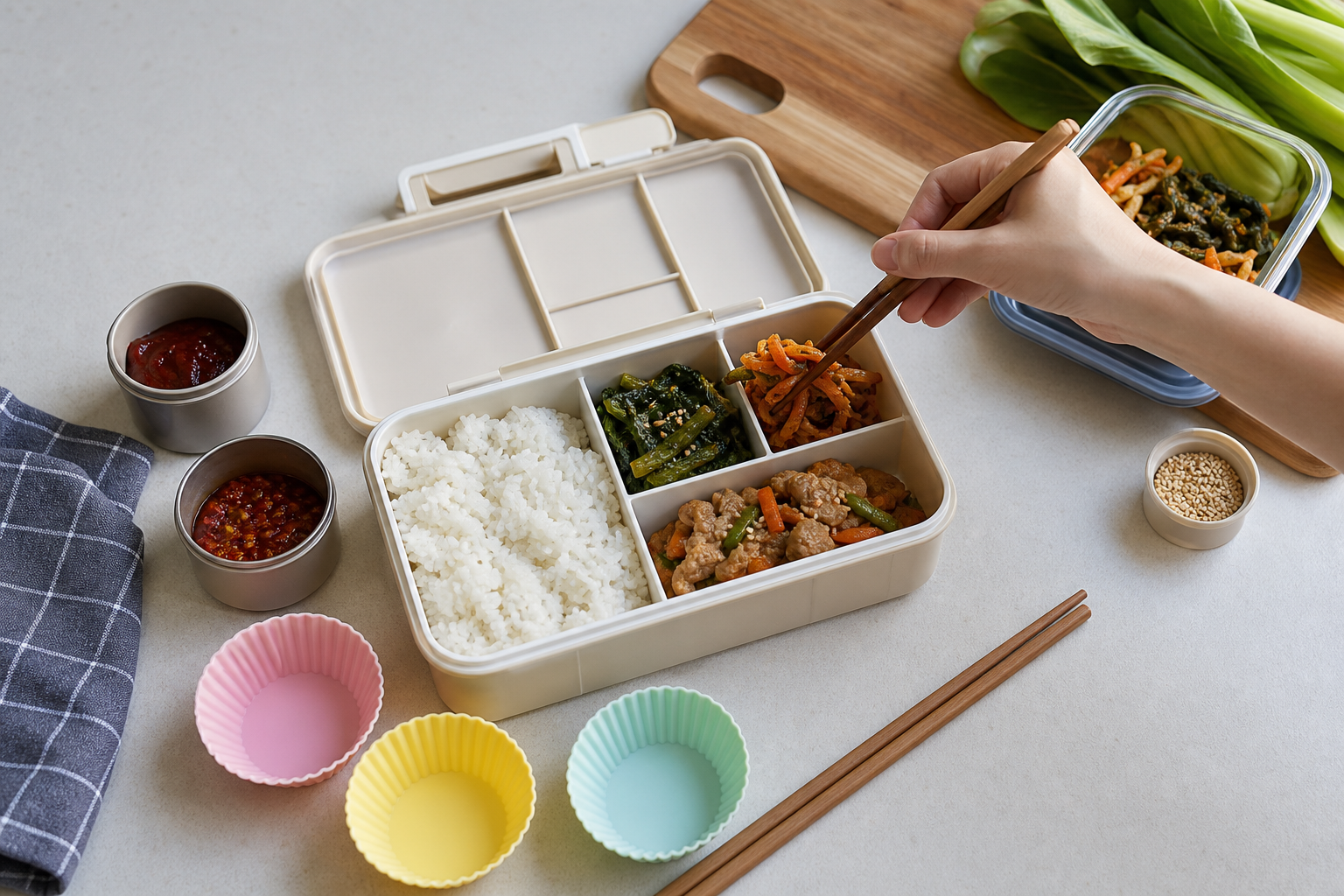
In Korea, lunch isn’t grabbed — it’s packed with the same care as a home-cooked dinner, sometimes the night before, sometimes at 6 AM by someone who genuinely wants you to eat well. The Korean lunch box, called dosirak (도시락), is nothing like the sad desk salad you’re used to. It’s a compartmentalized work of art with rice, protein, and three to five side dishes called banchan — all designed to taste just as good at room temperature as they do fresh off the stove. This guide breaks down exactly how to build one, with 5 proven combinations that Korean workers, students, and parents actually pack every week.
What Makes a Korean Lunch Box Different from Regular Meal Prep

A Korean dosirak follows a specific ratio: roughly 40% rice, 30% protein, and 30% banchan (side dishes) — and this balance is what makes it satisfying without feeling heavy. Most Western meal prep focuses on one main dish portioned into containers. Korean lunch boxes flip that logic entirely. Instead of one big thing, you get five or six small things, which means every bite tastes different from the last.
This isn’t just an aesthetic choice. Korean nutritionists widely agree that variety in a single meal improves both nutrient intake and satiety. When your lunch has pickled radish, seasoned spinach, stir-fried protein, and rice all in one box, you’re hitting fermented foods, leafy greens, complex carbs, and protein without thinking about macros at all.
The Dosirak Structure You Need to Know
Every Korean lunch box, whether packed by a university student or a parent of three, follows the same unwritten blueprint:
- Base layer: Short-grain white rice or mixed grain rice (잡곡밥) — this fills the largest compartment and acts as the neutral foundation
- Main protein: Bulgogi, pan-fried eggs, braised tofu, or grilled fish — one portion, roughly the size of your palm
- Banchan #1: Something fermented — kimchi is the default, but seasoned perilla leaves or pickled radish work too
- Banchan #2: Something green — seasoned spinach (sigeumchi-namul), stir-fried zucchini, or broccoli with sesame oil
- Banchan #3: Something savory-sweet — braised black beans (kongjaban), fish cake stir-fry, or anchovy side dish
Without that fermented element, the lunch box feels flat. Without the green, it feels greasy. Korean home cooks instinctively balance these flavor categories — salty, tangy, savory, and slightly sweet — so that no single taste dominates. If you skip the banchan and just throw rice and meat into a box, you’ve made a regular lunch. The banchan is what makes it a dosirak.
Why Room Temperature Matters
Here’s something most food blogs get wrong about Korean lunch boxes: they’re designed to be eaten at room temperature, not reheated. Walk into any Korean office at noon and you’ll see people eating dosirak straight from the bag — no microwave line, no waiting. That’s why the banchan leans toward pickled, braised, and seasoned preparations rather than crispy or fried dishes that lose their texture within hours.
This changes everything about how you prep. Instead of worrying about reheating, you focus on dishes that hold up. Braised eggs taste better after sitting. Kimchi gets tangier. Seasoned vegetables release just enough liquid to slightly flavor the rice beneath them — and that’s considered a good thing.
Before You Start: Essential Korean Lunch Box Supplies

You don’t need specialty equipment to pack Korean lunch box ideas into reality, but the right container changes the experience completely. The biggest mistake newcomers make is using a single open container and watching their carefully arranged banchan turn into a sad mixed pile by noon.
Containers That Actually Work
In Korea, the most popular lunch box style has built-in dividers or separate stackable layers. You’ll see three main types at any Korean home goods store:
- Compartmentalized stainless steel boxes — the classic Korean school lunch box style, usually with 4-5 sections and a snap-lock lid. Durable, microwave-safe (without lid), and they don’t stain from kimchi
- Stackable two-tier containers — rice on the bottom, banchan on top. Popular with office workers because they’re slim enough to fit in a bag
- Silicone cup dividers inside a single container — the budget-friendly approach. Small silicone cups keep banchan separated within one larger box
Avoid glass containers for dosirak. They’re heavy to carry and the extra weight discourages you from packing lunch at all — which defeats the purpose.
Pantry Staples to Keep Stocked
Most Korean lunch box banchan rely on the same handful of seasonings. Stock these once and you can make dozens of variations:
- Sesame oil — the finishing touch on almost every vegetable side dish
- Soy sauce (진간장, regular Korean soy sauce) — for braising and seasoning
- Gochugaru (Korean red pepper flakes) — for kimchi and spicy banchan
- Roasted sesame seeds — sprinkled on top of everything
- Rice vinegar — for quick pickles
- Garlic (fresh, minced) — used in virtually every dish
With just rice, these six seasonings, and whatever vegetables and protein are in your fridge, you already have the foundation for a legitimate Korean lunch box. The barrier is lower than you think.
Stainless Steel Korean Lunch Box with Dividers
The same compartmentalized style used in Korean schools and offices — keeps banchan separated so flavors stay distinct, and stainless steel means kimchi stains wipe right off.
5 Authentic Korean Lunch Box Ideas (With Step-by-Step Packing)

These five Korean lunch box combinations are what you’ll actually find packed in Korean kitchens — not Pinterest-perfect creations that take two hours to assemble. Each one can be prepped in under 30 minutes if you batch-cook the banchan on Sunday. Most Korean families rotate through combinations like these throughout the week, swapping one or two side dishes to keep things interesting without cooking from scratch every day.
1. The Classic Bulgogi Dosirak
This is the Korean lunch box equivalent of a greatest hits album — everyone loves it, it travels well, and it never gets old.
- Rice: White short-grain rice, packed while still slightly warm so it stays soft
- Protein: Beef bulgogi (thinly sliced beef marinated in soy sauce, garlic, pear juice, and sesame oil), pan-fried until caramelized
- Banchan 1: Napa cabbage kimchi, cut into bite-sized pieces
- Banchan 2: Seasoned spinach — blanched, squeezed dry, tossed with sesame oil, garlic, and a pinch of salt
- Banchan 3: Rolled egg (gyeran-mari) sliced into rounds — mix 3 eggs with finely diced scallions and carrots, cook flat in a pan, roll tightly, slice
Packing tip: Place a piece of lettuce or perilla leaf between the bulgogi and rice to prevent the sauce from making the rice soggy. Korean moms have been doing this trick for decades.
2. The Spicy Chicken (Dak-galbi) Box
If your lunch crew at work keeps asking what smells so good, this is probably why.
- Rice: Mixed grain rice (white rice cooked with barley, black rice, or millet)
- Protein: Spicy stir-fried chicken thighs with gochujang, gochugaru, garlic, and a touch of honey
- Banchan 1: Cubed radish kimchi (kkakdugi) — the crunchy texture balances the soft chicken perfectly
- Banchan 2: Stir-fried zucchini with garlic — sliced thin, cooked quickly so it stays slightly firm
- Banchan 3: Sweet braised black beans (kongjaban) — these shiny, sweet-salty beans are in almost every Korean side dish lineup
Packing tip: Dak-galbi releases liquid as it cools. Use the deepest compartment for the chicken, or add a small silicone cup to contain the sauce.
3. The Vegetarian Bibimbap-Style Box
This is what Korean temple cuisine looks like in lunch box form — no meat, but absolutely nothing missing in terms of flavor.
- Rice: White rice with a drizzle of sesame oil mixed in
- Toppings (arranged in sections): Seasoned bean sprouts, sautéed shiitake mushrooms, julienned carrots with sesame oil, seasoned spinach, and shredded dried seaweed
- Sauce: Small container of gochujang mixed with sesame oil and a drop of rice vinegar
- Extra: Half a fried egg on top (optional but recommended)
Packing tip: Keep the gochujang sauce in a tiny separate container. Mix everything together right before eating — that moment of stirring is half the experience of bibimbap.
4. The Gimbap Roll Box
Gimbap is Korea’s answer to the sandwich — portable, endlessly customizable, and sold at every convenience store for around 1,500-3,000 won (roughly $1-2.50).
- Rolls: Gimbap made with seasoned rice, pickled radish (danmuji), egg strips, carrots, spinach, and crab stick or bulgogi — rolled in roasted seaweed and sliced into rounds
- Side 1: Cherry tomatoes or sliced cucumber with a sprinkle of salt
- Side 2: A few pieces of kimchi in a separate container (the moisture can soften seaweed if they’re together)
Packing tip: Brush finished gimbap rolls with a thin layer of sesame oil before slicing. This prevents the rice from drying out AND keeps the slices from sticking to each other. Every gimbap shop in Korea does this — now you know why theirs looks shinier than yours.
5. The Japchae Noodle Box
For days when rice feels too heavy but you still want something substantial.
- Main: Japchae — sweet potato glass noodles stir-fried with soy sauce, sesame oil, thinly sliced beef, spinach, carrots, mushrooms, and onions
- Side 1: Pan-fried tofu cubes with soy dipping sauce
- Side 2: Quick-pickled cucumber (sliced cucumber tossed with rice vinegar, sesame oil, gochugaru, and garlic — let it sit for at least 10 minutes)
Packing tip: Japchae noodles clump as they cool. Toss them with an extra teaspoon of sesame oil right before packing — this keeps the noodles separated and silky even hours later.
Korean Lunch Box Meal Prep: The Sunday Banchan Session
The real secret behind Korean lunch box culture isn’t cooking skill — it’s batch-prepping banchan on one day and mixing and matching all week. In most Korean households, Sunday evening or Monday morning is banchan time. You make five or six side dishes in about an hour, store them in small containers in the fridge, and assemble different lunch boxes each morning in under 10 minutes.
Without this system, packing a dosirak every day feels impossible. With it, you’re just scooping pre-made sides into compartments and adding freshly cooked rice. That’s the difference between a Korean lunch box habit that lasts and one that dies after three days.
Banchan That Last All Week (Fridge Life)
- Kimchi: Keeps for weeks. Gets better with age.
- Braised black beans (kongjaban): 7-10 days refrigerated
- Seasoned spinach: 3-4 days (make a large batch)
- Pickled radish (danmuji): 2+ weeks in brine
- Stir-fried anchovies (myeolchi-bokkeum): 5-7 days — sweet, savory, crunchy
- Braised quail eggs or regular eggs in soy sauce: 5-7 days
- Seasoned dried seaweed: Keeps for months in an airtight container
Notice the pattern: fermented, pickled, and braised dishes last the longest. Fresh sautéed vegetables (zucchini, bean sprouts) are best within 2-3 days, so make smaller amounts of those and larger batches of the longer-lasting items. Korean home cooks have been optimizing this ratio for generations — you’re inheriting their system.
Morning Assembly: 10 Minutes or Less
- Cook rice the night before using a timer on your rice cooker (most Korean households set it to finish at 6 AM)
- Scoop warm rice into the largest compartment
- Pull 3-4 banchan containers from the fridge and portion into compartments with clean chopsticks
- Add protein — either leftover from dinner or a quickly pan-fried egg
- Close, bag, go
Instead of a 45-minute cooking session every morning, this takes under 10 minutes — and most of that is just waiting for the rice cooker.
CJ Bibigo Pre-Made Korean Banchan Variety
For weeks when Sunday prep doesn’t happen — these shelf-stable banchan are the same brand most Korean families keep as backup in their pantry.
Korean Lunch Box Ideas Comparison: Which Style Fits Your Life?
| Feature | Classic Dosirak (Rice + Banchan) | Gimbap Roll Box | One-Dish Box (Japchae/Bibimbap) |
|---|---|---|---|
| Morning prep time | 8-10 min (with pre-made banchan) | 20-25 min (rolling takes practice) | 5-7 min (reheat or scoop) |
| Sunday batch prep needed? | Yes — banchan prep essential | Minimal — mostly fresh assembly | Yes — cook main dish in bulk |
| Best eaten at room temp? | Excellent — designed for it | Excellent — ideal grab-and-go | Good — japchae yes, bibimbap benefits from warm rice |
| Variety per meal | High — 4-6 different tastes | Medium — variety is inside the roll | Low-Medium — one main flavor profile |
| Kid-friendly? | Very — kids love picking from compartments | Very — portable, fun to eat | Moderate — depends on spice level |
| Calorie control | Easy — small portions of each item | Harder — rolls are deceptively filling | Moderate — easy to over-portion noodles |
| Best for | Daily office lunches, balanced nutrition | Picnics, school lunches, on-the-go eating | Quick bulk meal prep, weeknight leftovers |
| Estimated cost per box | Around $3-5 (home-cooked) | Around $2-4 (home-cooked) | Around $2-3 (home-cooked) |
The classic dosirak with rice and banchan is the best overall choice for most people — it gives you the most variety, the easiest calorie control, and the fastest morning assembly once you have the Sunday batch prep system down. Gimbap is perfect for special occasions or weekends but requires more hands-on time each morning. One-dish boxes are the fastest option when you’re short on time but can get repetitive after a few days.
Frequently Asked Questions
How do I keep my Korean lunch box from getting soggy?
The key is separating wet and dry components using compartments or silicone cups. Place kimchi and saucy items in their own sections, and let rice cool for 2-3 minutes before closing the lid — trapped steam is the main cause of sogginess. A perilla leaf or lettuce barrier between saucy proteins and rice also helps significantly.
What happens if I don’t use short-grain rice in my dosirak?
Long-grain rice like jasmine or basmati dries out and hardens much faster than short-grain Korean rice at room temperature. Short-grain rice stays sticky and soft for hours, which is exactly why it’s the standard for lunch boxes in Korea. If short-grain rice isn’t available, adding a small splash of rice vinegar to cooked jasmine rice can help it retain moisture slightly longer.
Can I make Korean lunch boxes the night before?
Yes — many Korean families prep dosirak the night before and refrigerate them overnight. The banchan actually develops deeper flavor after sitting. Just cook the rice fresh in the morning using a rice cooker timer, or microwave the pre-packed rice compartment for 1-2 minutes before heading out. Cold rice is the only part that suffers from overnight storage.
What’s the easiest Korean lunch box idea for beginners?
Start with the bibimbap-style box — it’s the most forgiving. You just need rice, two or three sautéed or seasoned vegetables, and gochujang sauce. There’s no precise arrangement needed, everything gets mixed together before eating, and it tastes good even if your knife skills aren’t perfect yet. Once you’re comfortable, graduate to the classic compartmentalized dosirak.
How do Korean parents pack lunch boxes so fast every morning?
Batch-prepped banchan is the entire secret — Korean parents are assembling, not cooking, in the morning. They spend about an hour on Sunday making 5-6 side dishes that last the week, then each morning they simply scoop pre-made banchan into compartments alongside fresh rice. The actual morning assembly takes under 10 minutes once the banchan system is in place.
Key Takeaways
- A Korean lunch box (dosirak) follows a 40% rice, 30% protein, 30% banchan ratio — this balance is what makes it satisfying, nutritious, and never boring
- The banchan batch-prep system is non-negotiable — spend one hour on Sunday making 5-6 side dishes, then morning assembly takes under 10 minutes all week
- Korean lunch box food is designed to taste good at room temperature — choose braised, pickled, and seasoned dishes over fried or crispy ones that lose texture
- Five combinations cover an entire week: bulgogi box, spicy chicken box, vegetarian bibimbap box, gimbap roll box, and japchae noodle box — rotate and swap banchan for endless variety
- Sesame oil is the dosirak MVP — it prevents noodles from clumping, keeps gimbap rolls from drying out, and adds depth to every vegetable side dish
- Start with the bibimbap-style box if you’re new — it’s the most forgiving and requires the least technique, but still delivers authentic Korean lunch box flavor
This Sunday, pick three banchan from the list above — seasoned spinach, braised black beans, and kimchi is the easiest trio to start with. Prep all three in under 40 minutes, and tomorrow morning, pack your first real Korean lunch box. You’ll wonder why you ever waited in a microwave line.
This article contains affiliate links. If you purchase through these links, we may earn a small commission at no extra cost to you. We only recommend products we genuinely believe in.