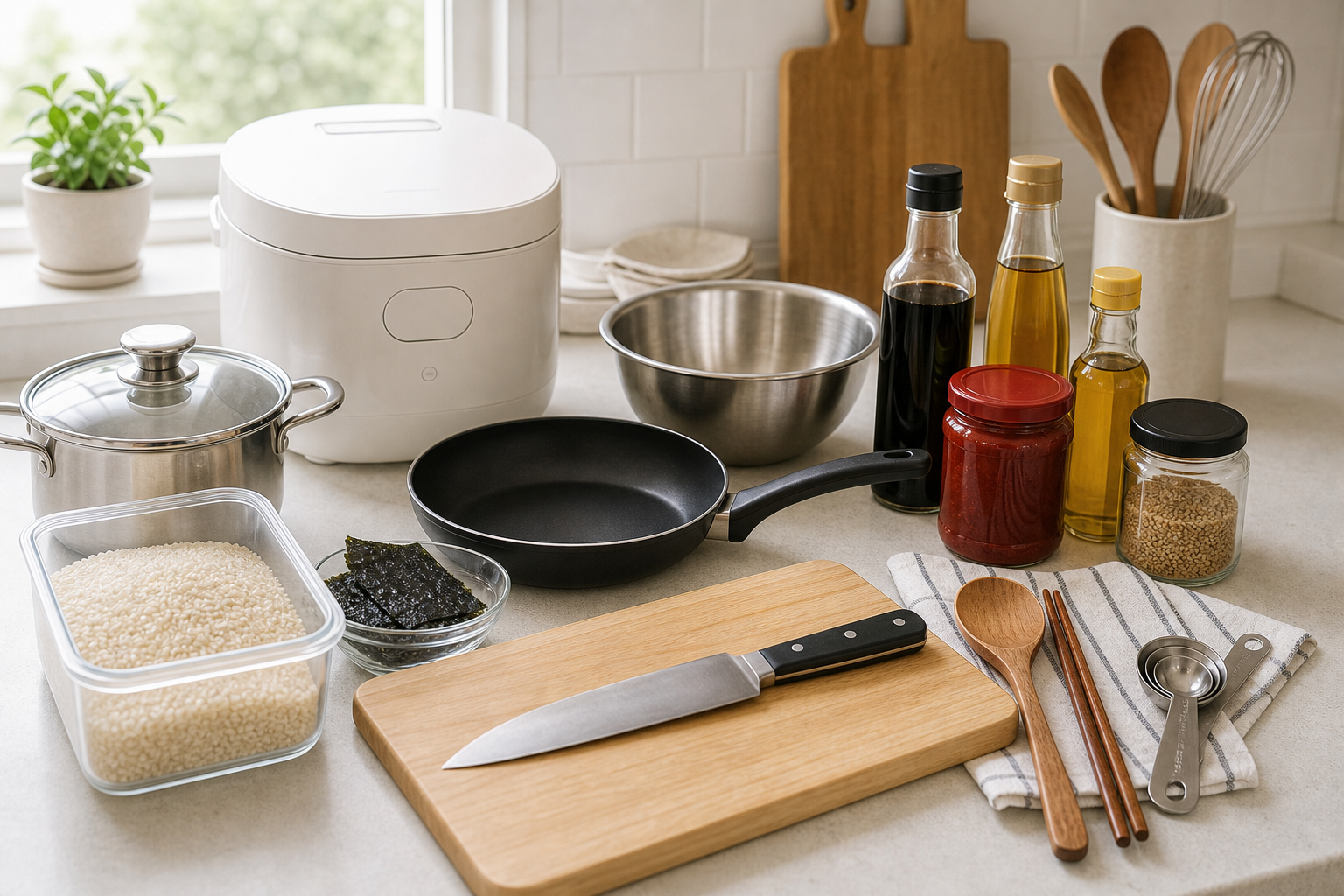
A properly equipped Korean kitchen requires only 12 core tools, and 8 of them are items most Western kitchens don’t have. Korean home cooking relies on specific pots, utensils, and fermentation containers that have been refined over centuries. Without them, recipes like kimchi jjigae, bibimbap, and japchae lose the textures and flavors that make them authentic. This guide to Korean kitchen essentials for beginners covers exactly what to buy first, what to skip, and how Korean home cooks actually use each item day to day.
The Core Korean Kitchen Essentials Every Beginner Needs

Korean cooking is built around three heat methods — boiling in heavy pots, stir-frying in shallow pans, and tabletop grilling — which means your cookware choices matter more than your ingredient list. Walk into any Korean home kitchen and you’ll see a remarkably consistent lineup of tools, regardless of the cook’s skill level.
Ttukbaegi (뚝배기) — Korean Earthenware Pot
The ttukbaegi is a thick, unglazed clay pot used for jjigae (stews) and guk (soups). It retains heat for 20-30 minutes after leaving the stove, which is why Korean stews are still bubbling when they arrive at the table. Beginners should start with a 1-person size (approximately 12 cm diameter) since Korean stews are traditionally served individually.
Season a new ttukbaegi by boiling rice water in it for 10 minutes. This seals the porous clay and prevents cracking. Never put a cold ttukbaegi on high heat — always start on low and increase gradually.
Dolsot (돌솥) — Stone Bowl for Bibimbap
A genuine Korean dolsot is carved from natural granite or agalmatolite and weighs 2-3 kg for a single serving size. This mass is what creates the nurungji — the crispy rice crust at the bottom of dolsot bibimbap that you cannot replicate in any other vessel. Before each use, brush the interior with sesame oil and preheat it on the stove for 5 minutes.
Yangnyeom Scissors (양념 가위) — Kitchen Scissors
Korean cooks use scissors more than knives. In a 2022 survey by the Korean Consumer Agency, 94% of Korean households reported using kitchen scissors daily, compared to 61% for chef’s knives. You’ll use them to cut noodles in the pot, trim green onions, portion grilled meat at the table, and open food packaging. Buy a pair with a built-in bottle opener and nutcracker — that’s the standard Korean multi-function design.
The Full Beginner List
- Ttukbaegi — earthenware stew pot (1-person size)
- Dolsot — stone bibimbap bowl
- Yangnyeom scissors — multi-function kitchen scissors
- Jeotgarak (젓가락) — stainless steel chopsticks
- Sutgarak (숟가락) — long-handled flat spoon
- Gukja (국자) — large ladle with flat bottom
- Jeongeol naembi (전골냄비) — shallow hot pot pan
- Ssambap plate — sectioned plate for lettuce wraps
- Onggi (옹기) — breathable fermentation jar
- Yangnyeomtong — stackable sauce containers
- Ramyeon naembi (라면냄비) — aluminum instant noodle pot
- Gaseurange pan (가스레인지 팬) — Korean-style frying pan with low sides
Korean Kitchen Essentials Compared: Materials, Prices, and Durability

Choosing the right material for each Korean kitchen tool directly affects cooking performance — Korean cookware is designed around specific heat behaviors, not just aesthetics. Below is a comparison of the most important items a beginner needs, including realistic pricing from Korean online retailers like Coupang and global sellers on Amazon.
| Item | Material | Avg. Price (USD) | Lifespan | Best For |
|---|---|---|---|---|
| Ttukbaegi (earthenware pot) | Unglazed clay | $8–$15 | 2–5 years | Kimchi jjigae, doenjang jjigae, sundubu |
| Dolsot (stone bowl) | Granite / agalmatolite | $20–$35 | 10+ years | Dolsot bibimbap, rice dishes |
| Ramyeon naembi (noodle pot) | Aluminum with lid | $5–$10 | 3–7 years | Ramyeon, boiling eggs, small soups |
| Jeongeol naembi (hot pot pan) | Stainless steel | $15–$30 | 10+ years | Budae jjigae, army stew, shabu-shabu |
| Onggi (fermentation jar) | Breathable ceramic | $25–$60 | 20+ years | Kimchi, doenjang, gochujang storage |
| Korean frying pan | Coated aluminum / stainless | $12–$25 | 1–3 years (coated) / 10+ (stainless) | Jeon (pancakes), stir-fry, buchimgae |
| Stainless steel chopsticks | 18/10 stainless steel | $3–$8 per pair | Lifetime | Daily eating, cooking, grilling |
A few notes from real use: the aluminum ramyeon naembi is intentionally cheap and thin because it heats water to a boil 40% faster than a stainless steel pot of the same size. Koreans don’t consider this disposable cookware — most families keep the same ramyeon pot for years. The iconic gold-toned pot you see in every Korean drama is functional, not decorative.
For the onggi jar, spending more gets you a thicker wall, which provides more consistent temperature during fermentation. A $25 onggi works fine for small-batch kimchi. The $60 range is for serious doenjang (fermented soybean paste) that needs to age for 6-12 months.
How Korean Home Cooks Actually Use These Kitchen Essentials

Korean cooking workflows are designed around “mise en place on steroids” — Koreans call it bapsang charigi (밥상 차리기), which means setting a full table of dishes, and it requires using 3-5 pots and pans simultaneously. Understanding this workflow helps beginners buy the right items in the right order.
The Daily Korean Cooking Workflow
A standard weeknight Korean dinner includes rice, one soup or jjigae, and 2-3 banchan (side dishes). Here’s how the tools work together:
- Rice cooker starts first (electric — not on this list because most beginners already own one or can use a regular pot)
- Ttukbaegi goes on low heat with water, anchovy stock packet, and doenjang paste for soup
- Frying pan heats up for a quick jeon (savory pancake) or stir-fried vegetable banchan
- Kitchen scissors cut green onions, dried seaweed, and perilla leaves directly into the pot — no cutting board needed
- Banchan comes out of yangnyeomtong containers that live in the fridge — pre-made kimchi, pickled radish, seasoned spinach
The entire dinner comes together in 20-25 minutes because the banchan container system (yangnyeomtong) eliminates daily side dish prep. Korean families typically prepare banchan in bulk on Sunday and store them in stackable containers that fit into the kimchi fridge or regular refrigerator door.
Why Stainless Steel Chopsticks Are Non-Negotiable
Korean jeotgarak are flat, stainless steel, and heavier than wooden chopsticks from China or Japan. Korea is the only country in the world that uses metal chopsticks as a daily standard, a tradition dating back to the Baekje Dynasty (18 BC – 660 AD) when royalty used silver to detect poison in food.
For beginners, the flat shape is harder to use than round Japanese chopsticks. Buy a pair with textured or ridged tips — this is the modern Korean solution for grip, and most Korean brands now include this feature. Practice with slippery items like cubed tofu to build skill quickly.
Onggi: The Secret to Authentic Kimchi at Home
Onggi is a microporous Korean ceramic that allows air to pass through the walls at a microscopic level, creating the exact anaerobic-to-aerobic balance that Lactobacillus bacteria need for proper kimchi fermentation. Storing kimchi in glass or plastic containers produces a noticeably different (sharper, less complex) flavor within 2 weeks.
You don’t need a large onggi to start. A 2-liter onggi holds about 1.5 kg of kimchi — enough for one person for 2-3 weeks. Store the onggi in the refrigerator, not at room temperature, unless you want very fast fermentation (3-5 days rather than 2-3 weeks).
Common Mistakes When Building a Korean Kitchen Setup
The biggest mistake beginners make is buying a Korean BBQ grill first — in reality, 80% of daily Korean home cooking is soups, stews, and rice-based dishes, not grilled meat. Grilling at home is a weekend event in Korea, not a weeknight default. Prioritize your stew pots and utensils before investing in a tabletop grill.
- Buying glazed clay pots instead of unglazed ttukbaegi — glazed pots don’t retain heat the same way and can crack faster under direct flame
- Using wooden chopsticks for Korean cooking — wooden chopsticks absorb garlic and gochugaru oils, stainless steel doesn’t
- Skipping the ladle (gukja) — Korean ladles are flat-bottomed and wider than Western ladles, designed to scoop rice and thick stew in one motion
- Buying a full set from a Korean brand at premium prices — individual items from Daiso Korea or Coupang cost 50-70% less than boxed “Korean kitchen starter kits”
- Washing onggi with soap — the porous clay absorbs detergent. Clean with warm water and a brush only, then sun-dry completely
Frequently Asked Questions
What are the most important Korean kitchen essentials for beginners?
The three most important Korean kitchen essentials for beginners are a ttukbaegi (earthenware pot), stainless steel chopsticks, and multi-function kitchen scissors. These three tools cover the majority of daily Korean cooking tasks — stews, eating, and food prep. Add a dolsot and a ramyeon naembi as your next purchases.
Can I use regular pots instead of Korean cookware?
You can substitute a regular pot for Korean cooking, but the results will differ noticeably in texture and heat retention. A stainless steel pot won’t keep jjigae bubbling at the table the way a ttukbaegi does. For stir-fries and boiling, any pot works. For stews and bibimbap, Korean-specific cookware makes a real difference.
Where can I buy Korean kitchen tools outside of Korea?
Amazon, H Mart (online and in-store), and Maangchi’s recommended links are the most reliable sources for Korean kitchen tools outside Korea. Amazon carries brands like Crazy Korean Cooking and Kitchen Art. H Mart stocks authentic Korean cookware at competitive prices. Avoid no-name imports that list “stone pot” without specifying the actual material.
How much does it cost to set up a basic Korean kitchen?
A complete Korean kitchen starter setup costs between $80 and $150 USD when buying individual items. The breakdown: ttukbaegi ($10), dolsot ($25), scissors ($8), chopstick and spoon set ($10), ladle ($5), ramyeon pot ($7), frying pan ($15), onggi ($30), and sauce containers ($10). This covers everything you need for daily Korean home cooking.
Do I need a kimchi fridge to store Korean fermented foods?
No, a kimchi fridge is not necessary for beginners — a regular refrigerator set to 1-3°C (34-37°F) works for short-term kimchi storage up to 4 weeks. Dedicated kimchi fridges maintain a more precise, consistent temperature that slows fermentation evenly, which matters for large batches aged over months. For small onggi batches, your standard fridge is sufficient.
Key Takeaways
- A complete Korean kitchen for beginners requires 12 core tools and costs $80-$150 USD to set up from scratch.
- The ttukbaegi (earthenware pot) retains heat for 20-30 minutes, which is essential for the bubbling stew presentation central to Korean dining.
- Korean kitchen scissors are used daily by 94% of Korean households and replace the chef’s knife for most prep tasks.
- Onggi fermentation jars have microporous walls that create the specific bacterial environment needed for authentic kimchi flavor — glass and plastic containers produce noticeably different results.
- Prioritize stew pots and utensils over a Korean BBQ grill — 80% of daily Korean home cooking is soups, stews, and rice dishes.
- Stainless steel chopsticks are unique to Korea and date back to the Baekje Dynasty; buy textured-tip versions for easier handling as a beginner.
Building your Korean kitchen essentials for beginners doesn’t require a massive investment or specialty stores — start with a ttukbaegi, a good pair of scissors, and stainless steel chopsticks, then expand as your cooking grows.