A Korean aesthetician once told me something that changed how I think about combination skin: “You don’t have one face — you have five zones, and each one is thirsty for something different.” She was pressing a damp cotton pad along my jawline while a completely different essence sat on my T-zone, and I remember thinking — why has every Western skincare routine I’ve tried treated my entire face like a single canvas? My forehead was slick by noon, my cheeks were flaking by 3 PM, and every product that fixed one problem made the other worse. That frustrating seesaw is exactly what Korean skincare for combination skin was designed to solve. The approach isn’t about finding one miracle product — it’s about reading each zone of your face and responding to what it actually needs, separately, in 5 deliberate steps.
Why Korean Skincare Treats Combination Skin as Two Faces, Not One
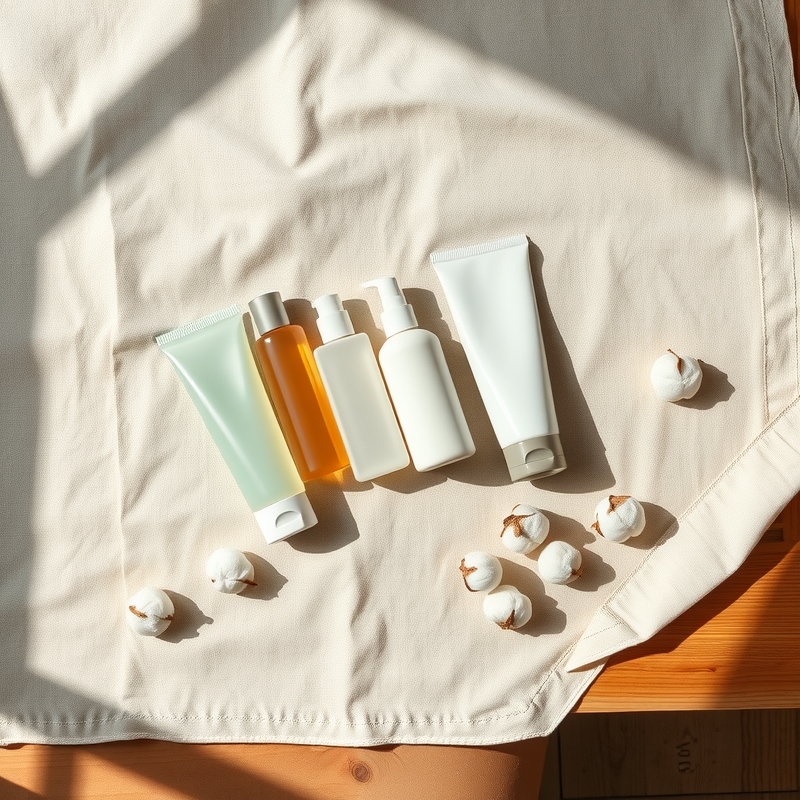
The core principle behind Korean skincare for combination skin is 부분 케어 (bubun ke-eo) — zone care — and it’s the reason Korean routines outperform single-product approaches. Walk into any Korean dermatology clinic in Gangnam and you’ll notice something immediately: the consultation doesn’t start with “What’s your skin type?” It starts with a moisture-mapping device pressed against five points on your face — forehead, nose, both cheeks, chin. Each zone gets its own reading, its own diagnosis, its own treatment plan.
This matters because combination skin isn’t a fixed identity — it’s a daily weather report. Your T-zone might be oily today because you slept in a heated room, while your cheeks are dehydrated from yesterday’s wind. Korean skincare acknowledges this fluidity. Instead of labeling your entire face “combination” and handing you a single moisturizer, the Korean approach gives you a toolkit of textures — lightweight gels for oily zones, richer essences for dry patches — and trusts you to read your own skin each morning.
Without this zone-based thinking, you’re stuck in the combination skin trap: mattifying products that parch your cheeks, or hydrating creams that turn your T-zone into an oil slick by lunch. Research on skin barrier function and pH balance consistently shows that maintaining the right moisture level in each facial zone is more effective than applying a uniform product across the entire face. Korean skincare figured this out decades ago — the rest of the world is just catching up.
The Oily-Dry Seesaw (and How to Stop It)
Here’s what most combination skin routines get wrong: they aim for the middle. A “balanced” moisturizer that’s not too heavy, not too light. But the middle satisfies nobody. Your oily forehead doesn’t need “balanced” — it needs lightweight hydration that won’t clog pores. Your dry cheeks don’t need “balanced” — they need a ceramide-rich layer that seals in moisture for hours.
The Korean solution is surprisingly simple:
- Layer thin, not thick — three lightweight layers absorb better than one heavy cream
- Apply by zone, not by face — pat essence into dry areas, skip or lighten on oily areas
- Adjust daily — your skin changes with the season, your cycle, your sleep, even humidity
Instead of a 45-minute 10-step routine that influencers love to film, the actual Korean approach for combination skin takes under 10 minutes once you learn to read your zones.
한방 (Hanbang) and the Korean Philosophy of Skin Balance
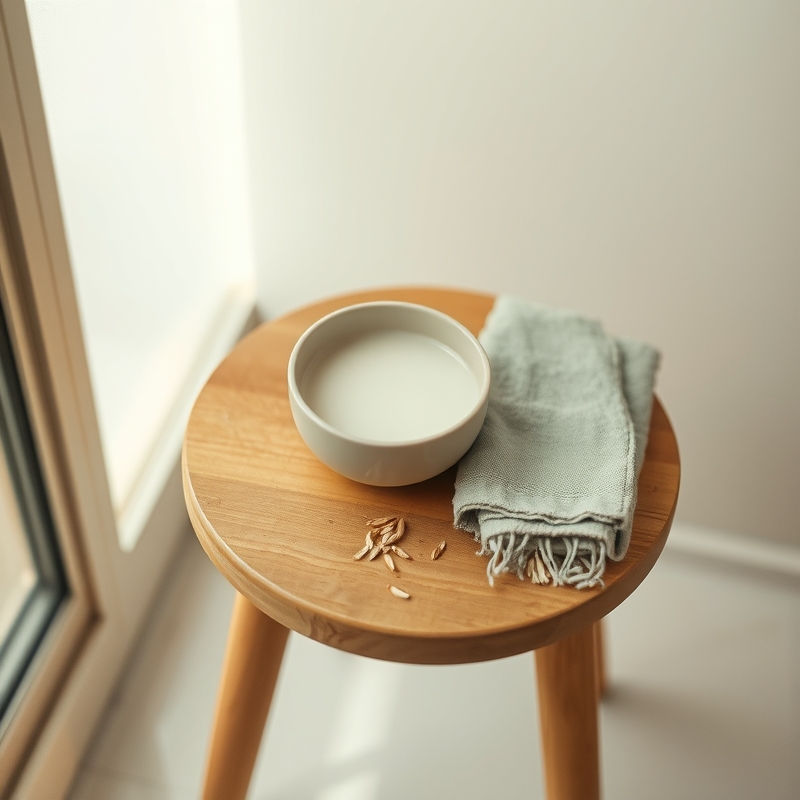
Korean skincare for combination skin isn’t just a modern trend — it’s rooted in 한방 (hanbang), the centuries-old Korean herbal medicine tradition that treats the body as an interconnected system of hot and cold zones. In hanbang philosophy, combination skin is called 복합성 피부 (bokhapseong pibu), and it’s understood not as a “type” but as a signal that your body’s internal balance is off.
My neighbor in Mapo-gu, a retired 한의사 (Korean medicine doctor), once explained it like this: “Oily skin on the forehead means heat is rising. Dry cheeks mean moisture isn’t circulating. You don’t fix the skin — you fix the flow.” This is why traditional Korean skincare ingredients often include cooling botanicals like 녹차 (nokcha, green tea) for oily zones and warming ingredients like 인삼 (insam, Korean ginseng) for dry areas.
Walk into any Korean grandmother’s bathroom and you’ll likely find 미감수 (rice bran water) stored in a small bowl. She washes her face with it every morning — not because she read it in a beauty magazine, but because her mother did it, and her grandmother before that. Rice bran is naturally pH-balanced around 5.5, which is remarkably close to healthy skin’s natural pH. It gently cleanses oily areas without stripping dry zones — the original Korean solution for combination skin, long before any lab bottled it.
This hanbang-rooted philosophy is what separates Korean skincare from Western approaches. Western dermatology often treats skin as a surface problem — too much oil, not enough moisture. Korean skincare treats it as a systemic balance issue, which is why the routines focus on layering and zone care rather than one aggressive active ingredient.
The 5-Step Korean Skincare Routine for Combination Skin

This streamlined 5-step routine is what Korean aestheticians actually recommend for combination skin — not the exaggerated 10-step version that circulates on social media. Each step serves a specific purpose for balancing oily and dry zones simultaneously.
Step 1: Oil Cleanse (PM Only) — But Only Where You Need It
Oil cleansing is the foundation of Korean skincare, and for combination skin it works on a simple mechanism: oil dissolves oil. Apply your oil cleanser primarily to your T-zone and chin where sebum and sunscreen accumulate. On your cheeks, a light pass is enough — over-cleansing dry zones strips the lipid barrier and makes dryness worse. Rinse with lukewarm water, never hot. Hot water feels satisfying but it disrupts the skin barrier on already-dry areas.
Step 2: Low-pH Water Cleanser
Your second cleanse should be a gel or foam cleanser with a pH between 5.0 and 6.0. This is non-negotiable in Korean skincare for combination skin — high-pH cleansers (most Western drug-store foaming washes sit around pH 9-10) strip your skin’s acid mantle, triggering your oily zones to produce even more sebum to compensate. The result? Oilier T-zone AND dryer cheeks. A low-pH cleanser cleans without triggering that overcompensation cycle.
COSRX Low pH Good Morning Gel Cleanser
The cleanser that most Korean combination-skin routines start with — a gentle, slightly acidic formula with tea tree oil that cleans oily zones without punishing dry patches. Your skin shouldn’t feel “squeaky clean” after washing — it should feel like nothing at all.
COSRX Low pH Good Morning Gel Cleanser — the daily staple in most Korean combination skin routines, usually under $12
Step 3: Hydrating Toner (the “7-Skin Method” Lite)
Korean toners aren’t astringent — they’re watery hydration layers. For combination skin, the technique matters more than the product: pat 2-3 layers of toner onto your dry cheeks and jawline, but only 1 light layer on your T-zone. This is a simplified version of the famous 7-skin method (7스킨법), where you build hydration through thin repeated layers rather than one heavy application. Your dry zones get the moisture they need without drowning your oily zones.
Step 4: Essence or Serum — Zone It
This is where Korean skincare for combination skin really diverges from Western routines. Instead of one serum for your whole face, Korean aestheticians recommend keeping two options:
- For oily zones: a lightweight, niacinamide-based serum that regulates sebum production
- For dry zones: a snail mucin or hyaluronic acid essence that deeply hydrates without heaviness
You don’t need to buy expensive products for this. Many Korean women simply apply their single essence more generously on dry areas and sparingly on oily areas — the zone technique matters more than having multiple products.
COSRX Advanced Snail 96 Mucin Power Essence
This is the essence you’ll find in nearly every Korean bathroom cabinet. Snail mucin sounds unusual, but the texture is lightweight and absorbs quickly — it delivers deep hydration to dry zones without adding shine to oily areas. The transformation most people notice first is smoother texture within the first two weeks.
COSRX Advanced Snail 96 Mucin Power Essence — the #1 selling essence in Korea for a reason, typically around $12-16
Step 5: Moisturizer — Two Textures, One Face
The final step is where most combination skin routines fail. One moisturizer cannot serve both your oily forehead and your dry cheeks. Korean skincare solves this with a strategy called 투 존 보습 (tu jon bosup — two-zone moisturizing):
- T-zone: A lightweight gel moisturizer or skip entirely if your serum layer feels sufficient
- Cheeks and jawline: A richer cream with ceramides or squalane to lock in all the hydration layers beneath
At night, you can add a sleeping mask on dry zones only for extra overnight repair.
Laneige Water Sleeping Mask
Think of this as an overnight drink of water for your driest zones. Apply it only to your cheeks and jawline before bed — by morning, the flaky patches that usually greet you will be noticeably softer. It’s one of the most repurchased products in Korean skincare for combination skin routines.
Laneige Water Sleeping Mask — the overnight hydration fix Korean women swear by, around $18-25
Korean Skincare for Combination Skin: Product Comparison
Choosing the right moisturizer type is the single most impactful decision for combination skin. Here’s how the three main approaches compare — notice how the middle option gives you the best of both worlds:
| Feature | Heavy Cream (Western Approach) | Two-Zone Method (Korean Approach) | Gel-Only (Minimalist Approach) |
|---|---|---|---|
| T-Zone Oil Control | Poor — adds shine by midday | Excellent — gel or bare on oily zones | Good — lightweight everywhere |
| Cheek Hydration | Good — rich enough for dry patches | Excellent — cream layer seals in moisture | Poor — not enough for dry zones |
| Daily Time Required | 2 minutes (one product) | 5-8 minutes (zone application) | 2 minutes (one product) |
| Seasonal Adaptability | Low — too heavy in summer | High — adjust ratios by season | Medium — may need cream in winter |
| Monthly Cost (approx.) | $15-30 (one product) | $20-35 (two textures) | $10-20 (one product) |
| Pore Congestion Risk | High on T-zone | Low — targeted application | Low overall |
| Best For | Mostly dry combination skin | All combination skin types | Mostly oily combination skin |
The two-zone method costs slightly more and takes a few extra minutes, but it’s the only approach that actually addresses both sides of combination skin simultaneously. Korean skincare routines default to this method because it treats the cause — zone imbalance — not just the symptoms.
Frequently Asked Questions
What happens if I use the same moisturizer on my entire combination face?
You’ll likely either over-moisturize your T-zone (leading to breakouts and excess shine) or under-moisturize your cheeks (leading to flaking and tightness). This is the core problem Korean skincare for combination skin solves — treating your face as multiple zones with different needs rather than one uniform surface. Even if you only use one product, applying it in different amounts per zone makes a significant difference.
How many steps does a Korean skincare routine for combination skin really need?
Five steps is the practical standard that Korean dermatologists recommend for combination skin. The viral 10-step routine was a marketing concept, not a clinical recommendation. The five essential steps are: oil cleanse (PM), water cleanse, toner, essence/serum, and zone moisturizer. Add sunscreen in the morning as a non-negotiable sixth step.
Can I use Korean skincare for combination skin if I have sensitive skin too?
Yes — Korean skincare is particularly well-suited for sensitive combination skin because the layering approach uses gentler, lower-concentration products. Instead of one potent retinol serum across your whole face, you’d use a mild centella or mugwort essence on sensitive areas and a lightweight niacinamide on your T-zone. The key is patch-testing each new product on your jawline for 48 hours before adding it to your routine.
Why do Korean skincare routines emphasize toner so much for combination skin?
Korean toners serve a completely different purpose than Western astringent toners — they’re hydrating prep layers that help subsequent products absorb better. For combination skin, this matters because hydrated skin produces less compensatory sebum. When your skin barrier is properly hydrated from the toner step, your oily zones calm down naturally rather than overproducing oil to compensate for dehydration.
What’s the biggest mistake people make with Korean skincare for combination skin?
Using mattifying or oil-control products on their entire face instead of only on oily zones. Mattifying products on your cheeks and jawline strip already-dry skin, damaging the barrier and creating a cycle of irritation and flaking. Korean skincare teaches you to see your face as a map, not a single destination — what works on your forehead may be the worst thing for your cheeks.
Key Takeaways
- Korean skincare for combination skin treats your face as multiple zones, not one uniform surface — this is the fundamental difference from Western one-product approaches
- A low-pH cleanser (around 5.0-6.0) prevents the oily-dry seesaw by keeping your skin’s acid mantle intact instead of triggering compensatory oil production
- The two-zone moisturizing method (투 존 보습) — gel on your T-zone, cream on your cheeks — is the single most effective step for combination skin balance
- Five steps is the real Korean routine, not ten — oil cleanse, water cleanse, toner, essence, and zone moisturizer cover everything combination skin needs
- Thin, repeated hydration layers absorb better than one thick cream — this is why the Korean toner-patting technique works so well for dry zones without overwhelming oily areas
- 한방 (hanbang) philosophy views combination skin as a balance signal, not a permanent skin type — your routine should adapt daily based on how each zone feels that morning
Tonight, try one thing: apply your moisturizer only to your cheeks and jawline, and skip your T-zone entirely. Touch your forehead in the morning — if it feels balanced instead of greasy, your T-zone was never asking for more product. It was asking for less.
This article contains affiliate links. If you purchase through these links, we may earn a small commission at no extra cost to you. We only recommend products we genuinely believe in.