Quick Answer: The secret to restaurant-quality Korean BBQ pork at home is a fruit-enzyme marinade — Asian pear or kiwi — that tenderizes tough cuts in 30 minutes flat, plus stovetop cooking that requires zero outdoor grill. Here’s what you need to know:
- 3 core marinades cover every Korean BBQ pork dish you’ll ever need
- Pork shoulder (목살, moksal) is the cut Korean mothers actually use — not tenderloin
- You don’t need a grill — a hot skillet or cast iron pan works better for home cooking
- Marinate as little as 30 minutes or overnight — both work, with different results
- Total active cooking time: under 15 minutes per batch
When my friend’s Korean mother-in-law watched her carefully trim fat off pork loin for “Korean BBQ night,” she gently took the knife away. “You’re using the wrong cut entirely,” she said, pulling a marbled pork shoulder from the fridge. That one correction — the cut, not the sauce — changed everything. Most Western Korean BBQ recipes start with the marinade. Korean mothers start with the meat.
Why Korean BBQ Pork at Home Tastes Different From Restaurants
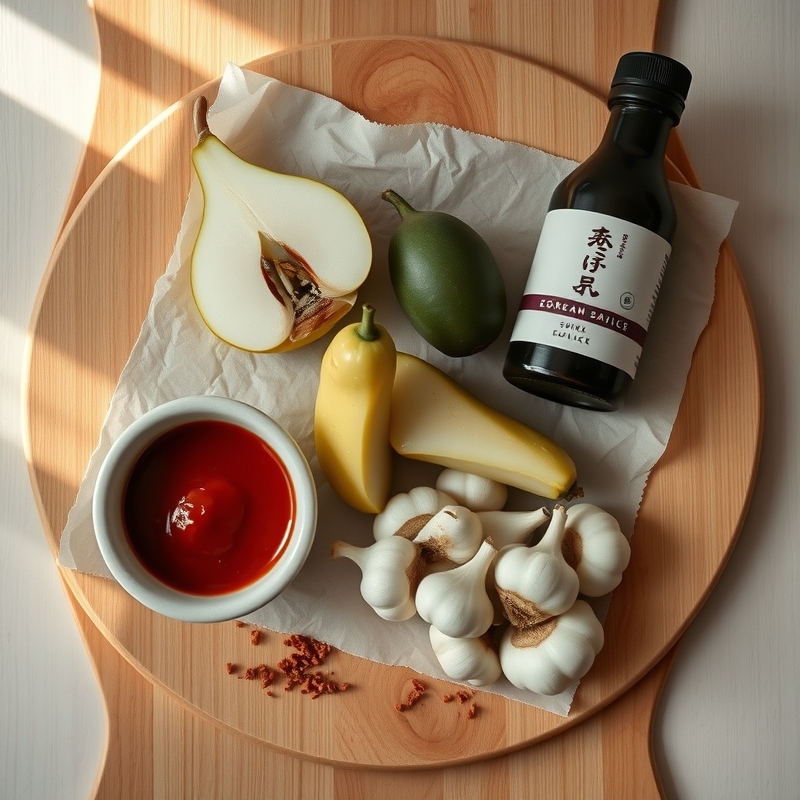
Korean home-style BBQ pork (돼지구이, dwaeji gui) relies on a completely different logic than restaurant Korean BBQ. At a Korean BBQ restaurant, you’re paying for the experience — the tabletop grill, the banchan parade, the theatrical sizzle. At home, Korean mothers optimize for flavor absorption, weeknight speed, and feeding a family of four without spending an hour at the stove.
The biggest difference most people miss: restaurant marinades are designed to taste good raw on the table, while home marinades are designed to caramelize. That’s why Korean home cooks add more sugar or fruit — the Maillard reaction at high heat transforms those sugars into the sticky, charred edges you’re craving.
Here’s what Korean households actually do differently:
- Cut: 목살 (moksal, pork shoulder/collar) sliced thin against the grain — marbling keeps it juicy
- Tenderizer: Grated Asian pear, kiwi, or even cola — fruit proteases break down tough fibers without turning the meat mushy
- Marinade time: 30 minutes minimum, 4 hours ideal, overnight if you’re meal prepping on Sunday
- Cooking vessel: A heavy skillet, not a grill pan with ridges (ridges prevent full contact = less caramelization)
Without the right cut, even a perfect marinade can’t save dry, chewy pork. Korean mothers know this instinctively — and now you do too.
What You’ll Need Before You Start Korean BBQ Pork
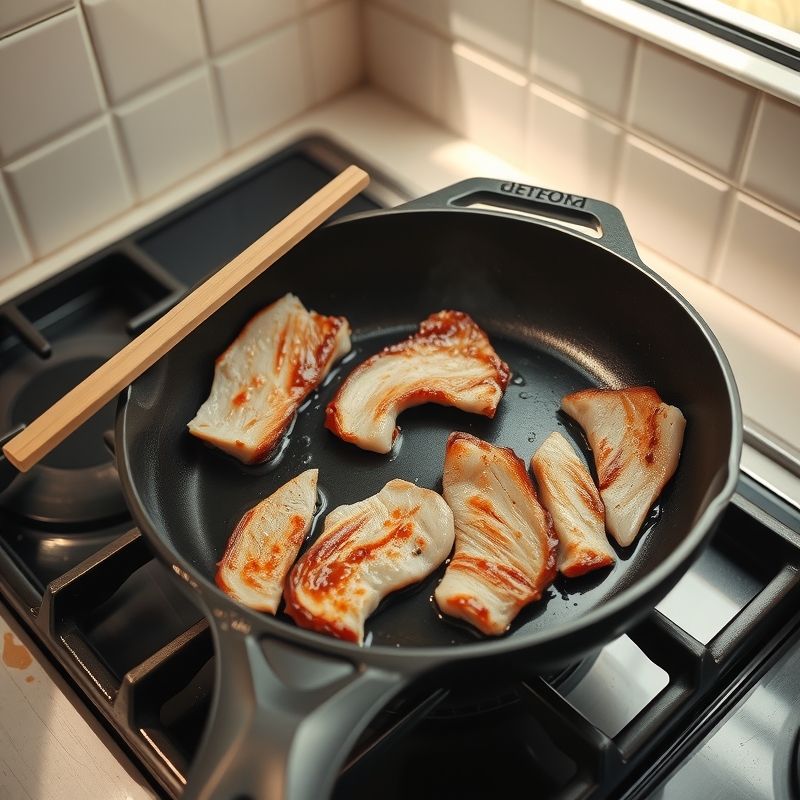
Every Korean BBQ pork recipe in this guide uses the same 10 pantry staples. Stock these once and you’re set for months. Walk into any Korean household kitchen and you’ll find all of them within arm’s reach.
The Meat
Pork shoulder (also labeled pork butt or Boston butt) is the go-to cut. Ask your butcher to slice it about 3mm thin, or freeze it for 45 minutes and slice it yourself — partially frozen pork cuts like butter. You’ll need about 1.5 pounds (roughly 700g) to feed four adults generously.
Pork belly (삼겹살, samgyeopsal) works for the soy-garlic recipe below, but shoulder is more forgiving and cheaper — typically around $3-5 per pound at most grocery stores.
The Pantry Staples
- 고추장 (gochujang) — fermented red pepper paste, the backbone of spicy Korean BBQ. Gochujang is a centuries-old fermented condiment made from chili powder, glutinous rice, and soybeans.
- 고춧가루 (gochugaru) — Korean red pepper flakes (coarse, not powder). These give color and a fruity heat distinct from cayenne.
- 간장 (ganjang) — soy sauce (regular, not low-sodium — you need the salt for caramelization)
- 참기름 (chamgireum) — toasted sesame oil (added after cooking, not during, so it doesn’t burn)
- 미림 (mirim) — rice wine or mirin (tenderizes and adds sweetness)
- 배 (bae) — Asian pear, grated (or 2 tablespoons of kiwi puree as substitute)
- Garlic — 5-6 cloves, minced (Korean recipes use more garlic than you think)
- Ginger — 1 tablespoon, freshly grated
- Sugar — brown sugar or honey
- Scallions — sliced, for finishing
Korean Gochugaru (Red Pepper Flakes)
When I make dwaeji bulgogi, I use coarse-cut gochugaru because it melts into the marinade and clings to the pork — regular chili flakes just slide off. The fruity, sun-dried heat is completely different from supermarket red pepper.
(paid link)
Check Availability & Reviews →
3 Korean BBQ Pork Marinades Korean Mothers Rotate Weekly
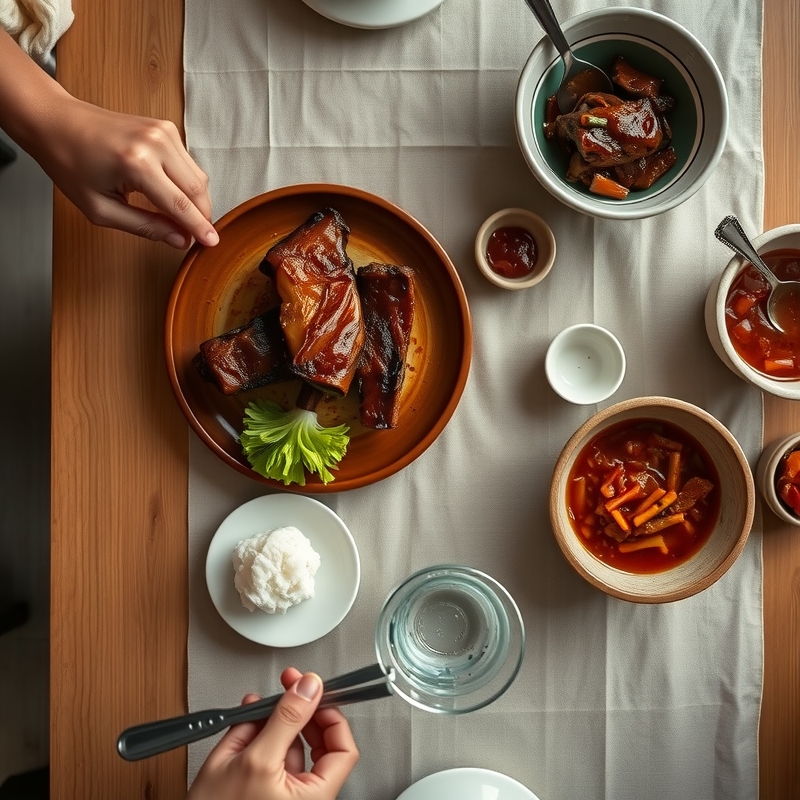
Korean households don’t make one BBQ pork recipe — they rotate three marinades depending on the season, who’s eating, and what’s in the fridge. Master these three and you’ll never order Korean BBQ delivery again.
Recipe 1: 돼지불고기 (Dwaeji Bulgogi) — Spicy Gochujang Pork
This is the one. The most popular Korean BBQ pork recipe in Korean homes, and the one most Western recipes get almost-right but miss on two key details: the fruit tenderizer and the ratio of gochujang to gochugaru.
Marinade (for 1.5 lbs / 700g thinly sliced pork shoulder):
- 2 tablespoons gochujang
- 1 tablespoon gochugaru (this adds depth — skipping it makes the sauce one-dimensional)
- 2 tablespoons soy sauce
- 1 tablespoon brown sugar or honey
- 1 tablespoon toasted sesame oil
- 2 tablespoons rice wine (mirim)
- 4 tablespoons grated Asian pear (about half a small pear)
- 5 cloves garlic, minced
- 1 tablespoon fresh ginger, grated
- ½ medium onion, grated (adds natural sweetness and moisture)
Mix everything in a large bowl. Add the sliced pork and massage the marinade into the meat with your hands — gloves recommended unless you want gochujang-stained fingers for two days. Marinate at least 30 minutes at room temperature or up to 24 hours in the fridge.
To cook: Heat a large skillet or cast iron pan over high heat until it’s smoking. Add the pork in a single layer — do not crowd the pan. This is where most home cooks fail. Crowding drops the temperature and steams the meat instead of searing it. Cook in two or three batches, 2-3 minutes per side, until the edges are caramelized and slightly charred. Finish with a drizzle of sesame oil and sliced scallions.
Recipe 2: 간장 돼지불고기 (Ganjang Dwaeji Bulgogi) — Soy-Garlic Pork
This is the recipe Korean mothers make when kids are at the table or when someone doesn’t handle spice well. Zero heat, all umami — and honestly, many Korean adults prefer this version too.
Marinade (for 1.5 lbs / 700g):
- 4 tablespoons soy sauce
- 1 tablespoon brown sugar
- 1 tablespoon toasted sesame oil
- 2 tablespoons rice wine
- 3 tablespoons grated Asian pear
- 6 cloves garlic, minced
- 1 teaspoon black pepper
- 2 scallions, finely chopped
Same method: marinate 30 minutes to overnight, cook in a screaming-hot pan in batches. The soy sauce caramelizes beautifully at high heat — you’ll get sticky, almost lacquered edges. This version is especially good with a bowl of steamed rice and a simple 깻잎 (perilla leaf) wrap.
Recipe 3: 매실 삼겹살 (Maesil Samgyeopsal) — Plum-Marinated Pork Belly
Korean mothers use 매실청 (maesil cheong, green plum syrup) as a secret-weapon tenderizer that also cuts the richness of fatty pork belly. If you can find maesil syrup at a Korean grocery store (usually around $8-12 for a bottle), this recipe is worth making at least once. Honey works as a substitute, but the tangy, floral note of green plum is what makes this version distinctly Korean.
Marinade (for 1 lb / 450g pork belly, sliced ¼-inch thick):
- 2 tablespoons maesil cheong (or 1 tablespoon honey + 1 teaspoon rice vinegar)
- 2 tablespoons soy sauce
- 1 tablespoon gochugaru
- 1 tablespoon minced garlic
- 1 teaspoon grated ginger
- 1 tablespoon rice wine
Because pork belly is fattier, marinate for at least 2 hours — the fat needs more time to absorb flavor. Cook on medium-high heat (not raging high, or the fat renders too fast and splashes). Let each side get crispy, about 3-4 minutes per side.
고기구이 (Gogigui): The Korean Home BBQ Tradition Most Westerners Miss
In Korea, BBQ at home isn’t a weekend event — it’s a weeknight shortcut. The word 고기구이 (gogigui, literally “meat roasting”) covers everything from tabletop grilling to quick stovetop stir-frying. What surprises most Western visitors is how fast and unfussy Korean home BBQ actually is.
Walk into a Korean household on a Tuesday evening and you might see this: thin-sliced pork that was marinated that morning sitting in a container in the fridge, pulled out at 6:30 PM, cooked in a hot pan by 6:40, and on the table — with rice, kimchi, and a couple of banchan from the weekend — by 6:50. Total active cooking time: roughly 12 minutes.
The Korean approach to home BBQ reflects a broader kitchen philosophy: front-load the work into the marinade, then cook fast. This is why Korean mothers marinate in the morning before leaving for work, or prep two different marinades on Sunday and portion them into containers for the week. It’s not meal prep in the Instagram sense — it’s just how Korean kitchens have operated for generations.
There’s also a communal element that translates beautifully to a family dinner in your 40s and 50s — the pork goes on the table with lettuce leaves (상추, sangchu), perilla leaves, sliced garlic, ssamjang (wrap sauce), and everyone builds their own wraps. Teenagers who won’t sit still for a plated dinner will absolutely stay at the table to assemble ssam. Korean mothers discovered this engagement hack long before any parenting blog.
Korean BBQ Stovetop Grill Pan
When I make dwaeji bulgogi on weeknights, I use a Korean-style stovetop grill pan — under $25 — because the sloped surface lets fat drain away while the pork gets that charred, caramelized edge you’d get at a restaurant.
(paid link)
See Why Reviewers Love This →
Korean BBQ Pork Recipes: Marinade Comparison
Choosing the right marinade depends on your heat tolerance, what cut you have, and who’s eating. Here’s how the three core Korean BBQ pork marinades compare side by side:
| Feature | Spicy Gochujang (돼지불고기) | Soy-Garlic (간장 불고기) | Plum Pork Belly (매실 삼겹살) |
|---|---|---|---|
| Heat Level | Medium-spicy | None (all umami) | Mild with tang |
| Best Cut | Pork shoulder, thinly sliced | Pork shoulder or loin | Pork belly, ¼-inch thick |
| Minimum Marinate Time | 30 minutes | 30 minutes | 2 hours |
| Active Cook Time | 10-12 minutes | 10-12 minutes | 15-18 minutes |
| Kid-Friendly? | Not for young kids | Yes — most family-friendly | Moderate |
| Difficulty | Easy | Easiest | Easy-moderate |
| Ingredient Cost | Around $8-12 total | Around $6-9 total | Around $10-15 total |
| Best For | The classic Korean BBQ craving | Weeknight family dinner | Weekend cooking, entertaining |
| Meal Prep Friendly? | Excellent — marinates overnight beautifully | Excellent | Good (use within 24 hours) |
For weeknight dinners, the soy-garlic version is the most practical starting point — fewest specialty ingredients, universally loved, and forgiving if you overcook slightly. Once you’re comfortable, the spicy gochujang version is the recipe you’ll make most often.
Stovetop, Oven, or Grill: How to Cook Korean BBQ Pork at Home
You do not need a grill to make authentic Korean BBQ pork. Korean apartment kitchens in Seoul are small — many don’t even have ovens. Stovetop is how the majority of Korean home cooks actually prepare BBQ pork, and it produces better caramelization than most outdoor grills.
Method 1: Stovetop (Recommended)
- Heat a large, heavy skillet over high heat for 2 full minutes (the pan must be smoking)
- Add pork in a single layer — no oil needed if using pork shoulder (the fat renders naturally)
- Cook without touching for 2 minutes until the bottom caramelizes
- Flip once. Cook 2 more minutes.
- Remove to a plate. Repeat with remaining batches.
The critical mistake: moving the pork around. Every time you stir or flip, you reset the caramelization clock. Let it sit. The charred, sticky edges are the entire point.
Method 2: Oven Broiler
Set your oven broiler to high. Spread marinated pork on a foil-lined sheet pan in a single layer. Broil 4-5 inches from the element for 4-5 minutes per side. This method is hands-off and works well for larger batches, but you’ll get less caramelization than stovetop. The USDA recommends pork reach an internal temperature of 145°F (63°C) with a 3-minute rest — though thinly sliced Korean BBQ pork cooks so fast this is rarely a concern.
Method 3: Outdoor Grill
If you’re grilling, use high direct heat and a grill basket or perforated grill mat — thin-sliced pork falls through standard grates. Grill 2-3 minutes per side. Best for summer entertaining when you want the smoky char.
Frequently Asked Questions
What happens if I skip the Asian pear in Korean BBQ pork marinade?
Your pork will still taste good but will be noticeably chewier. Asian pear contains natural enzymes that break down protein fibers, making the meat tender even when sliced thin and cooked at high heat. If you can’t find Asian pear, grate 2 tablespoons of kiwi or use 2 tablespoons of pineapple juice — fruit proteases work similarly across species. Use kiwi sparingly — it’s more aggressive and can turn meat mushy if left too long.
Can I use pork tenderloin for Korean BBQ instead of shoulder?
You can, but Korean mothers generally don’t — and for good reason. Pork tenderloin is too lean for BBQ-style cooking. Without marbling, it dries out quickly at high heat. Pork shoulder (목살) costs less and delivers juicier results because the intramuscular fat bastes the meat as it cooks. If tenderloin is all you have, slice it extra thin and don’t marinate longer than 2 hours (the fruit enzymes will break it down too much).
How long does marinated Korean BBQ pork last in the fridge?
Marinated raw pork keeps for up to 3 days in the fridge in an airtight container. Many Korean households marinate a large batch on Sunday and cook portions throughout the week — Monday’s is mildly flavored, Wednesday’s is deeply seasoned. Both are good. You can also freeze marinated pork for up to a month. Thaw overnight in the fridge before cooking.
What do you serve with Korean BBQ pork at home?
The classic Korean home setup is steamed rice, lettuce wraps, and 2-3 banchan. At minimum: a bowl of 흰쌀밥 (white rice), fresh lettuce or perilla leaves for wrapping, and kimchi. Ssamjang (a thick, savory wrap sauce made from doenjang and gochujang) is essential — it ties everything together. Sliced raw garlic and green chili peppers on the side are traditional but optional.
Is Korean BBQ pork healthy?
Compared to Western-style BBQ with heavy sugar-based sauces, Korean BBQ pork is relatively well-balanced. The marinade uses modest amounts of sugar, and the lettuce-wrap serving style naturally adds vegetables to every bite. Pork shoulder is higher in fat than chicken breast, but the thin-slice, high-heat method renders much of the surface fat away. Korean families balance the richness with banchan — fermented vegetables, pickled radish, and light soups that aid digestion.
Key Takeaways
- Pork shoulder (목살), not tenderloin, is the cut Korean mothers actually use — the marbling keeps it juicy at high heat and costs less per pound.
- Asian pear is the tenderizer Korean recipes depend on — its natural enzymes soften tough fibers in as little as 30 minutes, replacing the need for expensive cuts.
- Three marinades cover every Korean BBQ pork occasion: spicy gochujang for classic cravings, soy-garlic for family dinners, and plum pork belly for weekend entertaining.
- A heavy skillet on high heat beats a grill for home Korean BBQ — maximum surface contact means better caramelization, which is where the flavor lives.
- Don’t crowd the pan and don’t keep flipping — these two mistakes are why home Korean BBQ pork tastes steamed instead of charred.
- Front-load the work into the marinade, not the cooking — marinate in the morning, cook in 12 minutes after work. That’s the actual Korean weeknight BBQ system.
Tonight, try the soy-garlic marinade on whatever pork you have in the fridge — even pre-sliced pork from the grocery store works. Mix the sauce, let it sit while you cook rice, then sear it in the hottest pan you own. Twelve minutes from fridge to table.
This article contains affiliate links. If you purchase through these links, we may earn a small commission at no extra cost to you. We only recommend products we genuinely believe in.