Quick Answer: Korean chicken soup recipes go far beyond basic broth — Korean mothers rotate through at least 7 distinct chicken soups depending on the season, who’s sick, and what the body needs. Here’s what you need to know:
- 삼계탕 (Samgyetang) — the famous ginseng chicken soup, eaten in summer to fight heat exhaustion
- 닭곰탕 (Dakgomtang) — a milky-white bone broth simmered 6+ hours for collagen
- 닭죽 (Dakjuk) — chicken rice porridge, the Korean answer to feeling run-down
- 닭한마리 (Dak-hanmari) — a whole chicken boiled simply with potato and garlic
- 닭개장 (Dakgaejang) — spicy shredded chicken soup that clears your sinuses in minutes
- 닭미역국 (Dak-miyeokguk) — chicken seaweed soup packed with iodine and iron
- 닭칼국수 (Dak-kalguksu) — hand-cut noodles in rich chicken broth, the ultimate cold-weather bowl
When my mother came home exhausted after a 12-hour shift in the late ’90s, she didn’t reach for canned soup. She pulled a whole chicken from the fridge, stuffed it with sticky rice and dried jujubes, and had 삼계탕 simmering within ten minutes. Korean mothers don’t make “chicken soup” — they prescribe it, rotating through at least 7 different chicken soups depending on the season, the symptom, and who needs healing.
Most Western chicken soup recipes stop at one formula: broth, noodle, done. Korean kitchens treat chicken as medicine — and each soup targets something different. If you’re in your 40s and tired of the same rotation, these are the soups that Korean women your age have been making for decades.
1. 삼계탕 (Samgyetang) — Ginseng Chicken Soup That Koreans Eat in Summer, Not Winter
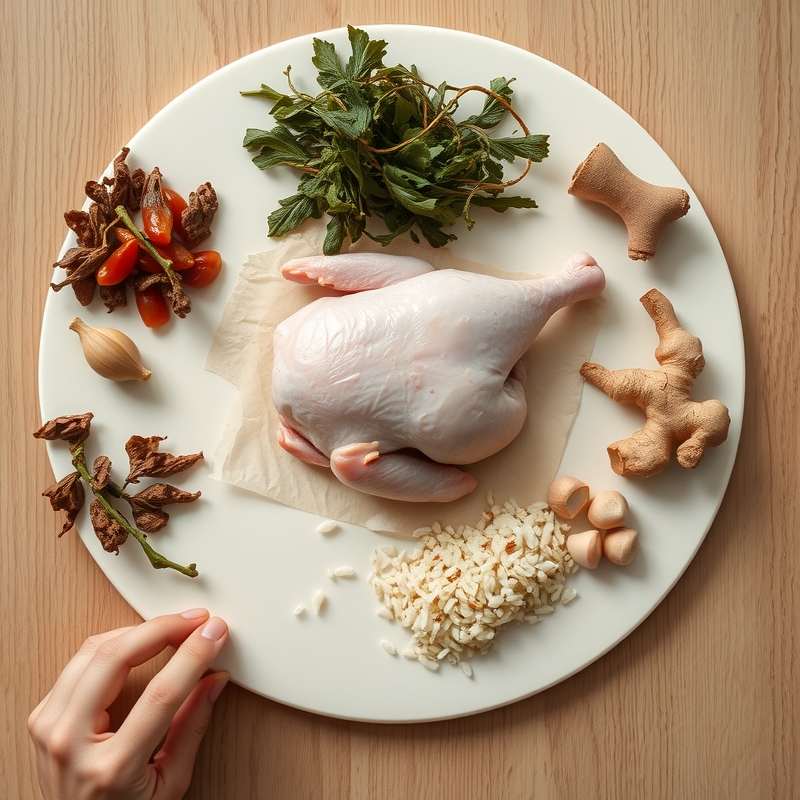
삼계탕 is Korea’s most iconic chicken soup, and most people outside Korea get the timing wrong — it’s traditionally eaten on the hottest days of summer, not in winter. The logic is 이열치열 (fight heat with heat): a steaming bowl of ginseng-stuffed chicken raises your core temperature, making you sweat and cool down naturally.
Here’s what goes inside the chicken:
- Sticky rice (glutinous rice, about ⅓ cup per bird)
- Fresh or dried Korean ginseng root (1 small root)
- 4-5 dried jujubes (대추, daechu)
- 3-4 peeled garlic cloves
- A few dried ginkgo nuts (optional)
You stuff a small whole chicken (Cornish hen works perfectly in American grocery stores), tie the legs, and simmer in water for about 50-60 minutes until the rice is swollen and the meat falls apart. No heavy seasoning — just salt and pepper at the table. That’s it.
What surprises most first-timers: samgyetang broth is milky and almost creamy despite having zero dairy. The long simmer pulls collagen from the bones and starch from the rice, creating that signature thickness. Korean women in their 40s and 50s eat this specifically because the ginseng and collagen-rich broth support energy without the crash of caffeine.
2. 닭곰탕 (Dakgomtang) — The Slow-Simmered Bone Broth Korean Grandmothers Never Rush
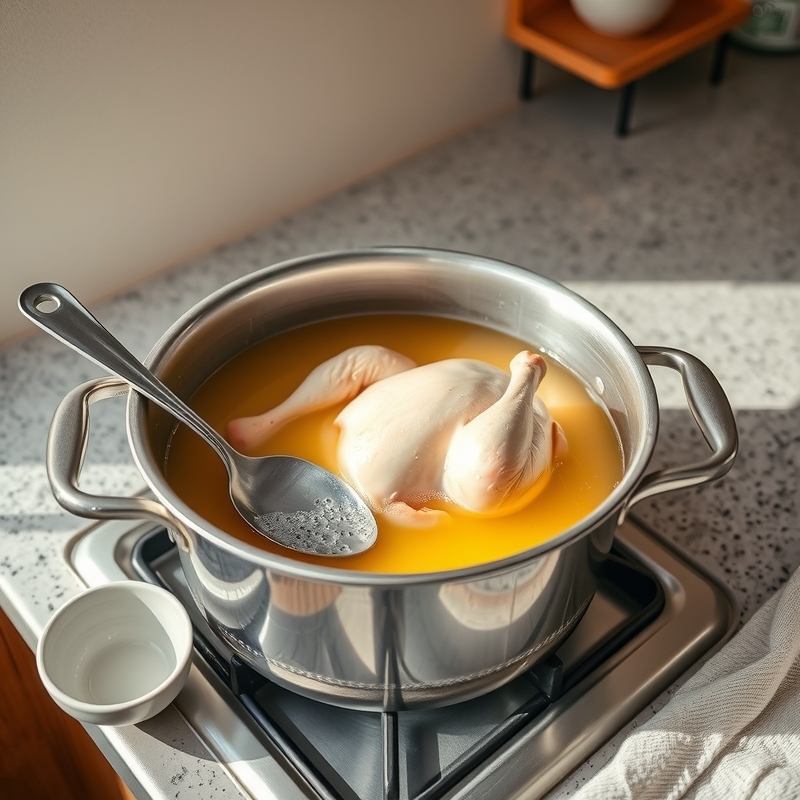
If samgyetang is a summer prescription, 닭곰탕 (dakgomtang) is the year-round baseline — a plain, milky chicken bone broth that Korean households keep as a pantry staple. The word 곰 (gom) means “to simmer long and slow,” and that’s exactly what makes this different from anything you’d get from a Western stock recipe.
The method is almost aggressively simple:
- Boil a whole chicken (or bone-heavy parts like backs, necks, wings) in cold water
- Discard the first boil water after 10 minutes (removes impurities — this is non-negotiable in Korean cooking)
- Refill with fresh water, add a whole onion, a few garlic cloves, and a thumb of ginger
- Simmer on the lowest heat for 4-6 hours
- Strain and season only with salt and sliced scallions
The result is a broth so opaque and rich it coats the back of a spoon. Korean mothers use dakgomtang as a base for everything — they freeze it in portions and pull it out for quick weeknight soups, porridge, or even cooking rice in broth instead of plain water. One batch on Sunday gives you 4-5 meals through the week, which is why busy Korean working women rely on it.
Without that first-boil step, your broth will taste murky and slightly off. Every Korean grandmother will tell you the same thing: 첫 물은 버려 — throw away the first water.
3. 닭죽 (Dakjuk) — The Chicken Rice Porridge Korean Mothers Make When You’re Falling Apart
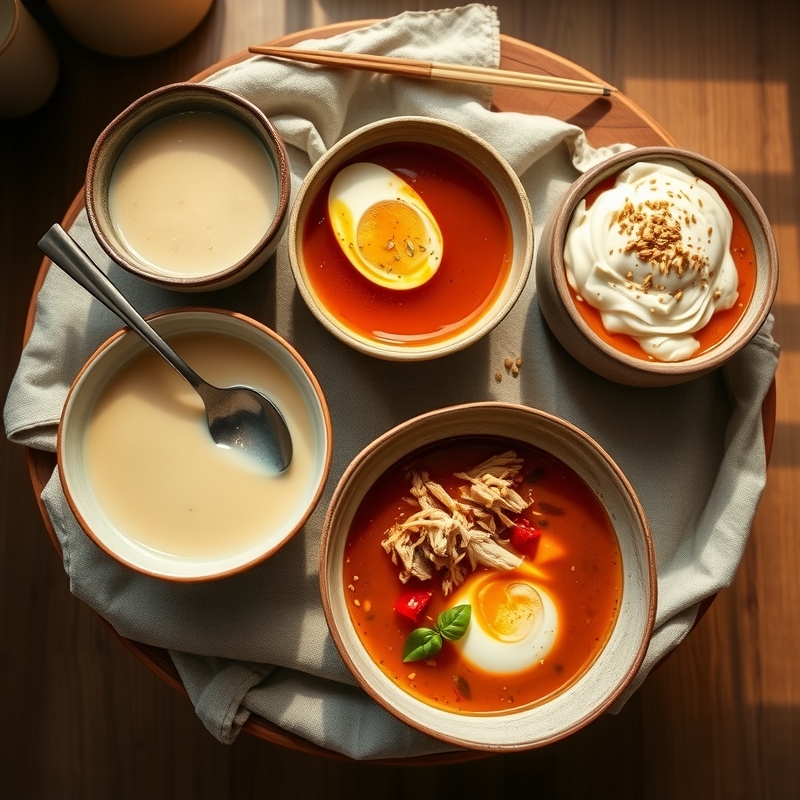
닭죽 (dakjuk) is what Korean mothers bring you when you’re sick, recovering from surgery, or simply too exhausted to chew. It’s chicken rice porridge — softer than congee, gentler than soup — and it’s the first food Korean women eat after childbirth as part of the 산후조리 (sanhu-jori) postpartum recovery tradition.
The recipe is forgiving:
- Shred leftover chicken (or poach a breast specifically for this)
- Cook ½ cup of short-grain rice in 4-5 cups of chicken broth (dakgomtang works perfectly here)
- Stir occasionally over medium-low heat for 25-30 minutes until the rice breaks down
- Season with sesame oil, salt, and a pinch of minced garlic
- Top with a beaten egg stirred in at the end, shredded chicken, and toasted sesame seeds
What makes dakjuk different from Western chicken and rice soup: the rice completely dissolves into the broth, creating a porridge that your stomach processes with almost zero effort. Korean nutritionists widely recommend this for digestive recovery because the broken-down starch requires less enzymatic work than intact grains.
In your 40s, when your digestion isn’t as bulletproof as it was at 25, a bowl of dakjuk after a heavy week feels like a reset button. My mother still makes it whenever I call and mention I’m tired — I’m 47, and she doesn’t care.
4. 닭한마리 (Dak-hanmari) — Seoul’s Famous Whole Chicken Soup You Can Make at Home
닭한마리 literally means “one whole chicken,” and it’s a Seoul specialty so popular that an entire alley in Dongdaemun — 닭한마리 골목 — is dedicated to restaurants serving only this dish. Unlike samgyetang’s stuffed approach, dak-hanmari is stripped down: a whole chicken simmered in water with potatoes, scallions, and a mountain of garlic.
The genius is in the dipping sauce, not the soup itself:
- Mix soy sauce, rice vinegar, Korean mustard (연겨자), and minced garlic
- Pull pieces of tender chicken from the pot and dip before eating
- After finishing the chicken, add knife-cut noodles (칼국수 면) to the remaining broth
- Finish with rice tossed into the very last dregs of broth for a final porridge course
This three-phase eating style — chicken, then noodles, then rice porridge — is how dak-hanmari is traditionally served in Seoul. One pot, three meals’ worth of satisfaction. For a household where everyone has a different appetite, it’s practical in a way that portioned Western soups aren’t.
One whole chicken feeds a family of 3-4 for under $8 in most American grocery stores (prices vary by region). That’s the kind of math Korean working mothers have always been good at.
5. 닭개장 (Dakgaejang) — The Spicy Chicken Soup That Clears Everything
닭개장 (dakgaejang) is the spicy, shredded chicken version of Korea’s famous 육개장 (yukgaejang), and it’s what Korean women make when they need something that wakes up the body from the inside out. The broth is deep red from gochugaru (Korean chili flakes), loaded with fernbrake (gosari), bean sprouts, and scallions.
What makes this soup worth your time after 40:
- The capsaicin from gochugaru boosts circulation — Korean mothers swear it “opens the blood” (피를 돌게 한다)
- Fernbrake and bean sprouts add fiber and texture without heaviness
- The shredded chicken is easy to eat and digest
- One bowl with rice is a complete, balanced meal in 20 minutes (if broth is pre-made)
The key technique most recipes skip: you must sauté the shredded chicken and vegetables in sesame oil and gochugaru before adding the broth. This step — 볶기 (bokki, stir-frying) before simmering — builds a depth of flavor that simply dumping everything into a pot cannot match. It’s the difference between a soup that tastes layered and one that tastes flat.
If you’ve ever had yukgaejang at a Korean restaurant and loved it but found beef too heavy, dakgaejang gives you the same soul-warming heat with lighter protein. Most Korean restaurants don’t serve the chicken version — it’s considered home cooking, made by mothers who know their family prefers chicken.
6. 닭미역국 (Dak-miyeokguk) — Chicken Seaweed Soup for Birthdays, Postpartum, and Bone Health
미역국 (miyeokguk, seaweed soup) is the most culturally significant soup in Korea — every Korean eats it on their birthday, and new mothers eat it daily for weeks after giving birth. The traditional version uses beef, but 닭미역국 (dak-miyeokguk) swaps in chicken for a lighter, cleaner variation that’s increasingly popular among health-conscious Korean women in their 40s and 50s.
Why seaweed soup specifically for recovery and birthdays:
- Dried miyeok (미역, wakame seaweed) is rich in iodine, calcium, and iron — nutrients that support thyroid function and bone density
- Korean traditional medicine considers it a blood cleanser (피를 맑게 한다)
- The slippery texture aids digestion and is gentle on postpartum or sensitive stomachs
To make the chicken version:
- Soak a handful of dried miyeok in water for 15 minutes, then cut into bite-sized pieces
- Sauté the rehydrated seaweed in sesame oil for 2-3 minutes
- Add chicken broth (or water with chicken pieces) and simmer for 20 minutes
- Season with soy sauce or soup soy sauce (국간장) and minced garlic
For women approaching 50, the iodine and calcium in miyeok become especially relevant as bone density and thyroid support become daily concerns, not abstract future problems. This is a soup Korean women don’t stop eating — they eat it more often as they age.
7. 닭칼국수 (Dak-kalguksu) — Chicken Knife-Cut Noodle Soup for Cold Nights
닭칼국수 (dak-kalguksu) is hand-cut wheat noodles in chicken broth, and it’s the Korean equivalent of the most comforting bowl you can imagine on a freezing night. 칼국수 literally means “knife noodles” — the dough is rolled flat and sliced by hand, giving the noodles an irregular, chewy texture that machine-cut pasta can never replicate.
The basic approach:
- Make noodle dough: 2 cups flour, 1 egg, ½ cup water, pinch of salt — knead until smooth, rest 30 minutes
- Roll thin and cut into ¼-inch wide strips with a knife
- Simmer chicken broth with sliced zucchini, potato, and onion
- Drop fresh noodles into the boiling broth and cook 5-7 minutes
- The starch from the noodles naturally thickens the soup
If making noodles from scratch feels like too much on a Wednesday night, Korean grocery stores sell fresh 칼국수 면 (kalguksu noodles) in the refrigerated section. No shame — most Korean working women in their 40s use store-bought noodles during the week and save handmade for weekends when time allows.
The trick that elevates this from “noodle soup” to something worth craving: add a handful of sliced 애호박 (aehobak, Korean zucchini) and let it cook until just soft. The sweetness of the zucchini balances the savory broth in a way that Western zucchini doesn’t quite match — Korean zucchini is denser and less watery. Look for it at Asian grocery stores or substitute with a small, firm regular zucchini.
Why Korean Mothers Rotate 7 Soups Instead of Making One — 국물 문화 (Gungmul Munhwa, Broth Culture)
In Korean food culture, 국 (guk, soup) isn’t a starter or a side — it’s the center of the meal. The phrase 국물 문화 (gungmul munhwa) literally means “broth culture,” and it describes how Korean meals are built around a bowl of hot soup or stew served with rice, not the other way around.
Walk into any Korean household at dinnertime, and you’ll find a pot of soup on the table. This isn’t optional — a Korean meal without soup feels incomplete the way a Western meal without bread might feel empty to a European. The specific soup changes based on:
- Season: Samgyetang in summer, kalguksu in winter, miyeokguk year-round
- Physical condition: Dakjuk when sick, dakgaejang when sluggish, dakgomtang for general maintenance
- Emotional need: Dak-hanmari when the family needs to gather around one pot
- Budget: One whole chicken feeds a family multiple meals across multiple soup types
This rotation isn’t random — it’s 약식동원 (yaksik-dongwon), the Korean philosophy that food and medicine share the same origin. Korean mothers in their 40s and 50s learned this rotation from their own mothers, adjusting ingredients based on what their family needs that week. It’s a system, not a recipe collection.
For Lisa reading this in her 40s and feeling stuck in the same three dinner rotations: this is the Korean approach that Western meal planning misses. You don’t need 30 different recipes. You need one protein (chicken), seven methods, and the judgment to match the soup to the situation.
Korean Chicken Soup Comparison: Quick Pick Table
| Soup | Best For | Prep Time | Spice Level | Difficulty |
|---|---|---|---|---|
| 삼계탕 (Samgyetang) | Summer energy, fatigue recovery | 60-70 min | None | Easy |
| 닭곰탕 (Dakgomtang) | Meal prep base, collagen broth | 4-6 hours (mostly passive) | None | Very Easy |
| 닭죽 (Dakjuk) | Sick days, digestive reset, postpartum | 30-40 min | None | Very Easy |
| 닭한마리 (Dak-hanmari) | Family dinner, budget-friendly | 50-60 min | Mild (dipping sauce) | Easy |
| 닭개장 (Dakgaejang) | Cold relief, sluggish days, warming | 45-60 min | Spicy | Medium |
| 닭미역국 (Dak-miyeokguk) | Birthdays, bone health, thyroid support | 25-30 min | None | Very Easy |
| 닭칼국수 (Dak-kalguksu) | Cold weather comfort, family favorite | 40-50 min (store-bought noodles: 20 min) | None | Medium (handmade) / Easy (store-bought) |
Best starting point if you’ve never made Korean chicken soup: 닭죽 (dakjuk). It takes 30 minutes, requires zero special ingredients, and you’ll immediately understand why Korean mothers reach for it first. The 닭곰탕 is your best value — 4-6 hours of passive simmering gives you a week’s worth of base broth.
Korean Earthenware Pot (뚝배기, Ttukbaegi)
When I serve dakjuk or miyeokguk, I ladle it into a ttukbaegi — the traditional Korean stone bowl that keeps soup bubbling-hot at the table for 20+ minutes. It changes the entire experience from “reheated soup” to “restaurant-level presentation” for under $20.
(paid link) Check Availability & Reviews →
Frequently Asked Questions
What happens if I skip the first boil when making Korean chicken soup?
Skipping the first boil (데치기, dechigi) leaves impurities, blood residue, and off-flavors in your broth. Korean cooks always boil the chicken for 10 minutes first, discard that water, then start the real soup with fresh water. This single step is the difference between a clean, clear broth and a murky, slightly gamey one.
Can I use chicken breast instead of a whole chicken for Korean soup?
You can, but the broth will be noticeably thinner. Korean chicken soups rely on bones, skin, and cartilage to create their signature rich, collagen-heavy broth. Chicken breast works for dakjuk (porridge) where the rice provides body, but for samgyetang or dakgomtang, use bone-in pieces at minimum — a whole chicken is ideal.
Which Korean chicken soup is best for someone feeling run-down after 40?
닭죽 (dakjuk, chicken porridge) is the gentlest option for recovery, while 삼계탕 (samgyetang) is the most restorative for energy. Korean women in their 40s and 50s often start with dakjuk when their stomach feels weak, then graduate to samgyetang when they have more appetite. Think of dakjuk as the reset and samgyetang as the rebuild.
Where can I find Korean soup ingredients like dried jujubes and ginseng in the US?
Most H Mart, Lotte, or Asian grocery stores carry dried jujubes, ginseng root, and dried miyeok (seaweed). If you don’t have a Korean grocery nearby, all three ingredients are widely available on Amazon. Dried jujubes and miyeok keep for months in the pantry, so stock up once and you’re set for multiple batches.
Is Korean chicken soup actually different from Western chicken soup nutritionally?
The biggest difference is technique, not ingredients — Korean methods extract more collagen and minerals through longer simmering times and the inclusion of whole bones. The first-boil-and-discard step also removes impurities that would otherwise stay in the broth. Add ingredients like ginseng, seaweed, and jujubes, and you’re getting micronutrients that a standard Western chicken-noodle recipe simply doesn’t include.
Key Takeaways
- Korean mothers rotate through 7+ chicken soups based on season, health needs, and family — not just one default “chicken soup” for everything.
- Always discard the first boil water (데치기) — this is the single most important technique in Korean soup-making that Western recipes skip.
- 삼계탕 (samgyetang) is eaten in Korea’s hottest summer months, not winter — the ginseng and hot broth fight heat exhaustion through the “fight heat with heat” principle.
- 닭곰탕 (dakgomtang) bone broth gives you 4-5 meals from one Sunday batch — freeze it in portions for instant weeknight soup bases all week.
- 미역국 (miyeokguk) with chicken is especially valuable after 40 — the iodine and calcium in seaweed support thyroid function and bone density during perimenopause.
- One whole chicken costs under $8 and produces multiple Korean soups — this is the budget math Korean working mothers have mastered for generations.
Tonight, try the simplest one first: cook ½ cup of rice in leftover chicken broth until it breaks down into porridge, stir in a beaten egg, and finish with a drizzle of sesame oil and salt. That’s 닭죽 — and once you taste it, you’ll understand why Korean mothers reach for a soup pot before a medicine cabinet.
This article contains affiliate links. If you purchase through these links, we may earn a small commission at no extra cost to you. We only recommend products we genuinely believe in.
You Might Also Like
- Korean Street Food: 9 Orders Korean Moms Say You Get Wrong
- 7 Korean Double Cleansing Products Most Women Over 40 Miss
- Korean Beef Soup Recipes: 5 Bowls Korean Women Make After 40