Quick Answer: Most famous Korean street food lists give you names but not the knowledge you actually need — what’s inside each dish, how to eat it properly, and which items to try first if you’ve never been to a Korean market. Here’s what you need to know:
- 떡볶이 (tteokbokki) is chewy rice cakes in spicy sauce — not noodles, not dumplings
- 순대 (sundae) is blood sausage with glass noodles inside — and yes, you dip it in salt
- 호떡 (hotteok) has molten brown sugar filling — wait 2 minutes or you’ll burn your mouth
- Order 어묵 (eomuk) broth first — it’s free at most stalls and settles your stomach between bites
- Korean moms order the combo (세트, seteu), not individual items — it’s cheaper and more balanced
My American friend Sarah visited Seoul last fall. She’d watched three seasons of K-dramas, bookmarked a famous Korean street food list from a travel blog, and walked into Gwangjang Market with confidence — then stood frozen for ten minutes because nothing on her list matched what she actually saw. The vendors were shouting names she couldn’t parse, the portions looked nothing like the photos, and she ended up pointing at random and getting something she didn’t enjoy. That’s not a Sarah problem. That’s a bad-list problem.
Why Most Famous Korean Street Food Lists Fail You
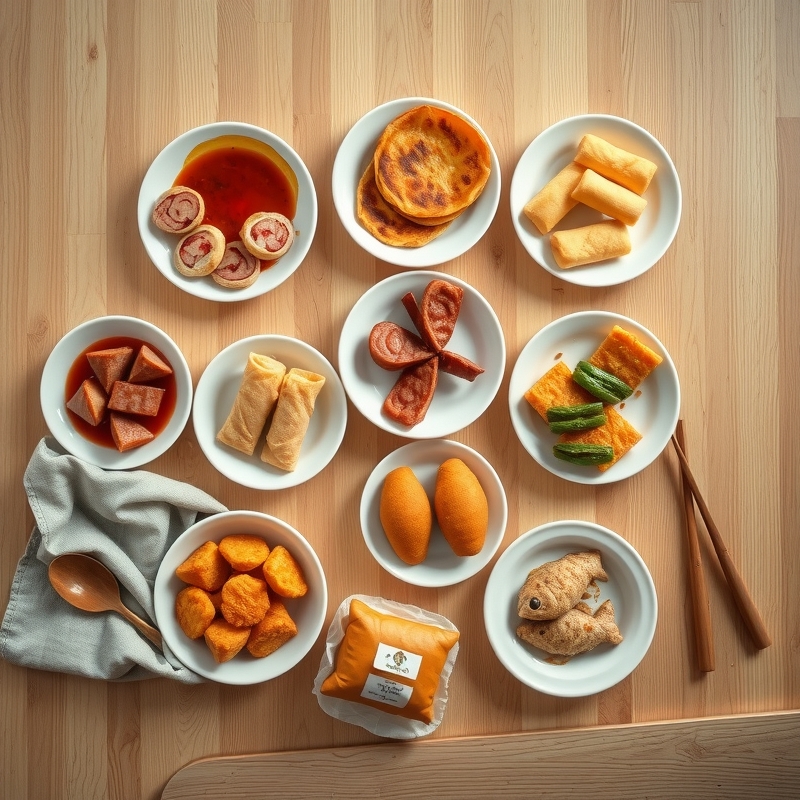
The biggest problem with Korean street food guides isn’t what they include — it’s what they leave out. Most lists give you a name, a one-line description, and a pretty photo. But Korean street food isn’t like ordering from a menu with pictures. It’s a sensory experience that requires context your typical listicle doesn’t provide.
Here’s what goes wrong. You read “tteokbokki — spicy rice cakes” and picture something like a spicy rice dish. Then you get a bowl of thick, chewy cylinders swimming in bright red sauce and realize you have no idea how to eat them (chopsticks? spoon? fork?). You read “sundae — Korean sausage” and expect something like bratwurst. Then blood sausage arrives and you panic.
Without understanding what’s actually inside each dish and how Koreans eat it, you’ll waste money on items you won’t finish and miss the ones you’d love.
Signs You’re Ordering Korean Street Food Wrong
- You order one item at a time instead of a combo set
- You skip the free fish cake broth (어묵국물) sitting right on the counter
- You start with the spiciest item and can’t taste anything after
- You eat hotteok immediately and burn the roof of your mouth
- You avoid sundae because you assume it’s all blood (it’s mostly glass noodles)
- You order tteokbokki expecting a light snack — it’s a full, heavy meal
9 Famous Korean Street Foods, Honestly Explained
Korean mothers don’t order Korean street food the way travel bloggers recommend it. They know exactly what’s inside each dish, which combinations work together, and what to skip when the line is too long. Here are the nine items you’ll see at virtually every Korean market and street food stall — explained the way a Korean mom would explain them to you before your first visit.
1. 떡볶이 (Tteokbokki) — Spicy Rice Cakes
What’s actually inside: Cylindrical rice cakes (떡, tteok) made from glutinous rice flour, simmered in gochujang-based sauce with fish cake strips, scallions, and sometimes boiled eggs. The texture is dense and chewy — think thick gnocchi, not fluffy rice.
How Korean moms eat it: With a wooden skewer or chopsticks, never a fork. They blow on each piece because the starchy coating holds heat. They pair it with 순대 (sundae) almost every single time — the savory richness of sundae balances tteokbokki’s sweetness.
What most lists won’t tell you: Tteokbokki is filling. Two people can share one serving. If you eat a full portion alone, you won’t have room for anything else at the market.
2. 순대 (Sundae) — Blood Sausage
What’s actually inside: Pig intestine casing stuffed primarily with glass noodles (당면, dangmyeon), barley, and pork blood. The blood is a binding ingredient, not the main filling. Think of it as a savory noodle-stuffed sausage.
How Korean moms eat it: Sliced into rounds, dipped in a mix of salt and pepper (소금, sogeum). Not sauce. Not ketchup. Just coarse salt. This sounds bizarre until you try it — the salt brings out the subtle sweetness of the glass noodles inside.
What most lists won’t tell you: If the idea of blood bothers you, order 찹쌀순대 (chapssal sundae, glutinous rice sundae) — same concept but filled with sticky rice instead. Available at most stalls.
3. 호떡 (Hotteok) — Sweet Filled Pancakes
What’s actually inside: Yeasted dough filled with a mixture of brown sugar, cinnamon, and crushed peanuts or seeds. When pressed flat on the griddle, the filling melts into liquid caramel inside.
How Korean moms eat it: They wait. Seriously — the number one hotteok mistake is biting into it immediately. The melted sugar inside reaches temperatures that will genuinely burn your mouth. Korean moms hold it by the paper cup, let it cool for at least two minutes, then bite from the edge where the filling is thinnest.
4. 김밥 (Gimbap) — Korean Rice Rolls
What’s actually inside: Seasoned rice, pickled radish (단무지, danmuji), spinach, egg strips, and either ham, tuna, or beef — all rolled in dried seaweed (김, gim). Not sushi. The rice is seasoned with sesame oil, not vinegar. The filling is cooked, not raw.
How Korean moms eat it: Gimbap is the grab-and-go option. Korean mothers buy it when they need food fast and don’t want something heavy. It’s the one street food that travels well — perfect for eating on a park bench or carrying on a hike.
5. 어묵 (Eomuk) — Fish Cake Skewers
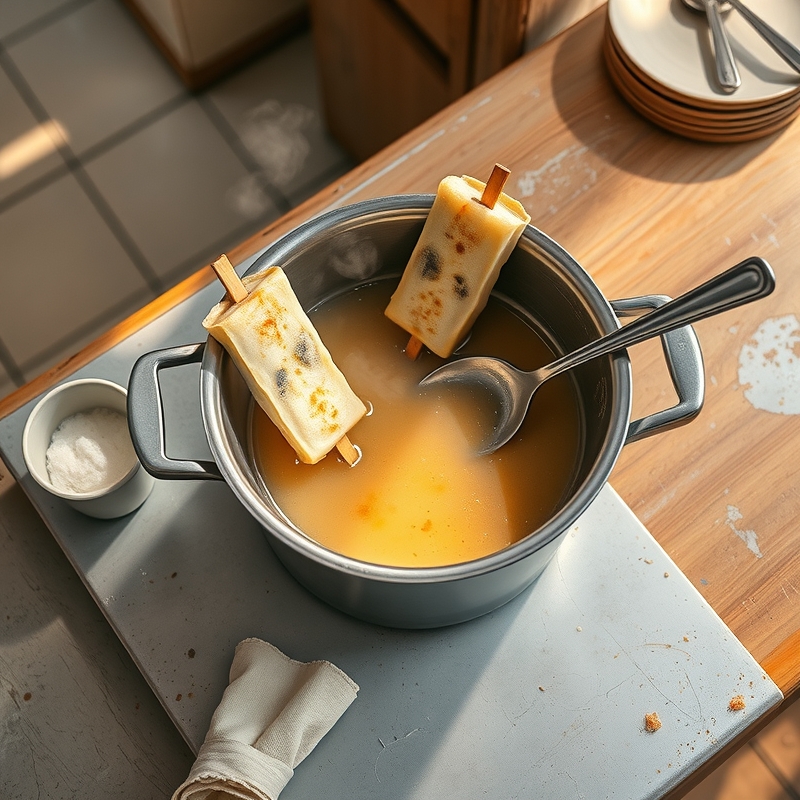
What’s actually inside: Pureed white fish mixed with starch, formed into flat sheets, folded onto skewers, and simmered in a light anchovy-kelp broth. The texture is soft and bouncy, similar to a firm tofu.
How Korean moms eat it: They grab a cup of the broth first — at most street stalls, the eomuk broth is free and self-serve. It’s warm, savory, and acts as a palate cleanser between spicier dishes. Korean mothers always start their market visit with a cup of this broth, especially in colder months.
6. 붕어빵 (Bungeoppang) — Fish-Shaped Bread
What’s actually inside: A waffle-like batter shaped like a carp fish, filled with sweet red bean paste (팥, pat). No actual fish. The name comes from the mold shape. Modern versions sometimes use custard cream instead.
How Korean moms eat it: Tail first. There’s a decades-old Korean debate about whether to eat the head or tail first — but the practical reason for tail-first is that the filling is usually thickest in the belly and head, so starting with the tail gives you a warm-up bite of mostly batter.
7. 튀김 (Twigim) — Korean Fried Bites
What’s actually inside: Battered and deep-fried vegetables (sweet potato, perilla leaf, chili pepper), shrimp, squid, or glass noodle rolls. The batter is thinner and crispier than Western tempura — almost shatteringly light.
How Korean moms eat it: Dipped in soy sauce mixed with vinegar and sliced chili, or with the tteokbokki sauce from the stall. Many stalls sell twigim and tteokbokki together because Koreans use the spicy sauce as a dip for the fried items. This is the combo you want.
8. 계란빵 (Gyeranppang) — Egg Bread
What’s actually inside: A slightly sweet, corn-bread-like batter with a whole egg cracked on top and baked in an oval mold. The egg sets soft, almost like a sunny-side-up egg nestled inside a warm muffin.
How Korean moms eat it: As a quick breakfast or afternoon snack. It’s mild, not spicy, and satisfying without being heavy. If you’re overwhelmed by unfamiliar options, gyeranppang is the safest starting point — everyone likes it.
9. 닭꼬치 (Dakkochi) — Chicken Skewers
What’s actually inside: Chunks of chicken thigh (not breast — Korean street vendors almost always use dark meat for juiciness), grilled over charcoal and glazed with a sweet-spicy sauce or sprinkled with cheese powder.
How Korean moms eat it: They choose the spicy-sweet glaze over cheese, and they eat it while walking. Dakkochi is the walking food — you eat it between stalls, not sitting down. Korean moms often buy one for each kid to keep them occupied while she shops for the real groceries.
시장 (Sijang) Culture: Why Korean Street Food Tastes Different at the Market
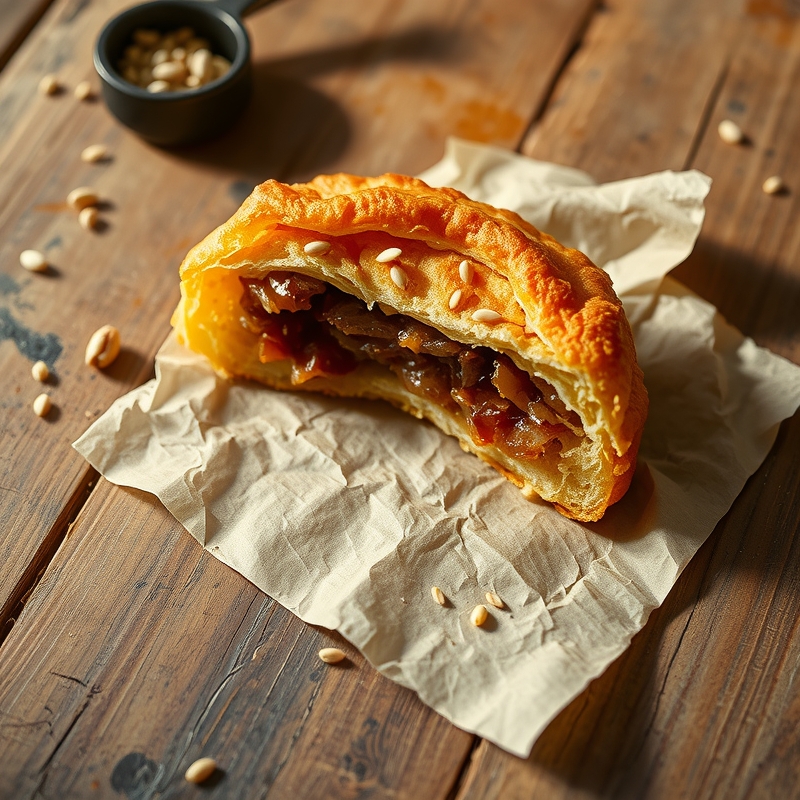
Korean street food wasn’t invented for tourists or Instagram — it evolved inside 시장 (sijang, traditional markets) as practical fuel for merchants and shoppers who needed fast, cheap, filling meals between transactions. This origin shapes everything about how the food is made and eaten today.
In a Korean traditional market like 광장시장 (Gwangjang Market) or 남대문시장 (Namdaemun Market), vendors have been operating from the same stall — sometimes the same family — for decades. The grandmother making tteokbokki at stall 32 learned the recipe from her mother, who learned it from hers. The broth in the eomuk pot has been simmering since 5 AM. The gimbap rice was seasoned at dawn.
This matters because the same dish tastes fundamentally different at a traditional market versus a trendy new street food chain. Market vendors cook by intuition built over decades. Chain shops follow standardized recipes optimized for consistency. Both are fine, but if someone tells you “I tried tteokbokki and it was just OK,” the first question a Korean mom asks is “where did you get it?”
Walk into any traditional Korean market and you’ll notice something else: Korean shoppers rarely eat alone at street food stalls. A mother and daughter sharing sundae and tteokbokki. Two older women splitting twigim and sipping free eomuk broth. Korean street food is portion-sized for sharing — another detail most food lists completely ignore. If you order three items for yourself, you’ll end up overwhelmed and full after one and a half.
How to Order Korean Street Food the Right Way
Korean mothers follow an unspoken ordering sequence at market stalls that most visitors don’t know about. It’s not random grazing — there’s a logic to it.
- Start with eomuk broth. Grab the free cup, warm your stomach, settle in. This is your orientation moment.
- Order a combo set (세트). Most stalls selling tteokbokki offer a set that includes tteokbokki + sundae + twigim for less than ordering each separately. Point to the combo sign or say “세트 주세요” (seteu juseyo — “set, please”).
- Eat the mild items first. Sundae and twigim before tteokbokki. Once the spicy sauce coats your tongue, subtle flavors disappear.
- Save sweets for last. Hotteok or bungeoppang is dessert, not an appetizer. Eating sugar first dulls your palate for everything after.
- Gimbap is for takeaway. If you’re still hungry after the market, grab gimbap to eat on the walk home. It holds up for hours.
| Factor | Ordering Individually | Combo Set (세트) | Shared Platter for 2 |
|---|---|---|---|
| Cost (approximate) | Around ₩12,000-15,000 for 3 items | Around ₩8,000-10,000 for 3 items | Around ₩10,000-12,000 total |
| Portion balance | Often too much of one item | Pre-balanced by the vendor | Best variety per person |
| Waste risk | High — full portions of each | Moderate — still generous | Lowest — split everything |
| Best for | Only if you want one specific dish | Solo visitors — best value | Pairs or small groups |
| What Korean moms choose | Rarely | When alone | Almost always — sharing is the norm |
Frequently Asked Questions
What happens if I eat Korean street food in the wrong order?
You’ll miss half the flavors. Starting with tteokbokki’s intense spice and sweetness overwhelms your palate, making milder items like eomuk and sundae taste flat afterward. Korean moms start mild and build toward spicy for a reason — it’s how you actually taste everything you paid for.
Is Korean street food safe for someone with food allergies?
Wheat, soy, shellfish, and sesame are in almost everything. Tteokbokki sauce contains soy and often wheat. Eomuk is fish-based. Twigim batter uses wheat flour. Gimbap contains sesame oil. If you have serious allergies, learn the Korean word for your allergen before visiting — most market vendors don’t have English ingredient lists, but they will tell you what’s in their food if you ask.
What Korean street food should I try first if I’ve never had any?
Gyeranppang (egg bread) is the safest first choice. It’s mild, familiar in concept (bread with egg), not spicy, and universally liked. From there, try gimbap — the sesame-oil rice and cooked fillings are approachable. Save tteokbokki and sundae for your second visit, when you know what to expect.
Can I find real Korean street food outside Korea?
Korean neighborhoods in major American cities — like LA’s Koreatown, New York’s Flushing, or Atlanta’s Buford Highway — have market-style stalls serving authentic versions. The quality depends on the vendor, not the country. Look for stalls run by older Korean women who speak more Korean than English — that’s usually a sign the recipes haven’t been adjusted for Western palates.
Why do Korean street food portions seem small compared to American portions?
They’re designed for sharing and combining, not eating alone. A single serving of tteokbokki is meant to be one dish among three or four items on the table. Korean eating culture is built around banchan (side dish) variety — many small tastes rather than one large plate. Order two or three items to share and you’ll feel perfectly full.
Key Takeaways
- Most famous Korean street food lists give you names without context — knowing what’s inside each dish and how to eat it matters more than knowing the name
- Korean moms order combo sets (세트), not individual items — it’s cheaper, better balanced, and how the food is meant to be eaten
- Start with free eomuk broth and mild items first — eating spicy tteokbokki first overwhelms your palate for everything after
- Sundae is mostly glass noodles, not blood — the blood is a binding ingredient, and rice-filled versions exist if you prefer
- Wait at least two minutes before biting into hotteok — the melted sugar filling is hot enough to seriously burn your mouth
- Korean street food is sharing food — ordering two or three items for two people gives you better variety and less waste than loading up solo portions
Next time you’re at a Korean market — or even a Korean food stall in your city — skip the individual orders. Point to the combo set, grab a free cup of eomuk broth while you wait, and start with the mild bites first. Say “세트 주세요” (seteu juseyo) and watch the vendor nod — you just ordered like someone who’s been doing this for years.
This article contains links to external resources for reference purposes only. All cultural observations are based on common Korean household and market practices.