A friend of mine moved to Seoul, ate Korean food every day for three months, and lost 14 pounds without trying. When she moved back to Chicago, she started buying kimchi from the grocery store, eating it the same way she thought Koreans do — straight from the jar as a snack. Six months later, nothing. The problem wasn’t the fermented food itself — it was 4 specific mistakes that quietly cancel the gut-health benefits Korean fermented foods are known for.
If you’ve been adding kimchi to your meals and wondering why your digestion hasn’t improved or the scale hasn’t budged, you’re not alone. Most Western guides treat Korean fermented foods like a magic pill. They’re not. They’re part of a daily eating system — and when you pull them out of that system, you lose the thing that actually makes them work.
Signs Korean Fermented Food Isn’t Working for Your Weight Loss
If you’re eating fermented Korean food but not seeing results, at least three of these will sound familiar. This isn’t about willpower or quantity — it’s about how and when you’re eating these foods.
- You eat kimchi cold, straight from the fridge, as a standalone snack
- You only eat one type of fermented food (usually kimchi) and nothing else
- You pair fermented foods with bread, pasta, or other refined carbs
- You buy pasteurized, shelf-stable “kimchi” that’s never been truly fermented
- You eat large portions occasionally instead of small amounts at every meal
- Your bloating actually got worse after you started eating kimchi regularly
- You add kimchi to heavy, greasy dishes thinking the probiotics will “cancel out” the fat
If you checked three or more, the issue isn’t the food. It’s the approach. And the fix is surprisingly simple once you understand how Koreans actually eat these foods daily.
Why Korean Fermented Food for Weight Loss Gets Misunderstood
Korean fermented foods support weight management through gut microbiome diversity — not through some single miracle ingredient. The mechanism is well-documented: fermented foods introduce beneficial bacteria (primarily Lactobacillus strains) that improve digestion, reduce inflammation, and influence how your body stores fat. Research indexed on PubMed on kimchi and gut microbiome interactions consistently links traditionally fermented kimchi to improved metabolic markers.
But here’s what most English-language wellness content misses entirely: Koreans don’t eat kimchi alone. They eat a system of fermented foods throughout the day — and it’s the variety and consistency that matters.
장 건강 (Jang Geongang) — The Korean Gut-Health System
In Korean food culture, 장 (jang) refers to the family of fermented pastes and sauces — 된장 (doenjang, fermented soybean paste), 고추장 (gochujang, fermented chili paste), and 간장 (ganjang, naturally brewed soy sauce). These aren’t condiments. They’re the backbone of Korean cooking. A typical Korean household meal includes at least 2-3 different fermented elements: kimchi on the side, doenjang in the soup, ganjang in the seasoning.
This matters because gut microbiome research, including findings reviewed by the NIH Office of Dietary Supplements on probiotics, shows that microbial diversity — not just volume — is what drives metabolic benefits. Eating one fermented food repeatedly feeds the same bacterial strains. Eating several different fermented foods feeds a wider ecosystem.
Walk into any Korean home at dinner time and count the fermented elements on the table. You’ll typically find three to five without anyone thinking twice about it. That unconscious diversity is the real mechanism behind the results — not any single jar of kimchi.
4 Mistakes That Cancel the Weight Loss Benefits of Korean Fermented Food
Without fixing these mistakes, you could eat kimchi every day for a year and see zero metabolic benefit. Each one is common, easy to make, and — fortunately — easy to correct.
Mistake 1: Buying Pasteurized “Kimchi” With No Live Cultures
This is the biggest one. Most kimchi sold at Western supermarkets sits on a regular shelf, not in a refrigerated section. That means it’s been heat-treated — pasteurized — which kills the very bacteria you’re eating it for. You’re essentially eating spicy pickled cabbage. Tasty, sure. Probiotic? No.
The fix: Only buy kimchi from the refrigerated section, and check the label for “naturally fermented” or “contains live cultures.” If the jar doesn’t need refrigeration, it’s not going to help your gut.
Mistake 2: Eating Fermented Food Only Once a Day (or Less)
Korean families don’t have kimchi once a day as a “health dose.” They have it at breakfast, lunch, and dinner — small amounts each time. A few pieces of kimchi with your morning rice. A bowl of 된장찌개 (doenjang-jjigae, fermented soybean paste stew) at lunch. Pickled radish with dinner. The consistency matters more than quantity.
The fix: Instead of one big serving, aim for a small portion of fermented food at two to three meals. Even a tablespoon of kimchi alongside your regular breakfast makes a difference over time.
Mistake 3: Pairing Fermented Food With Refined Carbs
Adding kimchi to a white bread sandwich or tossing it on instant ramen doesn’t create a balanced gut environment. Refined carbohydrates feed less beneficial bacteria and can counteract the probiotic benefit you’re trying to build. In Korea, fermented foods are almost always paired with whole grains — short-grain rice, barley rice (보리밥, boribap), or mixed grain rice (잡곡밥, japgokbap).
The fix: Pair your fermented foods with whole grains, vegetables, and lean protein. A bowl of rice with kimchi, a simple vegetable side, and grilled fish is closer to how Koreans actually eat — and how the gut benefits actually work.
Mistake 4: Ignoring Every Fermented Food That Isn’t Kimchi
Kimchi gets all the attention outside Korea. But inside Korea, the fermented foods that people eat most by weight are actually the jang pastes — doenjang, gochujang, and ganjang. These appear in almost every cooked dish. Then there’s 막걸리 (makgeolli, unfiltered rice wine), 동치미 (dongchimi, radish water kimchi), and 젓갈 (jeotgal, fermented seafood). Each one introduces different bacterial strains.
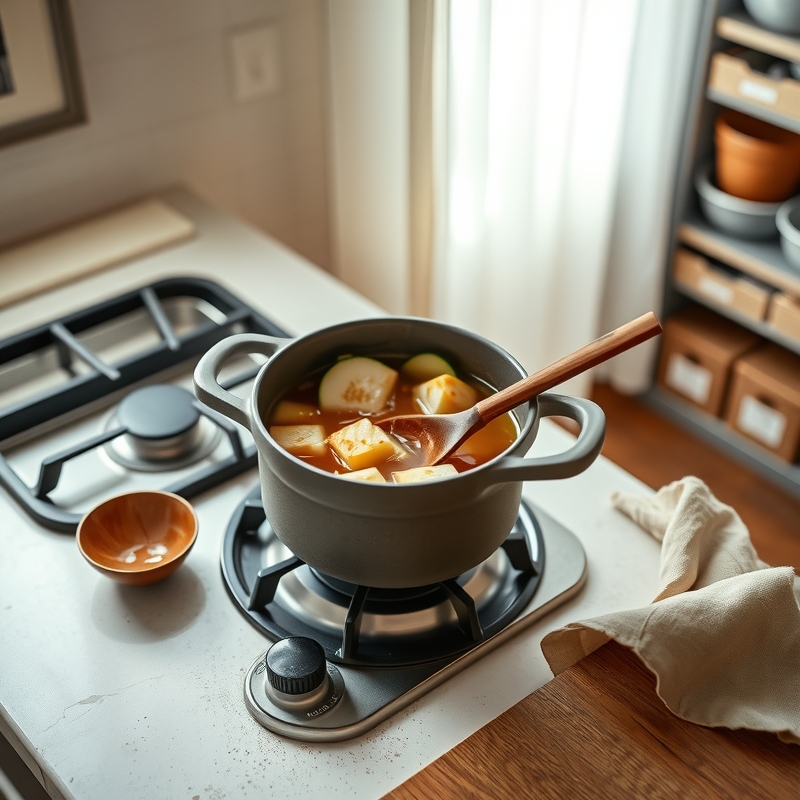
The fix: Add at least one more fermented Korean food to your rotation. Doenjang is the easiest — use it to make a simple soup with tofu and zucchini. If you already cook Korean breakfast dishes, adding a small bowl of doenjang-jjigae takes ten minutes and doubles your probiotic diversity.
How to Eat Korean Fermented Food for Real Weight Loss Results
The Korean approach to fermented food isn’t a diet — it’s a daily pattern that takes less effort than most Western meal prep. Here’s the practical framework, adapted for a non-Korean kitchen.
The Daily Fermented Food Framework
- Morning: A small side of kimchi (3-4 pieces) with whatever you eat for breakfast. Rice is ideal, but even alongside eggs works.
- Lunch: Add doenjang to a soup or stew. One tablespoon of doenjang dissolved in broth with tofu and vegetables makes a complete meal in under 15 minutes.
- Dinner: Rotate a different fermented side — pickled radish (단무지, danmuji), water kimchi (동치미, dongchimi), or a gochujang-based sauce on your protein.
This pattern mirrors what Korean households do naturally. Nobody in Seoul is counting probiotic strains. They’re just eating this way because it’s how meals are structured — and the metabolic benefits follow from the consistency.
Beginner Shopping List
You don’t need a Korean grocery store for most of this. Here’s what to start with, in order of priority:
- Refrigerated kimchi — napa cabbage, naturally fermented, from the cold section
- Doenjang (fermented soybean paste) — look for short ingredient lists: soybeans, salt, water
- Gochugaru (Korean chili flakes) — essential if you want to make your own kimchi, which is fresher and far cheaper
- Gochujang (fermented chili paste) — for sauces, marinades, and bibimbap
If you’re also exploring easy Korean soups for weeknight dinners, doenjang-jjigae is the perfect starting point — it’s the most common home-cooked Korean soup and it’s built entirely around fermented ingredients.
Korean Fermented Food for Weight Loss: Comparison Table
| Feature | Kimchi (Napa Cabbage) | Doenjang (Soybean Paste) | Gochujang (Chili Paste) |
|---|---|---|---|
| Probiotic diversity | High (Lactobacillus, Leuconostoc) | Very high (Bacillus, Aspergillus strains) | Moderate (fewer live strains after processing) |
| Calories per tablespoon | Around 5 calories | Around 25 calories | Around 30 calories |
| Best used as | Side dish at every meal | Soup/stew base (best daily value) | Sauce, marinade, flavor booster |
| Ease of daily use | Very easy — eat straight from jar | Easy — dissolve in hot water for instant soup | Easy — mix into sauces or rice bowls |
| Sodium per serving | Around 160-180 mg | Around 280-330 mg | Around 250-300 mg |
| Cost (approximate) | Around $5-8 per jar (prices vary) | Around $4-7 per tub (prices vary) | Around $5-9 per tub (prices vary) |
| Weight loss mechanism | Fiber + live bacteria + low calorie | Protein + diverse bacteria + satiety | Capsaicin + fermented base + flavor (reduces overeating) |
Best overall value for daily gut health: doenjang. It has the highest microbial diversity, works as a complete meal base (just add water, tofu, and vegetables), and costs less per serving than kimchi. Most Korean food blogs push kimchi because it’s the most recognizable — but Korean grandmothers will tell you doenjang is the real foundation.
What TikTok Gets Right (and Wrong) About Korean Fermented Food
The viral “kimchi diet” trend gets the headline right but the details dangerously wrong. If you found this article through a TikTok or Instagram post claiming kimchi will melt belly fat, here’s what’s actually going on.
What the trend gets right: fermented foods do support a healthier gut microbiome, and a healthier gut is associated with better metabolic function. That connection is real and backed by research.
What it gets wrong: treating kimchi as a fat-burning superfood you add to your existing diet and expect results. The weight management benefits come from the entire Korean meal pattern — high vegetable intake, moderate portions, multiple fermented foods, whole grains, and low sugar. Pulling one element out and eating it alongside pizza doesn’t replicate that system.
The other thing social media misses: portion size. Korean side dishes (반찬, banchan) are intentionally small. A Korean serving of kimchi at a meal is a few pieces — maybe two tablespoons. Not half a jar. If you’re eating large quantities of kimchi, the sodium alone can cause water retention that masks any benefit.
Products Worth Trying
If you’re building a Korean fermented food routine from scratch, these are the staples Korean households actually stock — not the overpriced “wellness” versions marketed to Western consumers.
Sempio Doenjang (Fermented Soybean Paste)
Sempio Doenjang
Sempio Doenjang — the everyday soybean paste found in most Korean kitchens, under $7 for months of daily soups
This is what makes doenjang-jjigae taste like it came from a Korean home kitchen. One tablespoon dissolved in broth with tofu and scallions gives you a probiotic-rich meal in ten minutes.
CJ Haechandle Gochugaru (Korean Chili Flakes)
CJ Haechandle Gochugaru
CJ Haechandle Gochugaru — the exact brand most Korean households use, under $10
If you’re ready to make your own kimchi (fresher, cheaper, and more probiotic-rich than store-bought), this is the chili flake to start with. It’s the difference between authentic flavor and something that just tastes “spicy.”
Chongga Mat Kimchi (Cut Cabbage Kimchi)
Chongga Mat Kimchi
Chongga Mat Kimchi — refrigerated, naturally fermented, and the closest to homemade without making it yourself
Chongga is one of Korea’s largest kimchi producers. Their mat kimchi comes pre-cut and ready to eat — just make sure you’re buying from the refrigerated section, not the shelf-stable version.
Frequently Asked Questions
How much kimchi should I eat per day for weight loss?
Most Korean nutritionists suggest around 100g (about half a cup) spread across two to three meals. Eating it all at once doesn’t give your gut the consistent exposure it needs. Think of it like watering a plant — a little each day beats flooding it once a week. Keeping portions small also manages sodium intake.
What happens if I eat pasteurized kimchi instead of naturally fermented?
Pasteurized kimchi has no live probiotic bacteria, so you lose the gut-health benefits entirely. You’ll still get fiber and vitamins from the vegetables, but the metabolic and digestive advantages come specifically from live Lactobacillus cultures that don’t survive heat treatment. Always check the label for “live cultures” and buy from the refrigerated section.
Can I eat Korean fermented food if I have a sensitive stomach?
Yes, but start slowly — one to two tablespoons of kimchi per meal for the first week. Introducing too much fermented food too quickly can cause temporary bloating as your gut microbiome adjusts. Doenjang soup is often gentler on sensitive stomachs than raw kimchi because the cooking process softens the flavor while preserving some beneficial compounds.
Is doenjang better than kimchi for weight loss?
Doenjang offers higher microbial diversity and more protein per serving, making it arguably more effective as a daily staple. Kimchi is lower in calories and higher in fiber, so the ideal approach is using both. Korean meals naturally combine them — kimchi as a side, doenjang as a soup base — and that combination is where the real benefit lies.
How long does it take to see weight loss results from Korean fermented foods?
Most people notice improved digestion within one to two weeks, with gradual weight changes appearing over four to eight weeks of consistent daily intake. Fermented foods aren’t a quick fix — they work by slowly shifting your gut microbiome toward a composition that supports better metabolic function. Consistency matters more than quantity.
Key Takeaways
- Korean fermented food supports weight loss through gut microbiome diversity, not as a single “superfood” — variety and daily consistency are what drive results.
- Pasteurized, shelf-stable kimchi has zero live probiotics — always buy from the refrigerated section and look for “naturally fermented” on the label.
- Doenjang (fermented soybean paste) may be more effective than kimchi alone because it contains different bacterial strains and higher protein, yet most Western guides overlook it entirely.
- Small portions at every meal beat large portions once a day — Koreans eat two to three tablespoons of fermented food per meal, not half a jar at dinner.
- Pairing fermented foods with whole grains instead of refined carbs is essential to supporting the beneficial bacteria you’re trying to build.
- The real Korean weight-management secret is the meal system — multiple fermented elements, high vegetable volume, moderate portions — not any single ingredient.
Tonight, try this: put a small dish of kimchi and a bowl of instant doenjang soup (one tablespoon of doenjang dissolved in hot water with a few cubes of tofu) next to whatever you’re already eating for dinner. Two fermented foods, five minutes of effort — and your gut will notice the difference within a week.
This article contains affiliate links. If you purchase through these links, we may earn a small commission at no extra cost to you. We only recommend products we genuinely believe in.