In Korea, the phrase “beauty starts from the inside” isn’t a slogan — it’s a daily habit. Walk into any Korean pharmacy and you’ll see an entire wall dedicated to ingestible beauty products, right between the sheet masks and the sunscreen. While the Western beauty world is still catching on, Korean women have been pairing their 10-step skincare routines with targeted supplements for years. Here are 7 Korean beauty supplements that are actually popular in Seoul right now — not the watered-down versions marketed to tourists, but the ones you’ll spot in a Korean woman’s desk drawer or bathroom shelf.
Quick-Pick Summary: 7 Korean Beauty Supplements at a Glance

| Supplement | Best For | Popular Korean Brand | Approx. Price Range | How Koreans Take It |
|---|---|---|---|---|
| Fish Collagen | Skin elasticity & firmness | BB LAB, VITALBEAUTIE | $20–$40 (prices vary) | Daily stick packet in water or juice |
| Glutathione | Brightening & antioxidant support | LACTO-FIT, Esther Formula | $15–$35 (prices vary) | Sublingual tablet before bed |
| Vitamin C Powder | Even skin tone & immunity | Lemona, Korea Eundan | $8–$20 (prices vary) | One sachet dissolved on tongue daily |
| Probiotics | Gut-skin connection | LACTO-FIT, Chong Kun Dang | $12–$25 (prices vary) | Morning capsule or chewable |
| Red Ginseng | Overall vitality & complexion | CheongKwanJang (KGC) | $25–$60 (prices vary) | Concentrated liquid pouch daily |
| Hyaluronic Acid | Deep hydration from within | VITALBEAUTIE, Innerb | $18–$35 (prices vary) | Low-molecular tablet with water |
| Ceramide | Skin barrier & moisture retention | ORBIS, Chocola BB (popular imports) | $15–$30 (prices vary) | Daily capsule with meals |
1. Fish Collagen — The Korean Beauty Supplement Everyone Starts With
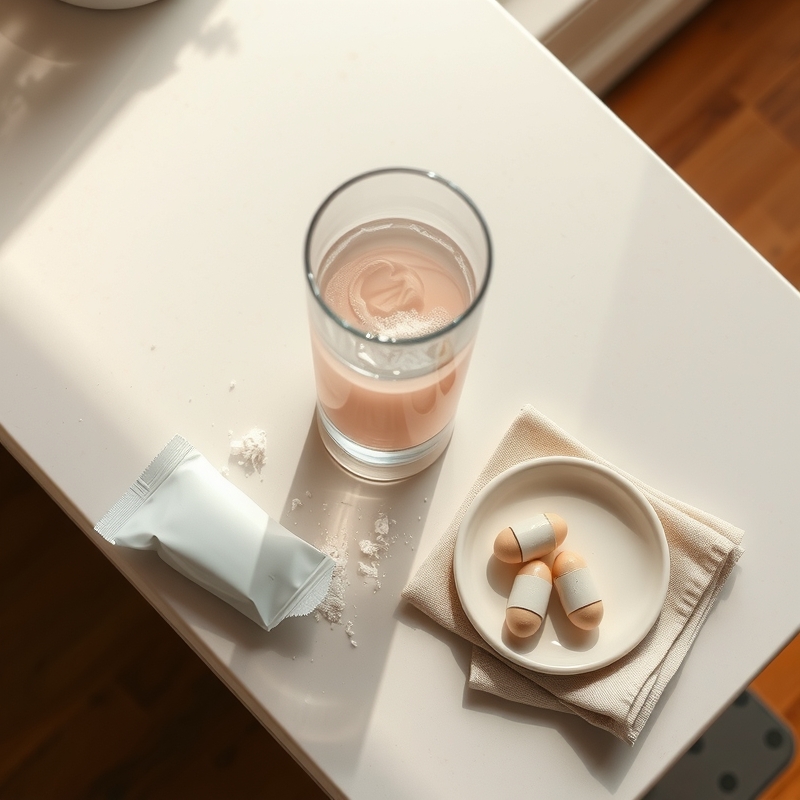
Fish collagen is the single most popular beauty supplement in Korea, outselling plant-based and bovine alternatives by a wide margin in Korean pharmacies. The reason Koreans specifically reach for fish (marine) collagen over other types comes down to one concept that Korean beauty science obsesses over: bioavailability — how much your body actually absorbs.
Most Korean collagen products use low-molecular-weight fish collagen peptides, typically processed to around 1,000–3,000 daltons. The smaller the molecule, the easier it passes through the intestinal wall. This is why you’ll rarely see Korean collagen in big capsule form — instead, it comes in slim stick packets that you tear open and mix into water, yogurt, or even your morning coffee.
Why Koreans Prefer Stick Packets Over Pills
Here’s something most K-beauty blogs won’t tell you: the stick-packet format isn’t just marketing. Korean consumers are skeptical of large tablets because they associate absorption rate with dissolution speed. A powder that dissolves instantly feels more bioavailable — and Korean brands have leaned into this by engineering flavored powders (pomegranate and berry are the most common) that taste closer to a drink mix than a supplement.
- When to take it: Most Koreans take collagen on an empty stomach in the morning or before bed
- How long before results: Korean dermatologists generally recommend waiting at least 8–12 weeks of consistent daily intake
- What to pair it with: Vitamin C — it supports natural collagen synthesis in the body
BB LAB Low Molecular Fish Collagen
This is the collagen brand you’ll find in practically every Korean office worker’s desk drawer. The pomegranate-flavored stick packets dissolve in seconds and deliver low-molecular fish collagen peptides — the same type recommended at Korean dermatology clinics.
2. Glutathione — Korea’s Open Secret for Brightening
Glutathione is the most-searched beauty supplement keyword on Korean portal site Naver, and Korean pharmacies now dedicate entire shelf sections to it. If you’ve ever wondered how Korean celebrities maintain that almost translucent-looking skin tone, glutathione is one of the worst-kept secrets in Seoul’s beauty scene.
Glutathione is a naturally occurring antioxidant produced by your liver. It plays a role in reducing oxidative stress, which dermatologists widely associate with dull, uneven skin tone. In Korea, glutathione supplements are taken orally — usually as sublingual tablets that dissolve under the tongue for better absorption.
The IV Drip vs. Oral Debate
Korean dermatology clinics famously offer glutathione IV drips (often called “white injections” or 백옥주사), but most everyday Korean consumers take the oral version at home. Without the steep clinic price tag — IV sessions can run $50–$150 per visit — oral supplements offer a more sustainable daily habit. Korean dermatologists generally advise that consistency matters more than delivery method for long-term results.
- Popular form in Korea: Sublingual tablets or film strips that dissolve under the tongue
- Commonly paired with: Vitamin C, which may help recycle oxidized glutathione in the body
- What most people get wrong: Taking it after a meal — Korean pharmacists typically recommend an empty stomach for better absorption
3. Vitamin C Sachets — The ₩1,000 Daily Habit
Lemona vitamin C powder sachets are so deeply embedded in Korean daily life that most Koreans don’t even think of them as a “supplement” — they’re more like a habit, similar to brushing your teeth. You’ll find boxes of Lemona stacked at every convenience store checkout counter, every pharmacy, and most office break rooms across Seoul.
While the Western wellness world debates liposomal vitamin C and slow-release capsules, Koreans have kept it remarkably simple: one tiny yellow sachet of powdered vitamin C, poured directly onto the tongue, once a day. Each sachet from brands like Lemona or Korea Eundan typically contains around 500–1,000 mg of vitamin C and costs roughly the equivalent of $0.30–$0.50 per serving.
Why This Matters for Your Skin
Vitamin C is essential for collagen synthesis — without adequate vitamin C, your body cannot properly form collagen fibers regardless of how much collagen supplement you take. This is why Korean beauty supplement routines almost always pair collagen with vitamin C. It’s not a marketing gimmick; it’s basic biochemistry.
- The Korean way to take it: Pour directly on your tongue and let it dissolve — no water needed
- Best time: Morning, since vitamin C can be mildly energizing
- Storage tip: Korean households keep the box at room temperature, away from sunlight
Lemona Vitamin C Powder Sachets
The same lemon-flavored vitamin C sachets that Korean kids grow up eating and Korean office workers keep in their desk. One sachet a day — the simplest step you can add to any beauty supplement routine.
4. Probiotics — The Gut-Skin Connection Koreans Figured Out First
Korea is one of the world’s largest markets for probiotic supplements, and Korean consumers increasingly choose probiotics specifically marketed for skin health — not just digestion. The concept isn’t surprising when you consider that kimchi, Korea’s most iconic food, is itself a fermented probiotic powerhouse.
The gut-skin axis — the idea that gut microbiome health directly influences skin condition — is something Korean wellness brands adopted early. Brands like LACTO-FIT (made by Chong Kun Dang, one of Korea’s largest pharmaceutical companies) sell billions of probiotic sachets annually. Many Korean women specifically choose probiotic blends that include Lactobacillus strains associated with skin health in addition to digestive strains.
Fermented Foods vs. Supplements: Do You Need Both?
If you’re already eating kimchi, doenjang, and other Korean fermented foods regularly, you might wonder if a supplement is redundant. Most Korean nutritionists suggest they serve different purposes — fermented foods provide diverse bacteria and prebiotic fiber, while supplements deliver specific targeted strains in guaranteed quantities. Many Koreans do both without thinking twice about it.
- Korea’s #1 brand: LACTO-FIT (종근당 락토핏) — you’ll see it in virtually every Korean household
- When to take: First thing in the morning on an empty stomach is the most common Korean approach
- What to look for: Products listing specific Lactobacillus and Bifidobacterium strains, not just “probiotic blend”
5. Red Ginseng — The 2,000-Year-Old Korean Beauty Supplement
Red ginseng (홍삼) isn’t a trendy newcomer — it’s a cornerstone of Korean wellness with over 2,000 years of documented use, and Koreans consume more ginseng per capita than any other country. While Westerners tend to associate ginseng with energy drinks, in Korea it’s treated as a serious daily health and beauty ritual.
The dominant brand is CheongKwanJang (정관장), manufactured by Korea Ginseng Corporation — a company with roots going back to a government-run monopoly established in 1899. When a Korean parent wants to help their adult child look healthier and more vibrant, a box of CheongKwanJang is the most common gift. It’s that culturally embedded.
How Red Ginseng Supports Skin
Korean traditional medicine practitioners have long associated red ginseng with improved blood circulation and overall vitality, which reflects in skin tone and complexion. The ginsenosides in red ginseng are natural antioxidant compounds. Korean consumers take it less for one specific skin benefit and more for the overall “healthy glow” effect — the Korean concept of 기력 (giryeok), meaning vital energy that shows on your face.
- Most popular format: Concentrated liquid in single-serving pouches (진액 or 정 formulas)
- Taste warning: It’s bitter and earthy — most Koreans chase it with water or mix it into honey tea
- Price reality: Quality red ginseng isn’t cheap — expect around $30–$60 for a month’s supply from reputable brands (prices vary)
CheongKwanJang Korean Red Ginseng Extract
This is the red ginseng brand that Korean families have trusted for generations. The concentrated pouches deliver the same daily dose of ginsenosides that Koreans have relied on for vitality and that healthy inner glow.
6. Hyaluronic Acid — Not Just for Your Serum Anymore
In Korea, the idea of taking hyaluronic acid orally — not just applying it topically — has gone mainstream, with major brands like Amorepacific’s VITALBEAUTIE and Innerb launching dedicated ingestible HA products. If you’re already using a hyaluronic acid serum, the Korean approach asks: why only hydrate from the outside?
The logic behind oral hyaluronic acid is straightforward. Your body naturally produces hyaluronic acid, which holds up to 1,000 times its weight in water. Production declines with age. While topical HA hydrates the skin’s surface layers, oral HA supplements aim to support hydration from within. Korean brands specifically use low-molecular-weight hyaluronic acid for better absorption through the digestive system.
Who Benefits Most
Korean beauty advisors typically recommend oral HA for people who feel like their skin stays dry no matter how many hydrating serums and creams they layer on. If you’re doing everything right topically and your skin still feels tight by afternoon, the Korean approach would be to address hydration internally as well.
- Common daily dose in Korean products: Around 100–200 mg of low-molecular HA
- Best paired with: Collagen — many Korean brands now combine both in one product
- Timeline: Korean consumers generally report noticing a difference after 4–8 weeks of daily use
7. Ceramide Supplements — The Newest Korean Beauty Supplement Trend
Ceramide supplements are the latest category gaining serious traction in Korean beauty aisles — the idea is to rebuild your skin’s moisture barrier from the inside, not just patch it with creams. Most people know ceramides from moisturizers, but oral ceramide supplements represent a newer frontier in Korean ingestible beauty.
Ceramides make up a significant portion of your skin’s outermost layer — the barrier that keeps moisture in and irritants out. When this barrier is compromised (from over-exfoliation, harsh weather, or aging), skin becomes dry, red, and reactive. Korean beauty brands are now selling plant-derived ceramide capsules, often extracted from rice bran or wheat — ingredients deeply familiar in Korean skincare traditions.
Why This Trend Makes Sense
Think of it this way: applying ceramide cream is like patching a wall from the outside. Taking ceramide supplements is like reinforcing the wall’s structure. Korean skincare philosophy has always been about layers — and now that layering concept extends to combining topical and ingestible ceramides for a comprehensive approach to barrier health.
- Source ingredient: Most Korean ceramide supplements use rice-derived or wheat-derived ceramides
- Who it’s for: Anyone dealing with chronic dryness, sensitivity, or a compromised skin barrier
- Still emerging: This category is newer than collagen or glutathione, so fewer Korean-brand options are available internationally — but growing fast
Korean Beauty Supplements Comparison: Effectiveness, Price, and Ease of Use
| Supplement | Primary Skin Benefit | Time to Notice Changes | Daily Effort | Monthly Cost (approx.) |
|---|---|---|---|---|
| Fish Collagen | Firmness & elasticity | 8–12 weeks | Mix 1 stick in liquid | $20–$40 |
| Glutathione | Brightening & tone | 8–16 weeks | 1 sublingual tablet | $15–$35 |
| Vitamin C Sachets | Collagen support & tone | 4–8 weeks | Pour 1 sachet on tongue | $8–$15 |
| Probiotics | Clarity & reduced breakouts | 4–8 weeks | 1 capsule or sachet | $12–$25 |
| Red Ginseng | Overall glow & vitality | 4–12 weeks | 1 liquid pouch | $30–$60 |
| Hyaluronic Acid | Deep hydration | 4–8 weeks | 1 tablet | $18–$35 |
| Ceramides | Barrier repair & moisture | 6–12 weeks | 1 capsule | $15–$30 |
Note: Price ranges are approximate and vary by retailer and product size. Vitamin C sachets offer the best value entry point for beginners — low cost, easy habit, and it enhances the effectiveness of collagen supplements if you add those later.
VITALBEAUTIE Meta Green Slim (Amorepacific)
From Amorepacific — the company behind Sulwhasoo and Laneige — VITALBEAUTIE is the ingestible beauty line Korean women trust when they want clinical-grade quality from a brand they already know. Their collagen and HA products are among the most gifted beauty supplements in Korea.
Frequently Asked Questions
Do Korean beauty supplements actually work, or is it just marketing?
Korean beauty supplements are backed by the same active ingredients studied in nutrition science — collagen peptides, antioxidants, and probiotics — not proprietary miracle formulas. The difference is that Korean brands have optimized delivery formats (like low-molecular powders and sublingual tablets) for better absorption. Results depend on consistency — most Korean dermatologists recommend committing to at least 8–12 weeks before evaluating.
What happens if I take collagen without vitamin C?
Without adequate vitamin C, your body cannot efficiently synthesize collagen, which means you may not get the full benefit of your collagen supplement. Vitamin C is a required cofactor in the collagen synthesis process. This is why Korean beauty supplement routines almost always include both — and why many Korean collagen products now add vitamin C directly to the formula.
Can I take multiple Korean beauty supplements at the same time?
Yes — most Korean women take 2–3 beauty supplements daily as part of a stacked routine. The most common Korean combination is collagen + vitamin C in the morning and glutathione or probiotics before bed. Korean pharmacists generally advise spacing supplements that compete for absorption, but most beauty supplements can be taken together safely. When in doubt, consult your doctor, especially if you take prescription medications.
Are Korean beauty supplements safe for Western consumers?
Korean beauty supplements sold by major brands like CheongKwanJang, BB LAB, and LACTO-FIT are regulated by Korea’s Ministry of Food and Drug Safety (MFDS), which has strict safety and labeling standards. When buying internationally, look for products from established Korean pharmaceutical companies rather than unknown sellers. If you have allergies, check for common Korean supplement ingredients like fish-derived collagen or soy-based components.
What’s the best Korean beauty supplement to start with as a complete beginner?
Start with vitamin C sachets — they cost under $15 per month, require zero preparation, and support your skin whether or not you add other supplements later. After establishing that daily habit for a few weeks, collagen is the most logical next addition. This is the same progression most Korean women follow: vitamin C first, collagen second, then specialized supplements based on individual skin concerns.
Key Takeaways
- Korean beauty supplements focus on bioavailability over dosage — low-molecular-weight formulas in powder and sublingual formats are preferred over large capsules because absorption matters more than milligrams on the label.
- Collagen + Vitamin C is the foundational Korean beauty supplement stack — vitamin C is a required cofactor for collagen synthesis, so taking collagen alone means you may be leaving results on the table.
- Stick packets and sachets aren’t gimmicks — the single-serve format ensures consistent daily dosing, avoids oxidation from opening and closing bottles, and dissolves faster than tablets.
- Probiotics for skin health is mainstream in Korea, not fringe — the gut-skin axis connection drives a massive market in a country that already consumes fermented foods daily.
- Start with the cheapest supplement, not the trendiest — Lemona vitamin C sachets at under $0.50 per day offer the highest value entry point and enhance everything else you add later.
- Consistency beats intensity — Korean dermatologists generally recommend 8–12 weeks of daily use before evaluating any beauty supplement, which is why easy-to-take formats matter for long-term adherence.
Tonight, grab one of those vitamin C packets — Lemona if you can find it, or any simple vitamin C powder — and pour it on your tongue before bed. It takes three seconds, costs almost nothing, and it’s the same small daily ritual that millions of Korean women use as the starting point for their beauty supplement routine. One sachet. That’s your entry point.
This article contains affiliate links. If you purchase through these links, we may earn a small commission at no extra cost to you. We only recommend products we genuinely believe in.