A Seoul dermatology clinic receptionist once told me the number-one mistake foreign patients make isn’t skipping sunscreen — it’s washing their face only once. In Korea, cleansing your face in two distinct steps isn’t a beauty trend; it’s as routine as brushing your teeth. The Korean double cleansing method uses an oil-based cleanser first to dissolve makeup and sunscreen, then a water-based cleanser to clear what’s left. These 7 rules are what separate the “I tried double cleansing and broke out” crowd from the people waking up with genuinely clear skin.
Quick Overview: The 7 Korean Double Cleansing Rules
| Rule | What to Do | Why It Matters |
|---|---|---|
| 1. Oil First, Always | Start with an oil or balm cleanser | Oil dissolves oil-based impurities that water can’t touch |
| 2. Match Oil to Skin Type | Choose the right oil texture for your skin | Wrong oil = clogged pores or over-drying |
| 3. Massage 60 Seconds | Gentle circular motions, minimum 1 minute | Quick swipes leave sunscreen residue behind |
| 4. Emulsify Before Rinsing | Add water to turn oil milky before washing off | Skipping this step leaves an oily film |
| 5. Low-pH Second Cleanser | Use a water-based cleanser around pH 5.5 | Protects the skin’s acid mantle |
| 6. Lukewarm Water Only | Never hot, never ice cold | Hot water strips natural oils; cold won’t rinse properly |
| 7. Adjust AM vs. PM | Double cleanse at night; simplify in the morning | Over-cleansing damages the skin barrier |
1. The Korean Double Cleansing Method Always Starts with Oil
Oil-based cleansing is the foundation of the Korean double cleansing method because oil dissolves oil — it’s basic chemistry, not marketing. Sunscreen, sebum, and makeup are oil-soluble, meaning your foaming cleanser physically cannot remove them completely. This is why people who only use a single foam or gel cleanser often still see residue when they swipe a toner pad across their face afterward.
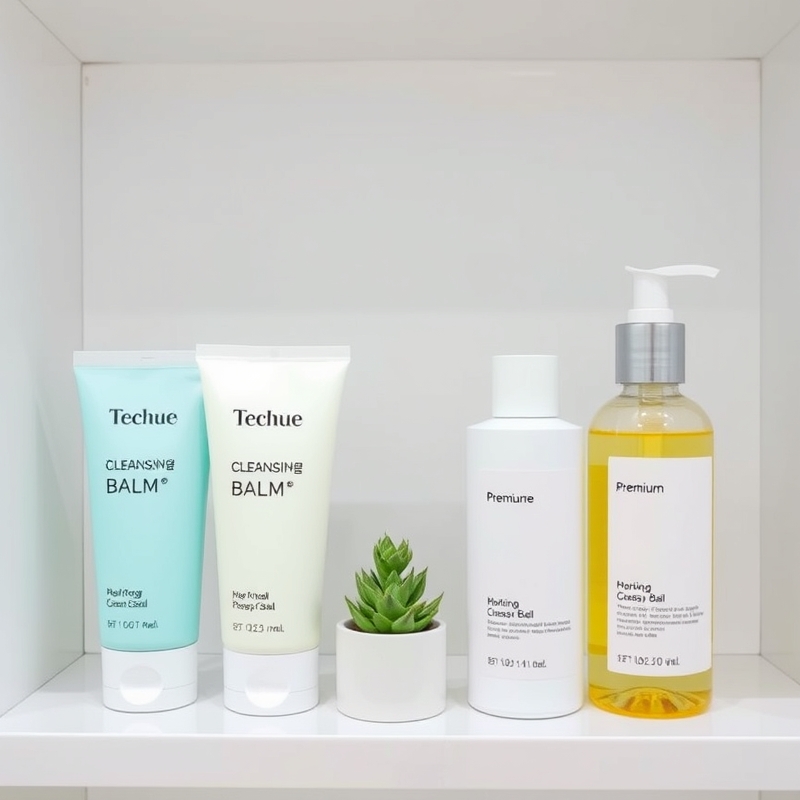
Walk into any Korean drugstore — Olive Young, Lalavla, Lohbs — and the cleansing oil section takes up an entire wall. That should tell you something about how seriously Koreans take this first step. The three main formats you’ll find:
- Liquid cleansing oils — lightweight, fast-spreading, best for daily use (e.g., Kose Softymo, Innisfree Green Tea Cleansing Oil)
- Cleansing balms — solid-to-oil texture, more thorough for heavy makeup (e.g., Banila Co Clean It Zero, Heimish All Clean Balm)
- Micellar oils — hybrid formulas that feel lighter but still oil-based
One thing most beauty blogs outside Korea get wrong: micellar water is not the same as an oil cleanser. Micellar water uses surfactant micelles suspended in water. It’s a convenient shortcut, but it doesn’t replace the oil step. In Seoul, micellar water is treated as a pre-step for removing eye makeup — not as a substitute for proper oil cleansing.
2. Match Your Oil Cleanser to Your Skin Type
The biggest reason people break out from double cleansing isn’t the method — it’s using the wrong oil for their skin. Korean beauty brands formulate cleansing oils with different base oils for a reason, and choosing blindly is like using shampoo for oily hair when yours is dry.
Here’s what Korean beauty consultants typically recommend when you walk into an Olive Young and ask for help:
- Oily or acne-prone skin: Lightweight oils with grape seed, sunflower, or hemp seed oil base. These have a low comedogenic rating and rinse cleanly.
- Dry or sensitive skin: Balm cleansers with shea butter or rice bran oil base. They add a touch of moisture instead of stripping the skin.
- Combination skin: Mid-weight cleansing oils with jojoba or olive oil. Jojoba closely mimics human sebum, so it works well for skin that’s oily in some zones and dry in others.
- Normal skin: Basically anything works — this is where you can experiment freely.
If you’ve tried the Korean double cleansing method before and gave up because you broke out, there’s a good chance you used a heavy mineral oil-based cleanser on acne-prone skin. Mineral oil is safe for most people, but it’s heavier and doesn’t suit everyone. Try switching to a plant-based formula before abandoning the method entirely.
3. Massage for a Full 60 Seconds — No Shortcuts
Most people spend about 15 seconds on their oil cleanse. That’s not enough time for the oil to actually bind to sunscreen and dissolved impurities. Korean estheticians consistently recommend a minimum of 60 seconds of gentle massage. Not aggressive scrubbing — light, circular motions across the entire face, including the hairline, jawline, and around the nostrils where product builds up.
Here’s the thing: without this step, you’re essentially applying oil and immediately washing it off before it’s done its job. That’s like spraying oven cleaner and wiping it up after five seconds — you get the surface grime but miss everything underneath.
The step-by-step process Korean women typically follow:
- Apply the oil cleanser to dry hands and a dry face (water blocks oil from binding to oil-based impurities)
- Start at the forehead and massage in slow circles, working outward
- Move down to the cheeks, then nose, then chin
- Spend extra time around the eye area if wearing eye makeup — but gently, using your ring finger
- Continue for 60 seconds total — set a timer until it becomes habit
You’ll actually feel the texture change under your fingers. Foundation and sunscreen start to dissolve and the oil becomes slightly grainy. That’s how you know it’s working. Without giving it that full minute, your second cleanser is fighting residue it wasn’t designed to handle.
4. Emulsify Before You Rinse — The Step Everyone Skips
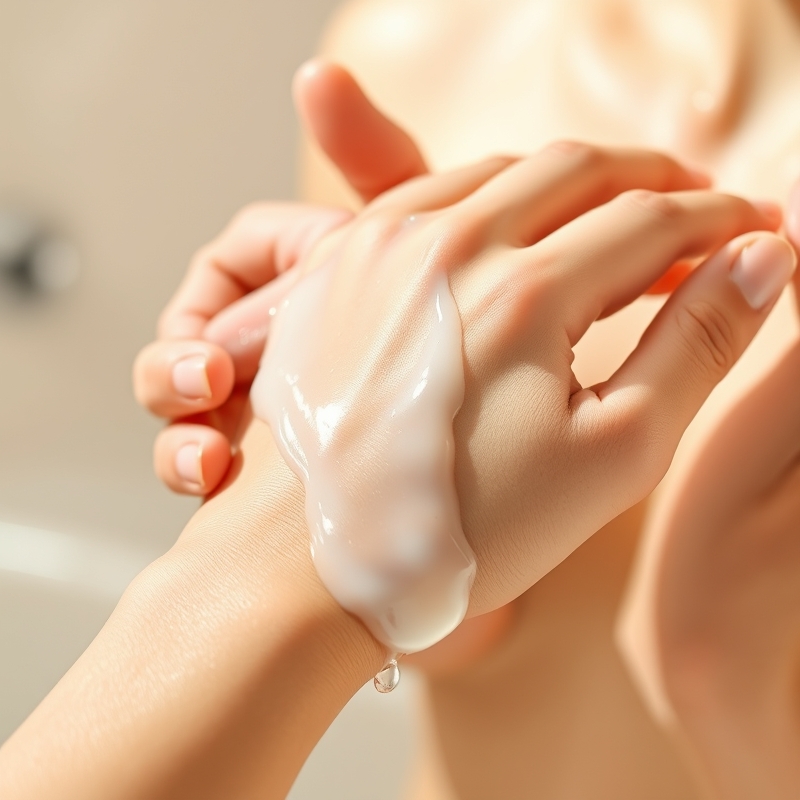
Emulsifying is the most overlooked step in the Korean double cleansing method, and skipping it is exactly why some people feel a greasy film on their face afterward. Emulsification means adding a small amount of lukewarm water to the oil on your face and continuing to massage. The oil will turn milky white. That’s the magic moment — the oil has trapped the impurities and is now water-soluble enough to rinse clean.
Without emulsifying, you’re trying to wash pure oil off your face with water. Oil and water don’t mix. You’ll either leave residue behind or scrub too hard trying to get it off, irritating your skin in the process.
The correct sequence:
- After your 60-second massage, wet your hands with lukewarm water
- Gently massage the water into the oil on your face — you’ll see it turn cloudy/milky
- Continue for 15-20 seconds
- Rinse thoroughly with lukewarm water until no slippery feeling remains
This step is so automatic for Korean women that beauty tutorials in Korea rarely even mention it — it’s assumed. But if you’re new to oil cleansing, the emulsification step is the difference between “this method is amazing” and “oil cleansing broke me out.”
5. Your Second Cleanser Must Be Low-pH for the Korean Double Cleansing Method to Work
Healthy skin sits at around pH 5.5, and using a high-pH cleanser in your second step can undo everything the oil cleanse just accomplished. Many popular Western cleansers — especially bar soaps and foaming washes — have a pH between 8 and 10. That’s alkaline enough to disrupt the acid mantle, the thin protective layer that keeps bacteria out and moisture in.
Korean skincare brands took the low-pH concept mainstream. Some well-known low-pH second cleansers that you’ll find in almost every Korean bathroom:
- COSRX Low pH Good Morning Gel Cleanser (pH ~5.0) — probably the most popular among Korean twenty-somethings
- Innisfree Blueberry Rebalancing 5.5 Cleanser (pH ~5.5) — the name literally tells you the pH
- Sulwhasoo Gentle Cleansing Foam (pH ~5.5) — the choice for those willing to spend more
- Round Lab 1025 Dokdo Cleanser (pH ~5.0-6.0) — a newer favorite that’s taken over Korean beauty forums
How do you check? You can buy pH testing strips on Amazon for around $5-8. Wet the strip, press it to the foam, and match the color. If your cleanser is above 7, it’s time to switch.
Why High-pH Cleansers Cause Problems
When your skin’s acid mantle is disrupted, two things happen. First, you lose moisture faster because the barrier is compromised. Second, bacteria that normally can’t survive on healthy acidic skin can now colonize. This is why some people develop breakouts or dry patches after washing their face — their cleanser is the problem, not their skin type.
6. Use Lukewarm Water — Hot Water Is Sabotaging Your Skin
Using hot water to rinse feels satisfying but strips your skin of its natural lipid layer, leaving it tight, dry, and reactive. Korean dermatologists generally recommend lukewarm water — roughly the temperature of warm milk. You shouldn’t feel the heat. If the mirror fogs up, the water is too hot.
This matters for both cleansing steps:
- During oil cleansing: Water that’s too cold won’t emulsify the oil properly. Too hot and it melts away natural oils your skin needs.
- During the second cleanse: Hot water opens pores temporarily but causes rebound dryness. Your skin produces more oil to compensate, which is counterproductive.
- Final rinse: Some Korean beauty routines end with a cool (not ice-cold) splash to help tighten pores. This is optional but common.
A simple test: run the water over the inside of your wrist. It should feel neutral — not warm, not cool. That’s the right temperature for your face.
7. Adjust the Korean Double Cleansing Method for Morning vs. Night
Double cleansing twice a day is over-cleansing, and over-cleansing damages the skin barrier just as much as not cleansing at all. This is a mistake a lot of people make when they first discover the method. They’re so excited about how clean their skin feels that they do the full two-step routine morning and night. Within a week, their skin is red, tight, or breaking out.
Here’s the Korean approach to timing:
- Evening (full double cleanse): Oil cleanser → emulsify → rinse → low-pH water cleanser → rinse. This is non-negotiable. Your face has a full day of sunscreen, makeup, pollution, and sebum.
- Morning (simplified): Water-based cleanser only, or just lukewarm water. You slept on a clean pillowcase (right?), so there’s no oil-based impurity to dissolve. Your skin only has a thin layer of overnight sebum that a gentle foam handles easily.
Some Korean women with very dry skin skip the morning cleanser entirely and just rinse with water. Others with oilier skin use a gentle foam. The point is that the oil cleansing step is reserved for nighttime, when there’s actually something on your face worth dissolving.
Korean Double Cleansing Method: Product Comparison
| Feature | Budget Pick: Kose Softymo Speedy Oil | Best Value: Banila Co Clean It Zero Original | Premium: Sulwhasoo Gentle Cleansing Oil |
|---|---|---|---|
| Price (approx.) | $7-10 | $15-20 | $35-45 |
| Format | Liquid oil | Sherbet balm | Liquid oil |
| Best for | Light makeup, daily sunscreen | All makeup levels, all skin types | Sensitive/mature skin |
| Emulsifies easily | Yes | Yes — turns milky quickly | Yes |
| Residue after rinse | Minimal | None — rinses very clean | Slight moisture layer (intentional) |
| Fragrance | Light | Mild | Herbal (traditional Korean medicine scent) |
| Availability outside Korea | Amazon, Asian beauty stores | Amazon, Sephora, Olive Young Global | Nordstrom, Sulwhasoo official site |
| Verdict | Great starter option | Best overall — clean rinse, good price, suits most skin types | Worth it for luxury experience |
Frequently Asked Questions
What happens if I skip the oil cleansing step and only use a foam cleanser?
Foam and gel cleansers alone cannot fully remove oil-based impurities like sunscreen, sebum, and silicone-based makeup. These residues stay on your skin and can clog pores over time, leading to dullness and breakouts. If you wear sunscreen daily (which dermatologists widely recommend), the oil cleansing step is essential to remove it properly.
Can I use coconut oil for the first cleansing step?
Coconut oil is highly comedogenic for many people and is not commonly used as a cleansing oil in Korean skincare. It doesn’t emulsify well with water, so it’s difficult to rinse off completely. Purpose-formulated cleansing oils contain emulsifiers that allow them to turn milky and wash away cleanly — coconut oil from your kitchen does not.
How long does the full Korean double cleansing routine take?
The entire process takes about 3-4 minutes. That’s roughly 60 seconds for the oil massage, 15-20 seconds for emulsifying, 30 seconds to rinse, and another 60 seconds for the second cleanser. Instead of spending 30 minutes on serums and masks, this 3-minute investment at the cleansing stage prevents most of the problems those products are trying to fix.
Should I double cleanse if I didn’t wear makeup today?
Yes — double cleansing at night is recommended even on no-makeup days. Sunscreen, environmental pollution, and your skin’s own sebum accumulate throughout the day. These are all oil-soluble and need an oil-based cleanser to fully remove. Makeup is only one of many things the oil step dissolves.
Is the Korean double cleansing method safe for sensitive skin?
The method itself is gentle — the key is choosing the right products. Fragrance-free balm cleansers with minimal ingredients work well for sensitive skin. Pair with a low-pH, non-foaming second cleanser. The double cleanse can actually be better for sensitive skin than scrubbing hard with a single cleanser to get everything off in one pass.
Key Takeaways
- The Korean double cleansing method uses two cleansers — oil-based first to dissolve sunscreen, makeup, and sebum, then water-based to clear remaining impurities.
- Apply oil cleanser to a dry face and massage for a full 60 seconds before adding water — rushing this step leaves residue behind.
- Emulsifying the oil with water before rinsing is the most commonly skipped step and the main reason people think oil cleansing leaves a greasy film.
- Your second cleanser should have a pH around 5.5 to protect your skin’s acid mantle. Many Western cleansers are too alkaline (pH 8-10).
- Double cleanse only at night — doing the full routine morning and night leads to over-cleansing and a damaged skin barrier.
- The entire routine takes under 4 minutes and addresses the root cause of most skin issues: improperly cleansed skin that blocks everything else from working.
Tonight, try one thing: apply your oil cleanser to a dry face, set a 60-second timer, and actually massage slowly before adding water. That single change — dry face, full minute, then emulsify — is where most people go wrong, and it’s the fastest way to see what Korean double cleansing is really supposed to feel like.