My Korean aunt is 54, and her hair looks exactly the way it did when I was a teenager — thick at the roots, soft at the ends, the kind of shine that doesn’t come from a bottle. Last spring, when I finally asked her what she uses, she laughed and walked me into her kitchen. Not her bathroom — her kitchen. She pointed at the rice cooker, a dark glass bottle of camellia oil she’d had for years, and a bag of black beans on the counter. “This is my hair salon,” she said. I stood there realizing that every expensive serum I’d tried in my 40s was attempting to replicate what Korean grandmothers had been doing with pantry staples for generations — and doing it better. These 5 Korean hair care home remedies use ingredients that cost almost nothing, take under 15 minutes, and specifically address the thinning, dryness, and breakage that accelerates after 40.
Why Korean Hair Care Starts in the Kitchen, Not the Bathroom
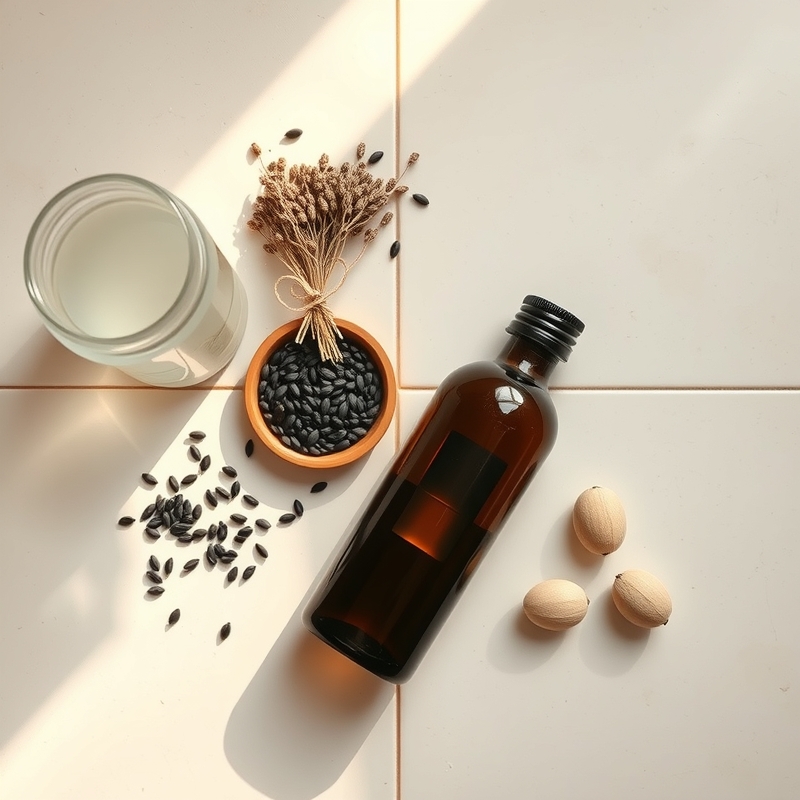
In Korean households, hair health has always been treated as an inside-out issue — something you feed, not just something you coat with product. This isn’t a recent wellness trend. It’s rooted in 한방 (hanbang, traditional Korean herbal medicine), a system that has guided Korean health practices for centuries. Hanbang treats hair thinning the same way it treats dull skin or poor digestion: as a sign that something internal needs attention, not something a topical product alone can fix.
Walk into any Korean grandmother’s kitchen and you’ll find the same quiet rituals repeated without fanfare. The water left after washing rice isn’t poured down the drain — it’s saved. Black beans are simmered not just for side dishes but because they’re considered essential for hair in your 40s and beyond. Camellia oil sits on the shelf next to cooking oil, pulled out for both stir-frying and split ends.
This is what most Western hair care advice misses entirely. After 40, your hair isn’t just “aging” — it’s responding to shifting hormones, reduced scalp circulation, and years of accumulated chemical processing. Korean home remedies don’t fight against these changes. They work with your body’s shifting biology by nourishing the scalp, strengthening roots from within, and protecting strands without silicone buildup. That distinction matters more at 45 than it ever did at 25.
The 쌀뜨물 (Ssaltteumul) Rice Water Rinse
If there’s one Korean hair remedy that went viral for all the wrong reasons, it’s rice water. TikTok turned it into a 30-second trend. But the way Korean mothers actually use 쌀뜨물 (ssaltteumul, rice-rinsing water) is nothing like the influencer version.
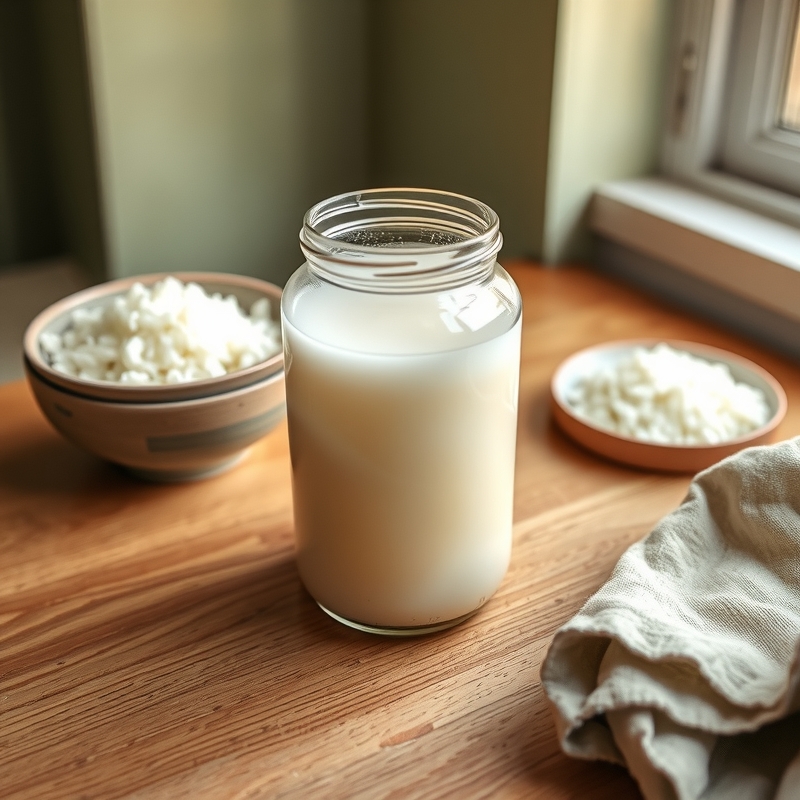
The real method is fermentation. You wash your rice two to three times, save the cloudy water in a glass jar, and let it sit at room temperature for 12 to 24 hours until it turns slightly sour. That fermentation process lowers the pH and increases the concentration of amino acids, B vitamins, and antioxidants. Korean women have been doing this for generations — the Yao women of China’s Huangluo village, who follow a nearly identical practice, are frequently cited for maintaining extraordinarily long hair well into old age.
Here’s the part nobody mentions: fermented rice water is especially effective after 40 because the amino acid inositol has been shown to penetrate damaged hair and repair it from within. A study published in the Journal of Cosmetic Chemists found that inositol remained inside the hair fiber even after rinsing, continuing to reduce surface friction and breakage. For hair that’s become brittle and dry in your 40s, that ongoing protection is exactly what’s needed.
My aunt’s method:
- Wash 1 cup of uncooked white rice with water, swirling gently
- Drain, then add 2 cups of fresh water and swirl again — save this second rinse
- Pour into a glass jar, cover loosely, and leave at room temperature for 12-24 hours
- After shampooing, pour the fermented water slowly over your scalp, massage for 2-3 minutes, then rinse with cool water
That’s it. No special products. No subscription. The total cost is whatever a cup of rice costs you — essentially zero.
동백기름 (Dongbaek-gireum) — Camellia Oil, Korea’s Original Hair Serum
Before argan oil, before marula oil, before every “miracle oil” marketed to Western consumers, Korean women had 동백기름 (dongbaek-gireum, camellia oil). On the southern island of Jeju, camellia trees have grown wild for centuries, and the oil pressed from their seeds has been the go-to hair treatment for Korean women for as long as anyone can remember.
Camellia oil is unusually rich in oleic acid — the same fatty acid that makes up the majority of your scalp’s natural sebum. That’s why it absorbs without leaving a greasy residue, something coconut oil can’t claim. After 40, when your scalp produces less natural oil, this matters. Your hair isn’t just dry on the surface — it’s lost the protective lipid layer that kept it manageable in your 30s. Camellia oil restores that layer without silicone, without dimethicone, without any of the synthetics that build up and make thinning hair look flat.
Korean grandmothers apply it the same way every time: two to three drops rubbed between the palms, then smoothed from mid-length to ends on damp hair. Never on the roots (unless your scalp is genuinely flaky). Never on dry hair (it won’t distribute evenly). The simplicity is the point.
Oshima Tsubaki Camellia Hair Oil
This is the Japanese cousin of the Korean original — pure camellia oil, no additives, the same oleic-acid-rich formula that Korean and Japanese women have trusted for generations. A single bottle lasts 4-6 months because you need so little per use.
(paid link)
Check Availability & Reviews →
3 Korean Hair Remedies That Target What Changes After 40
Here’s what most hair care articles won’t tell you directly: the hair you’re losing or struggling with in your 40s isn’t the same problem you had in your 20s, and it doesn’t respond to the same solutions. Declining estrogen affects hair density. Reduced scalp circulation slows growth. Years of heat styling and coloring have left your hair fiber structurally weaker. Korean home remedies address each of these layers — not with one “miracle” product, but with different ingredients targeting different problems.
검은콩 (Geomeun-kong) — Black Bean Water for Thinning Hair
In Korean food culture, 검은콩 (geomeun-kong, black beans) are considered essential for hair health — not as a topical treatment, but as something you consume regularly. My aunt drinks black bean water the way Americans drink coffee: daily, without thinking much about it.
The logic isn’t mystical. Black beans are one of the richest plant sources of both iron and biotin — two nutrients directly linked to hair growth and retention. According to the National Institutes of Health Office of Dietary Supplements, iron deficiency is one of the most common nutritional causes of hair loss, and it’s particularly prevalent in women over 40. Korean grandmothers didn’t know the biochemistry. They just noticed that the women who ate more black beans kept more hair.
To make black bean water: simmer 2 tablespoons of dried black beans in 3 cups of water for 20 minutes. Strain and drink warm or at room temperature. Most Korean women drink this once daily, usually in the morning. It tastes mildly nutty — inoffensive enough to become a habit.
쑥 (Ssuk) — Mugwort Scalp Treatment
If you’ve spent any time exploring Korean skincare, you’ve seen mugwort in serums and toners. But long before it became a K-beauty buzzword, 쑥 (ssuk, mugwort) was used in Korean households as a scalp treatment, especially for itchy, inflamed, or flaky scalps — problems that increase significantly after 40 as hormonal changes affect skin pH.
Mugwort contains high concentrations of vitamins A and C, plus anti-inflammatory compounds that calm scalp irritation without stripping natural oils. Korean women traditionally steep dried mugwort leaves in boiling water for 15 minutes, let it cool, and use it as a final rinse after shampooing. The effect is noticeably soothing — if your scalp has become itchy or sensitive in your 40s (a common perimenopause symptom that rarely gets discussed), this is worth trying before reaching for medicated shampoos.
참기름 (Chamgireum) — Warm Sesame Oil Scalp Massage
This one surprises people because sesame oil is so firmly associated with cooking. But in Korean home remedy tradition, warming a tablespoon of pure sesame oil and massaging it into the scalp for 5 minutes before shampooing is considered one of the most effective treatments for dry, thinning hair after 40.
The reasoning is practical, not magical. Sesame oil is rich in vitamin E, a fat-soluble antioxidant that supports scalp circulation. The warm oil opens pores and loosens buildup. The massage itself — something Korean women emphasize more than any specific product — increases blood flow to hair follicles. After 40, when reduced circulation is one of the key drivers of hair thinning, that 5-minute massage may matter more than the oil itself.
The method: warm one tablespoon of toasted sesame oil (the kind you already have for Korean cooking) until it’s comfortably warm, not hot. Apply to the scalp in sections, massage in circular motions for 5 minutes, then leave for an additional 15-20 minutes before shampooing twice to remove the oil completely.
Korean Home Remedies vs. Western Hair Products: What’s Actually Different
The fundamental difference isn’t ingredients — it’s philosophy. Western hair care is largely reactive: your hair is damaged, so you coat it with something to mask the damage. Korean home remedies are preventive: you nourish the scalp and body so the hair that grows is stronger from the start. After 40, when your body’s ability to recover from damage slows down, the preventive approach stops being optional.
| Feature | Korean Home Remedies | Western Drugstore Products | Western Salon Treatments |
|---|---|---|---|
| Cost per month | Under $5 (pantry staples) | $15-40 per product | $80-200+ per session |
| Approach | Preventive (scalp + internal nourishment) | Reactive (coat and mask damage) | Corrective (temporary repair) |
| Chemical load | Zero — all natural ingredients | Silicones, sulfates, synthetic fragrance | Formaldehyde (keratin), ammonia, peroxide |
| Time per use | 5-15 minutes, 2-3x per week | Daily use required for results | 1-3 hours at the salon |
| Addresses thinning after 40 | Yes (scalp health + internal nutrition) | Rarely (volumizing = temporary illusion) | Partially (doesn’t address root cause) |
| Long-term scalp health | Improves over time | Can worsen with buildup | Can sensitize with repeated treatments |
| Sustainability | Zero waste — kitchen ingredients | Plastic bottles, ongoing purchases | High resource use |
Notice the pattern: the middle column — Western drugstore products — offers the least value relative to its cost and chemical load. Most women in their 40s have a bathroom shelf full of half-used bottles that promised volume or strength and delivered neither. The Korean home remedy approach costs almost nothing, uses ingredients you already own, and actually addresses the biological changes happening to your hair after 40 — not just the cosmetic symptoms.
Ottogi Roasted Black Bean Powder
If simmering beans every morning feels like too much, this finely milled black bean powder dissolves instantly in warm water. It’s how many busy Korean working women in their 40s get the same benefits without the 20-minute simmer — stir into water, tea, or even a morning smoothie.
(paid link)
Check Availability & Reviews →
What 한방 (Hanbang) Teaches About Hair That Western Dermatology Skips
한방 (hanbang) is Korea’s traditional medicine system, and it treats hair loss as a circulation and organ-balance problem — not a cosmetic one. In hanbang philosophy, thinning hair after 40 is linked to what practitioners call weakened kidney energy (신장, singjang) and poor blood circulation to the scalp. Whether or not you subscribe to the traditional framework, the practical habits it produces are remarkably aligned with modern nutritional science.
Korean women who follow hanbang principles for hair health typically do three things that Western hair care culture ignores entirely:
- They eat for their hair, not just wash it. Black beans, black sesame seeds, walnuts, and seaweed (미역, miyeok) are staples in the Korean diet partly because they’re traditionally associated with strong hair and healthy aging. 미역국 (miyeok-guk, seaweed soup) is served to every Korean woman after childbirth — and many continue drinking it regularly through their 40s and beyond specifically for hair and skin.
- They massage their scalp daily. Not as a luxury ritual but as a 2-minute health practice, usually while watching evening TV dramas. The emphasis on scalp circulation as the foundation of hair health is a hanbang concept that modern research increasingly supports.
- They avoid overwashing. Most Korean women over 40 wash their hair every 2-3 days, not daily. The reasoning: daily washing strips the scalp’s protective oils, forcing it to overproduce sebum, creating a cycle of greasiness and dryness that damages hair over time. If you’ve been washing daily and your hair still feels dry, this single change — washing less often — might do more than any product switch.
This is the piece that makes Korean hair care home remedies genuinely different from a Pinterest “DIY hair mask” list. It’s not just about what you put on your hair. It’s a system — eating specific foods, massaging the scalp, reducing chemical exposure, and using kitchen ingredients to protect and nourish — that Korean women have refined over generations.
COSRX Pure Fit Cica Calming Scalp Toner
When your scalp needs calming between mugwort rinse days, this gentle toner applies the same anti-inflammatory Korean herbal approach in a modern format. Many Korean women in their 40s keep this on the bathroom shelf for the days between home treatments.
(paid link)
See Why Reviewers Love This →
Frequently Asked Questions
How long does fermented rice water last, and how often should I use it?
Fermented rice water stays usable for up to a week when refrigerated. Most Korean women use it as a hair rinse 2-3 times per week. Make a batch on Sunday and use it through the week. If it smells strongly sour rather than mildly tangy, discard it and make a fresh batch — over-fermented rice water can be too acidic for sensitive scalps.
Will these remedies help with hair thinning from perimenopause?
Korean home remedies address several factors that contribute to perimenopausal hair changes, including scalp dryness, reduced circulation, and nutritional gaps. They won’t override major hormonal shifts on their own — if you’re experiencing significant hair loss, consult a dermatologist to rule out thyroid or iron issues. But as a complementary practice alongside any medical treatment, these remedies support the scalp environment and nutritional foundation your hair needs to grow its best.
What happens if I skip the fermentation step and just use plain rice water?
Plain rice water still contains some beneficial starches and amino acids, but the fermentation step significantly increases the concentration of antioxidants and lowers the pH to a level closer to your hair’s natural acidity. Without fermentation, you’re getting perhaps a third of the benefit. The 12-24 hour wait is what transforms a mild rinse into an effective treatment — it’s the step most TikTok tutorials skip and the reason their results disappoint.
Can I use the toasted sesame oil I cook with, or do I need a special kind?
The same toasted sesame oil you use for Korean cooking works perfectly. In fact, that’s exactly what Korean grandmothers use — they don’t buy a separate “beauty” version. Just make sure it’s pure sesame oil with no additives. Warm it gently (never microwave) until it’s comfortably warm to the touch, and always shampoo thoroughly afterward to remove the oil completely.
How soon will I see results from these Korean hair care home remedies?
Most women notice improved texture and reduced breakage within 3-4 weeks of consistent use. Visible thickness changes take longer — typically 2-3 months — because you’re nurturing new growth from the follicle level. This is the honest timeline. Any product or remedy claiming dramatic results in days is overpromising. Korean women treat hair care like skincare: it’s a sustained practice, not a quick fix.
Key Takeaways
- Fermented rice water (쌀뜨물) is the single most effective Korean home hair remedy — the fermentation step is what makes it work, and skipping it (as most viral tutorials do) eliminates most of the benefit.
- Camellia oil mimics your scalp’s natural sebum better than any synthetic serum, making it especially valuable after 40 when natural oil production drops.
- Korean hair care treats thinning as an inside-out problem — black bean water, seaweed soup, and dietary habits address hair health at the root cause, not the surface level.
- A 5-minute warm sesame oil scalp massage may do more for thinning hair than any product switch, because reduced scalp circulation is a primary driver of hair loss after 40 that topical products can’t address.
- These remedies cost under $5 per month combined and use ingredients most kitchens already have — compared to $15-40+ per bottle for drugstore products that primarily mask damage rather than prevent it.
- Korean women over 40 typically wash hair every 2-3 days, not daily — this single habit change reduces the overwashing cycle that strips natural oils and accelerates dryness.
Tonight, save the water from your next rice wash. Pour it into a jar, leave it on the counter, and by tomorrow evening you’ll have your first batch of fermented rice water ready for a rinse — the same one Korean grandmothers have quietly relied on for longer than any brand has existed.
This article contains affiliate links. If you purchase through these links, we may earn a small commission at no extra cost to you. We only recommend products we genuinely believe in.
You Might Also Like
- Korean Probiotics for Weight Loss: Why Yours Failed After 40
- 7 Korean Chicken Soup Recipes Korean Mothers Actually Make
- Korean Street Food: 9 Orders Korean Moms Say You Get Wrong