A Seoul hairstylist once told me the biggest mistake her foreign clients make: they focus entirely on their hair and completely ignore their scalp. In Korea, hair care starts at the roots — literally. The full Korean hair care routine has 7 key steps, and at least 3 of them happen before shampoo even touches your hair. That’s why Korean women walk around with that impossibly shiny, swaying “glass hair” you’ve seen in every K-drama close-up.
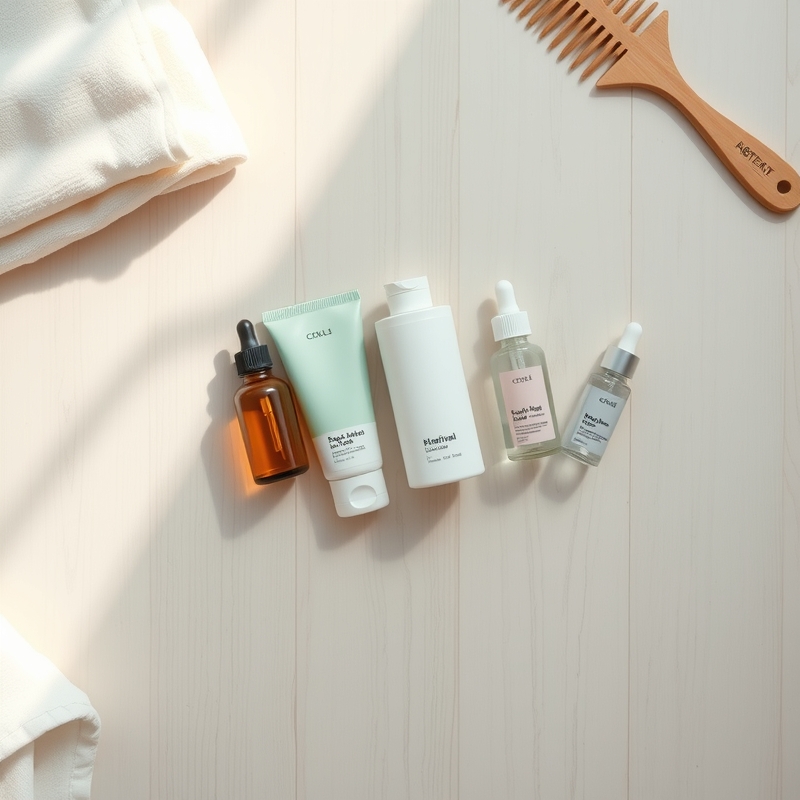
Quick-Pick Summary: The 7-Step Korean Hair Care Routine
| Step | What It Is | Time Needed | When to Do It |
|---|---|---|---|
| 1. Scalp Scaling | Exfoliate dead skin from scalp | 5 min | 1-2x per week |
| 2. Pre-Shampoo Oil | Nourish before cleansing | 10-20 min | 1-2x per week |
| 3. Double Shampoo | Cleanse in two stages | 5 min | Every wash |
| 4. Scalp Tonic | Treatment serum for scalp | 2 min | Every wash |
| 5. Hair Mask / Treatment | Deep conditioning | 5-15 min | 1-3x per week |
| 6. Leave-In Essence | Lightweight moisture seal | 1 min | Every wash |
| 7. Heat Protection + Drying | Low-heat finish | 5-10 min | Every wash |
Now let’s break down each step — because the details are where Korean hair care gets interesting.
1. Scalp Scaling — The Korean Hair Care Routine Step Nobody Talks About
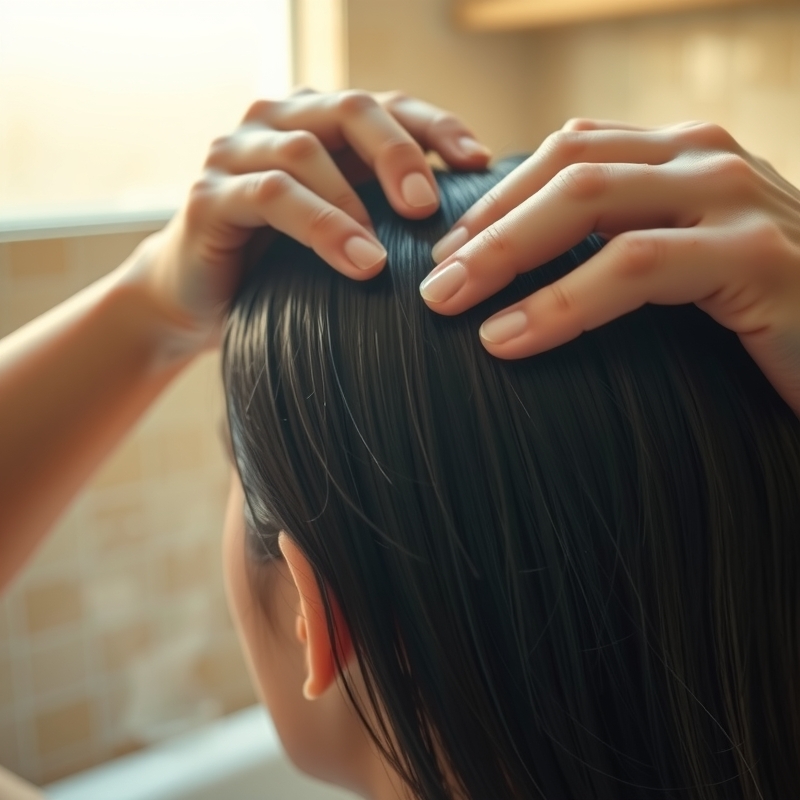
Korean hair care treats the scalp like skincare treats the face: exfoliation comes first. In almost every Korean hair salon, the first thing they do isn’t wash your hair — it’s apply a scalp scaler. These are gel or ampoule-type products with gentle acids (like salicylic acid or green tea extract) that dissolve buildup, excess sebum, and dead skin cells.
Without this step, every product you apply afterward sits on top of a layer of gunk. Think of it like applying a $50 serum on top of unwashed skin — it doesn’t absorb, and it certainly doesn’t work.
How to Do It
- Part your hair into sections (4-6 parts works well)
- Apply the scalp scaler directly along each part line
- Massage gently with your fingertips — never your nails — for about 2-3 minutes
- Leave on for 2-5 minutes if the product directions suggest it
- Rinse thoroughly before shampooing
Walk into any Olive Young store in Seoul and you’ll see an entire wall dedicated to scalp care. That should tell you how seriously Koreans take this step. Most food blogs and beauty sites skip it entirely — which is exactly why this routine gives you different results.
2. Pre-Shampoo Oil Treatment — Feed Your Hair Before You Strip It
Applying oil before shampoo — not after — is one of the most counterintuitive steps in the Korean hair care routine, and it makes a dramatic difference. The logic is simple: shampoo strips your hair of natural oils. If you coat the lengths with camellia oil or argan oil beforehand, the shampoo cleanses your scalp without leaving your ends like straw.
This technique isn’t widely known outside Korea, but it’s been a staple in Korean and Japanese beauty culture for centuries. Camellia oil (called dongbaek-yu in Korean) has been used on hair in East Asia for hundreds of years — and it’s still the most common hair oil you’ll find at Korean beauty stores.
How to Do It
- Apply 3-5 drops of camellia or argan oil from mid-lengths to ends
- For deeper treatment, wrap hair in a warm towel for 10-20 minutes
- Proceed directly to shampooing — the oil will wash out, leaving softness behind
Instead of a 45-minute deep conditioning mask, this takes under 15 minutes and works with whatever shampoo you already own. The $0 version: use a tiny amount of olive oil from your kitchen. It works in a pinch.
Innisfree Camellia Essential Hair Oil Serum
This is the same camellia oil Korean women have trusted for generations, in a lightweight formula that won’t weigh down fine hair. A few drops on damp ends and your hair dries softer than it has any right to.
(paid link) Check Availability & Reviews →
3. Double Shampoo — Why One Wash Is Never Enough
The Korean double shampoo method uses two different washes for two different purposes: the first removes product buildup, and the second actually cleans your scalp. If you’ve ever felt like your hair still looks dull even right after washing, this is probably why — one round of shampoo can’t do both jobs.
The Two-Stage Method
- First wash: Use a gentle, sulfate-free shampoo. Apply to roots, lather lightly, and rinse. This removes surface-level dirt, pollution, and styling product residue.
- Second wash: Apply shampoo again, this time massaging your scalp in small circular motions for a full 60 seconds. This is the real cleanse — the one that actually gets to your scalp.
Most Korean hairstylists will tell you that people outside Korea under-shampoo their scalps and over-shampoo their ends. The second wash should focus entirely on your scalp. Let the suds run down through your lengths as you rinse — that’s enough cleaning for your ends.
A common concern: “Won’t double shampooing dry out my hair?” Not if the first wash is sulfate-free and you’re only letting the product touch your ends passively. Korean dermatologists generally recommend focusing shampoo on the scalp while keeping ends protected with conditioner or oil.
4. Scalp Tonic — The “Skincare for Your Head” Step
Scalp tonic is essentially a serum for your scalp, and skipping it is like washing your face and never moisturizing. In Korea, scalp tonics are so common they sell them at convenience stores. They typically contain ingredients like biotin, centella asiatica, peppermint, or niacinamide — all aimed at keeping the scalp environment balanced and healthy.
How to Apply
- Part damp hair into sections after your final shampoo rinse
- Apply the tonic directly to your scalp using the nozzle tip
- Massage in with fingertips for 30-60 seconds
- Do not rinse — leave it in
Here’s what most people get wrong: they apply scalp tonic to dry hair, hours after washing. Korean salons apply it to a freshly cleaned, still-damp scalp so the active ingredients absorb before the pores close. That small timing change matters more than which brand you use.
Aromatica Rosemary Scalp Scaling Shampoo
This is the shampoo-and-scalp-care crossover that took Korean beauty communities by storm. Rosemary oil stimulates the scalp while gentle exfoliants keep follicles clear — your hair feels lighter and fuller from the first wash.
(paid link) See Why Reviewers Love This →
5. Hair Mask — The Weekly Reset Your Ends Are Begging For
Korean hair masks are formulated to be rinsed out in under 10 minutes — not the 30-minute commitments Western deep conditioners often require. The Korean approach prioritizes frequent, shorter treatments over occasional marathon sessions. Most Korean women do a quick hair mask one to three times per week rather than one heavy treatment per month.
Korean Hair Mask vs. Western Deep Conditioner
| Feature | Korean Hair Mask (Quick Type) | Western Deep Conditioner | Korean Sleeping Pack (Overnight) |
|---|---|---|---|
| Time | 3-10 minutes | 20-30 minutes | Overnight (6-8 hours) |
| Frequency | 1-3x per week | 1x per week | 1x per week |
| Texture | Lightweight cream | Thick, heavy cream | Light gel or watery |
| Best For | Regular maintenance, all hair types | Very damaged or dry hair | Fine hair that needs moisture without weight |
| Price Range | Around $8-15 | Around $15-35 | Around $10-20 |
| Rinse Required | Yes | Yes | Yes (morning) |
The middle option — the Korean quick mask — is the sweet spot for most people. It’s lightweight enough to use frequently without buildup, affordable enough to not ration, and effective enough to show results within a couple of weeks. The overnight sleeping pack is great for fine hair that can’t handle heavy products.
Application Tips
- Apply only from mid-lengths to ends — never on the scalp
- Use a wide-tooth comb to distribute evenly
- Squeeze out excess water before applying so the product isn’t diluted
Mise en Scène Perfect Serum Treatment Pack
There’s a reason this brand dominates Korean drugstore shelves — the treatment pack delivers salon-level softness in under 5 minutes. Your hair feels like it just had a professional treatment, without the price tag or the time commitment.
(paid link) View Current Price →
6. Leave-In Hair Essence — The Korean Secret to All-Day Shine
If there’s one step that separates Korean hair from everyone else’s, it’s the hair essence — a lightweight, watery-to-serum treatment that adds shine without any greasiness. While Western routines typically end at conditioner or maybe a heavy serum, Korean women layer a leave-in essence the same way they’d layer a facial serum under moisturizer.
Hair essences are formulated with smaller molecules than traditional serums or oils. That means they absorb into the hair shaft instead of just sitting on top. The result is shine that comes from within the hair strand — exactly that “glass hair” look.
How to Apply for Maximum Glass Hair Effect
- Towel-dry hair until it’s damp but not dripping
- Pump 1-2 drops of essence onto your palms
- Rub palms together, then press (don’t rub) into mid-lengths and ends
- Use a wide-tooth comb to distribute from mid-length to tips
- Allow to air dry or proceed to low-heat drying
The pressing motion matters. Rubbing creates friction and frizz — the exact opposite of what you want. Korean hairstylists call it the “prayer method”: palms together with hair sandwiched between, pressing gently downward.
7. Heat Protection and Low-Heat Drying — The Final Korean Hair Care Routine Step
Korean hair care philosophy treats heat tools as a last resort, not a daily habit — and when heat is used, it’s always at the lowest effective temperature. Walk into a Korean salon and you’ll rarely see a blow dryer on its highest setting. Most Korean stylists use the cool or warm setting, even if it takes a few extra minutes.
The Korean Drying Method
- Step 1: Gently squeeze excess water with a microfiber towel (regular towels create friction)
- Step 2: Apply heat protectant spray from 15-20 cm away
- Step 3: Blow dry on cool or medium heat, directing airflow downward along the hair shaft
- Step 4: Finish with a 30-second blast of cold air to seal the cuticle
That final cold-air step is the difference between “clean hair” and “glass hair.” Cold air closes the hair cuticle, and a closed cuticle reflects light evenly — that’s literally what creates shine. Skip this step and you lose the entire visual payoff of the routine.
For those who flat-iron: Korean stylists generally keep the temperature under 150°C (around 300°F) for most hair types. Higher temperatures aren’t more effective — they just damage faster. Healthy hair holds a style better than damaged hair ever will, no matter how high you crank the iron.
Frequently Asked Questions
How long does the full Korean hair care routine take?
The daily version takes about 15-20 minutes. Steps like scalp scaling and pre-shampoo oil are only done once or twice a week, so most wash days only involve steps 3 through 7. On a full-routine day, expect about 30-40 minutes, which is still less than many Western salon treatments.
What happens if I skip scalp care in my Korean hair care routine?
Without regular scalp exfoliation, dead skin and sebum accumulate around hair follicles, which can lead to thinning hair and a flaky scalp over time. Korean dermatologists generally compare it to never exfoliating your face — everything else you apply works less effectively. Starting scalp care is the single highest-impact change most people can make.
Can I follow the Korean hair care routine with curly or textured hair?
Yes, but with modifications. The scalp care and essence steps work beautifully on all hair types. For curly hair, skip the blow-dry step or use a diffuser on cool, replace the flat-pressing technique with scrunching, and use a slightly heavier essence. The core philosophy — healthy scalp, layered lightweight moisture, minimal heat — benefits every hair texture.
Do I need to buy Korean brands for this routine to work?
The technique matters more than the brand. You can adapt the 7-step structure using products you already own. However, Korean hair products are specifically formulated for this layered approach — they tend to be lighter in texture, which prevents the buildup that heavier Western products can cause when layered.
How soon will I see results from a Korean hair care routine?
Most people notice improved shine and softness within 2-3 washes, but the real transformation in hair strength and scalp health takes about 4-6 weeks. Hair grows roughly 1-1.5 cm per month according to the American Academy of Dermatology, so give new growth time to come in healthier from a better-maintained scalp.
Key Takeaways
- Korean hair care starts at the scalp, not the hair — scalp scaling and tonics are the foundation that most non-Korean routines completely miss.
- Pre-shampoo oil protects your ends from being stripped — apply camellia or argan oil before washing, not after, to keep lengths soft without greasiness.
- Double shampooing means two purposes, not just two washes — the first round removes buildup, the second actually cleanses the scalp with a full 60-second massage.
- Hair essence is the glass-hair secret weapon — lightweight, absorbable formulas create shine from within the strand, unlike heavy serums that just coat the surface.
- Cold air is the free finishing step most people skip — a 30-second blast of cold air after drying seals the cuticle and creates visible, light-reflecting shine.
- Frequency beats intensity in Korean hair care — short, regular treatments (5-10 minutes, multiple times a week) outperform occasional deep conditioning sessions.
Tonight, try one thing: after your regular wash, finish with 30 seconds of cold air from your blow dryer while pointing it downward along your hair. That one free step will show you what sealed cuticles feel like — and you’ll understand why the rest of this routine exists.
This article contains affiliate links. If you purchase through these links, we may earn a small commission at no extra cost to you. We only recommend products we genuinely believe in.
You Might Also Like
- Why Your Collagen Supplement Is Not Working (And What Korean Women Do Instead)
- 7 Easy Korean Soup Recipes You Can Make Tonight
- Easy Korean Side Dishes: Complete Guide to Banchan